
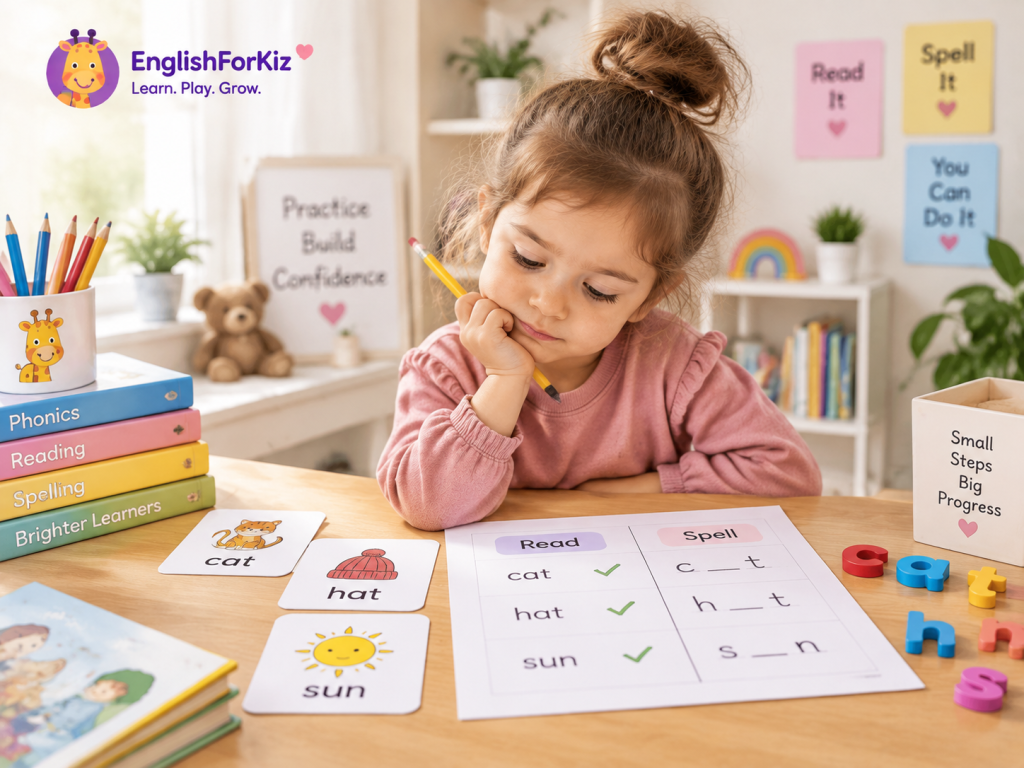
A child can read a CVC word correctly and still struggle to spell the same word from dictation. Reading gives the child visible letters. Spelling removes those clues and asks the child to hear the word, separate its sounds, keep them in order, remember which letters represent them, and write the result.
That difference explains much of the gap in CVC reading vs spelling. A child may read map easily but write mp, mep, or pam. Those are not three versions of the same mistake. Each one points toward a different place to check.
Why a Child May Read CVC Words Before Spelling Them
Decoding and encoding use related phonics knowledge, but spelling asks the child to generate information that reading already supplies.
When a child sees sit, the letters s, i, and t are sitting conveniently on the page doing part of the work. The child can look at each letter, recall its sound, and blend the word.
When an adult says “sit,” those letters disappear. Now the child has to hear three sounds, notice the short /i/ in the middle, remember their order, recall the matching letters, and form them on paper.
Only after the sound sequence is clear does the child need to retrieve s – i – t.
A miss at any one of those steps can change the spelling even when reading looks comfortable. The useful response is not automatically to restart CVC reading. First find the part that is breaking down.
Find Where the CVC Spelling Process Breaks Down
Once the reading-spelling difference is clear, the next question is not how much more practice to add, but where the sound-to-letter process is breaking down.
Can the child hear three sounds?
If the child says /s/ /u/ and loses /n/, begin with segmenting CVC words. A sound that is missing from the spoken segmentation may also be missing from the spelling.
Can the sounds stay in order?
If all three sounds are present but their positions change, work on sound order. The child may know the sounds individually but lose their sequence while preparing to write.
Can the child recall each letter?
If the spoken sounds are accurate but the letters are uncertain, focus on letter retrieval. This is sometimes called grapheme recall: remembering which written letter represents the sound.
Try the same three checks with a second word. One familiar example may be memorized. A repeating pattern across several suitable CVC words gives much more useful information.
Once the breakpoint is visible, CVC worksheets for kindergarten can be chosen for a purpose instead of simply because the page contains three-letter words.
What a CVC Spelling Error Can Tell You
After the three quick checks, the written attempt gives another clue. Compare what the child wrote with what the child was able to say before deciding what to practice next.
When the middle vowel keeps changing
A child may hear the beginning and ending consonants clearly but still hesitate over the medial vowel. Instead of repeatedly spelling the full word for the child, isolate the decision: “What sound is in the middle of sit?” Then compare it with a word such as set.
The letter should come after the listening decision. Otherwise, a child may simply choose a vowel that looks familiar without fully hearing the sound.
Use a Clear Vowel Pattern After the Child Can Hear It
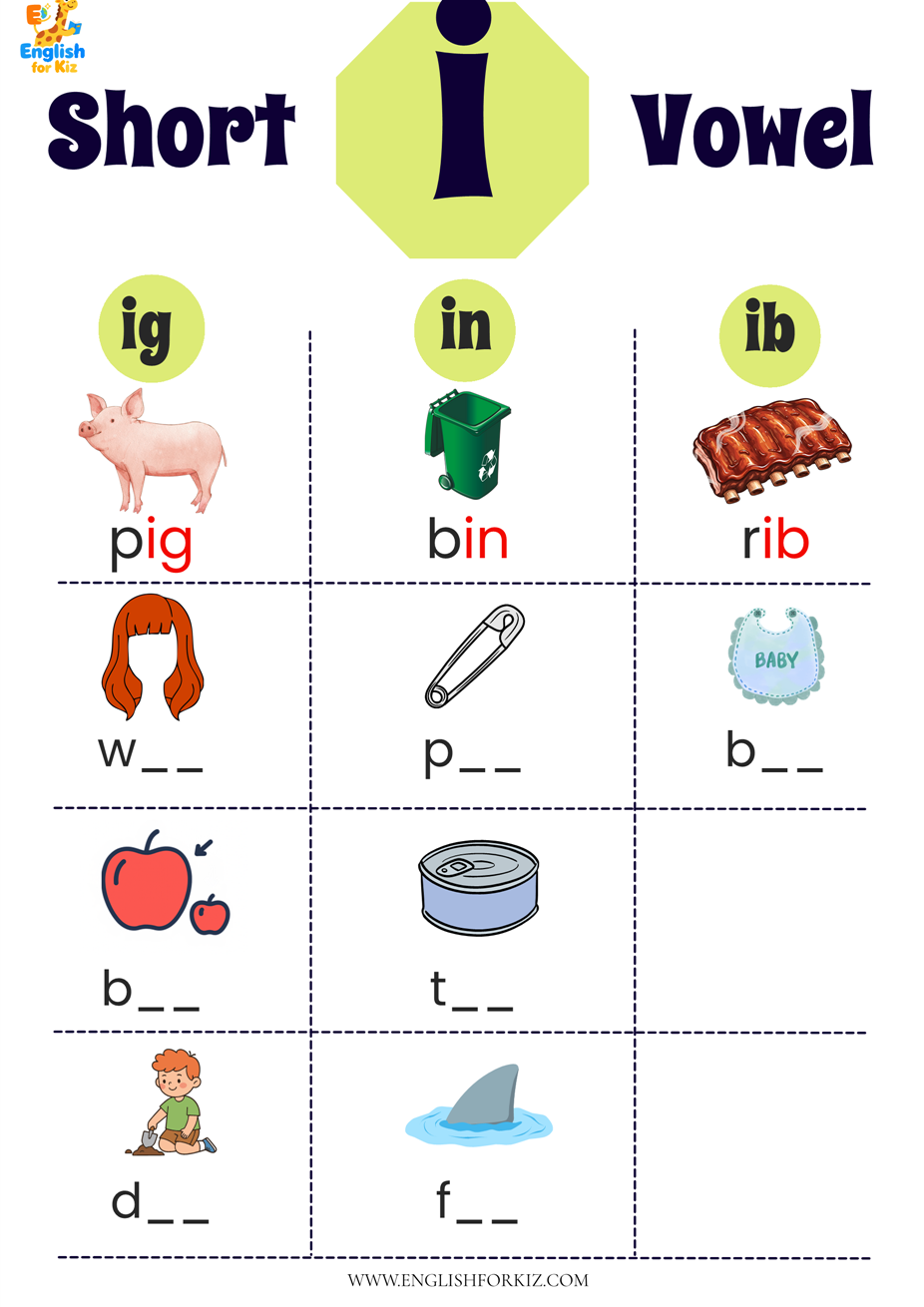
These EnglishForKiz worksheet previews keep one short vowel visible while children work with CVC word families. That makes them more useful after the listening step than a mixed page containing several uncertain vowels at once.
For a child confusing the medial vowel, begin with one familiar pattern, then compare another vowel only when the first sound can be identified accurately.
Browse Kindergarten CVC Worksheets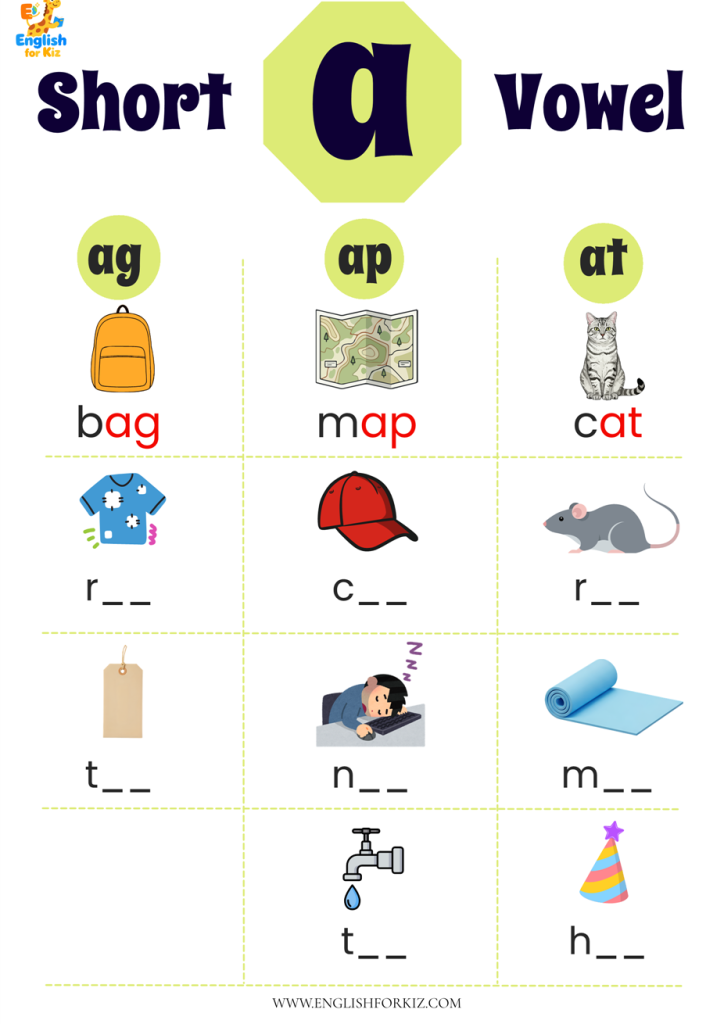
When the final consonant disappears
If dog becomes do, first ask the child to say the sounds without writing. If /d/ /o/ /g/ becomes only /d/ /o/, the missing letter is not yet the main problem. The final sound needs to become noticeable first.
If the child can say all three sounds correctly but still writes only two letters, move the check forward. Ask which letter represents the last sound. That small question separates segmentation from letter recall.
Build the Missing Step Between Hearing and Writing
Once the breakpoint is clear, practice should rebuild that step rather than restart the whole CVC sequence. If “hear the word, now write it” is where the child becomes lost, make the hidden steps visible for a while.
Say the sounds without letters
Use a familiar word such as lip. Ask for /l/ /i/ /p/. If the middle or final phoneme disappears here, keep the task oral for a few turns. Adding letters too soon only hides the first problem behind another one.
Give every sound a place
Move one counter, block, or bottle cap for each phoneme. The first marker is /l/, the second is /i/, and the third is /p/. This makes the number and order of sounds visible without requiring handwriting.
Replace the markers with letters
Now ask for one letter in each sound position. If the child says /l/ /i/ /p/ accurately but selects e for the middle, you have isolated the letter-choice problem without handwriting getting in the way.
Remove the supports and write
Dictate another word using the same taught pattern. The child says the sounds, writes the letters, then rereads the completed word. If the attempt breaks down, return to the last successful step rather than restarting the whole phonics sequence.
This is the practical difference in CVC decoding vs encoding. Reading begins with print. Spelling has to build the print from the spoken word. The bridge helps a child practice that change of direction in manageable steps.
A short review game can fit after direct teaching when the target pattern is already familiar. EnglishForKiz phonics games include kindergarten practice for listening, short vowels, CVC words, and spelling review. For more guidance on deciding when a game actually helps, see when and how to use phonics games.
Check Whether the Spelling Skill Transfers to New CVC Words
A successful practice word is only part of the answer. The next check is whether the child can use the same sound-to-letter process with another suitable word.
A child may remember cat as a whole written answer while still finding it difficult to spell cap from sounds. To check real transfer, keep the phonics pattern familiar but change some of the words.
Use one or two words the child already reads comfortably.
Use less-practiced words with the same taught vowel and known consonants.
The goal is not to surprise the child with strange vocabulary. Every word should still be suitable for the phonics knowledge already taught. The new example simply shows whether the child can use sound segmentation and letter recall instead of repeating a memorized spelling.
After writing, ask the child to read the word back. This creates a useful loop. The child first encodes from speech to print, then decodes the new print. If cap was intended but cop was written, rereading can help the child notice that the middle sound no longer matches.
If decoding itself still needs work, the guide to CVC words for kindergarten blending practice focuses specifically on moving from separate letter sounds into whole-word reading.
Match the Practice to the Breakpoint You Found
At this point, the error pattern should guide the practice choice. A page is useful because of what it asks the child to do, not simply because “CVC” appears in the title.
The EnglishForKiz kindergarten phonics worksheets include short-vowel and CVC word-family practice. Match the page to what the child is missing rather than asking the child to complete every available CVC activity.
When medial vowels are the main issue, the short-vowel worksheet teaching sequence provides a broader way to separate and compare short a, e, i, o, and u instead of mixing all five before they are ready.
Keep dictation short and diagnostic
Dictation does not need a long list to be useful. A few carefully chosen words can show whether the same error repeats. Say the word naturally, make sure the child heard the intended word, and allow time for sound segmentation before writing begins.
The useful rule is to choose spelling practice for the CVC pattern the child can already read. If a new reading pattern and a new spelling demand are introduced together, it becomes much harder to identify what caused the mistake.
Avoid Practice That Hides the Real Spelling Problem
Even well-intended practice can make progress look stronger than it is. A completed page can tell very little about independent spelling if too much of the answer is already visible or supported.
Avoid
Try Instead
Retest the Skill Before Moving Beyond Single Words
The final question is whether the child can now do the word-level task with less support. Sentence dictation adds more jobs: remembering several words, leaving spaces, using capitals, and sometimes adding punctuation.
Return to the same three checks with different CVC words. Can the child hear all three phonemes? Keep them in order? Retrieve the matching letters? Then dictate several words that include both practiced and less-practiced examples.
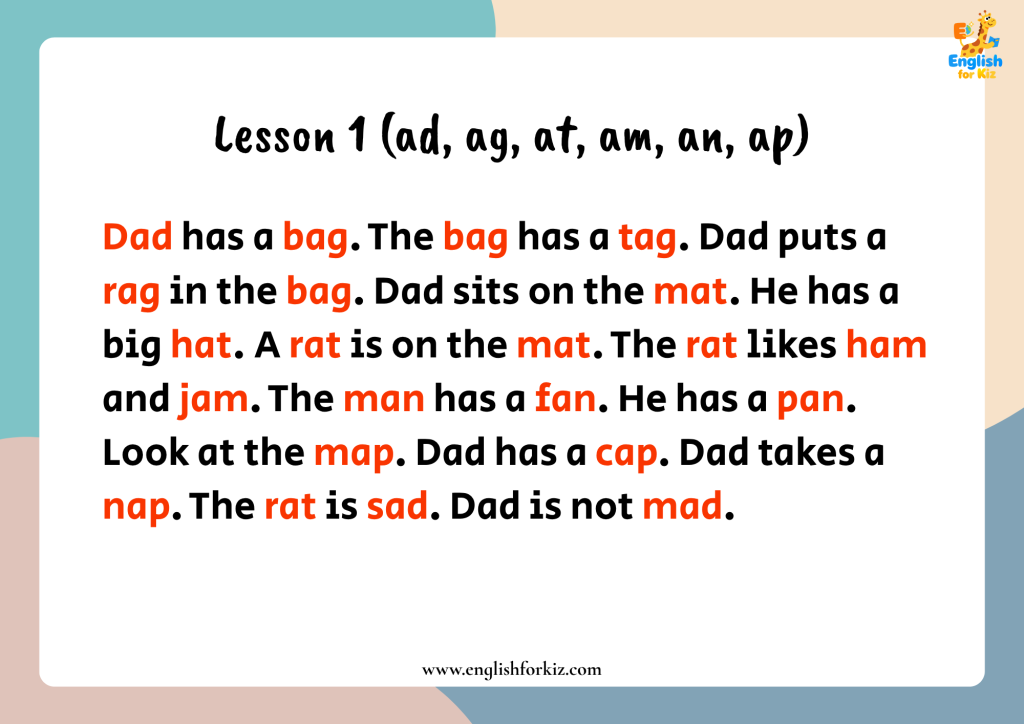
Once word spelling is becoming more secure, reading the same CVC patterns in connected text can help children see those spellings working inside real sentences. EnglishForKiz has a Kindergarten story library built around short-vowel word families.
Move a Secure CVC Pattern Into Simple Text
The EnglishForKiz Kindergarten decodable stories organize early passages around short-vowel word families. They are a logical next step after the child can decode the target words and spelling no longer requires heavy support.
Do not use a harder story to fix an unresolved spelling problem. Use connected reading after the word pattern itself is reasonably familiar.
Read Kindergarten CVC StoriesThe practical lesson in CVC reading vs spelling is simple: more spelling volume is not always the answer. Find out whether the child is losing a sound, losing its order, forgetting the matching letter, or struggling once handwriting enters the task. Then practice that part directly.
Choose the Next Step From the Error You Actually See
If the child needs more sound-to-letter practice, begin with focused printable CVC work using a pattern that is already readable. If several parts of the kindergarten phonics sequence need support, use the broader learning path to connect short vowels, blending, spelling, games, and early reading without jumping randomly between skills.
Frequently Asked Questions
Is it normal to read a word before being able to spell it?
It can happen because reading supplies the printed letters while spelling requires the child to retrieve them. Check whether the child can hear all the sounds, keep them in order, and recall the matching letters before assuming that more reading practice is needed.
Why are medial vowels harder to spell?
A child may notice the first and last consonants more easily while still being uncertain about the short vowel in the middle. Ask for the middle sound before showing any vowel letters. That reveals whether the difficulty is hearing the vowel or remembering its written form.
Should a child copy CVC words?
Copying can support handwriting and visual attention, but it should not replace spelling from sound. When checking encoding, hide the model and ask the child to segment and spell the spoken word independently.
How does phoneme segmentation help spelling?
Segmentation helps the child notice one sound position for each phoneme. Hearing dog as /d/ /o/ /g/ gives the child three ordered sounds to represent with letters instead of asking for the whole spelling at once.
When is a child ready for sentence dictation?
Try a short sentence when several appropriate CVC words can be segmented and spelled independently with manageable effort. If one word-level error still appears repeatedly, keep working there before adding sentence memory, spacing, capitalization, and punctuation.