
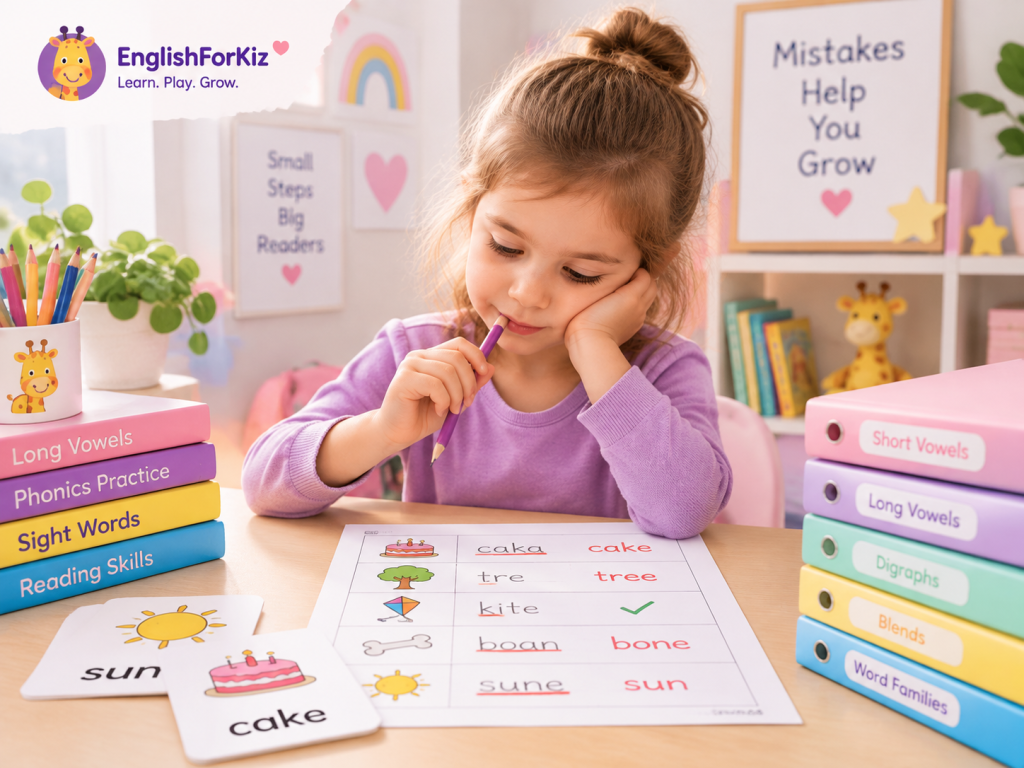
Phonics worksheet errors are most useful when the same mistake appears more than once. One wrong answer may come from rushing, unclear directions, handwriting, fatigue, or an unfamiliar picture. A repeated pattern across several short samples can tell a parent, teacher, or reading tutor what to check next: letter-sound recall, sound segmentation, blending, spelling, or task understanding.
One Wrong Answer Is Noise; a Repeated Pattern Is Evidence
Start by recording what the child actually did. Do not begin by deciding what is “wrong” with the child.
Imagine a child reads map as mat once. That substitution tells very little on its own. The child may have rushed, looked away, or simply made a one-time slip.
Now imagine the same child reads sit as sip, bed as bet, and rug as run during separate short activities. The repeated final-sound substitutions are much more useful. They tell the adult where to look next.
Write down the exact wrong response.
Was it an omission, substitution, reversal, guess, or blending problem?
Try the same skill in another short task.
Practice the narrow skill that keeps breaking down.
Use fresh examples and see whether the pattern changes.
This process is more useful than automatically assigning the whole worksheet again. If five wrong answers all point to one skill, the follow-up practice should usually focus on that skill rather than everything printed on the page.
Example: A child can say /m/ /a/ /p/ correctly but cannot turn the sounds into map. More letter-name practice would not answer the immediate question. A short blending check would.
When the next step needs to stay on paper, use phonics worksheets that match the skill being checked instead of choosing another mixed page at random.
Give Repeated Mistakes a Simple Error Code
Error coding keeps observation separate from interpretation. Record the visible behavior first. Work out the likely cause second.
A sound, letter, or part of the word disappears. Check whether the child can hear every sound and whether the whole item was scanned.
One sound or letter replaces another. Compare the two choices directly before assuming a broad phonics weakness.
A letter is formed or ordered in reverse. Check recognition separately before treating it as a reading error.
The answer seems to come from a picture, first letter, or word shape rather than looking through the whole word.
The individual sounds are correct, but the child cannot combine them into the spoken word.
The same visible mistake can still have more than one explanation. An omitted vowel in spelling may mean the child did not hear the middle sound clearly. A skipped letter on a crowded page may simply mean the child lost the place.
Reversals also need careful interpretation. If a child writes b for d but points to d correctly and says /d/ when the writing demand is removed, the error does not automatically show a sound-recognition gap.
Write what you saw. “Wrote sn for sun twice” gives you something to check. “Bad at spelling” does not.
Ask What the Worksheet Was Actually Testing
Reading, spelling, listening, and handwriting place different demands on a child. The same wrong-looking answer can mean something different in each task.
Can print become a word?
A reading item asks the child to look at letters, recall their sounds, and blend them. If each sound is correct but the word never comes together, blending deserves the next check.
Can a spoken word become letters?
Spelling asks the child to hear the word, split it into sounds, and choose letters for those sounds. A child may read sun correctly but write sn.
Can the sounds be heard without print?
An oral check removes letter recall and handwriting. If the child cannot hear the middle sound in map, the problem begins before pencil work.
Is handwriting hiding what the child knows?
Letter formation adds another demand. Pointing or saying an answer can show whether sound knowledge remains accurate when handwriting is removed.
Task directions can create false signals too. Before treating several wrong answers as a reading gap, ask the child to explain what the worksheet is asking.
A learner who can read all the words but misunderstands “circle the word with the middle sound /a/” needs the instruction clarified before another short-vowel worksheet is assigned.
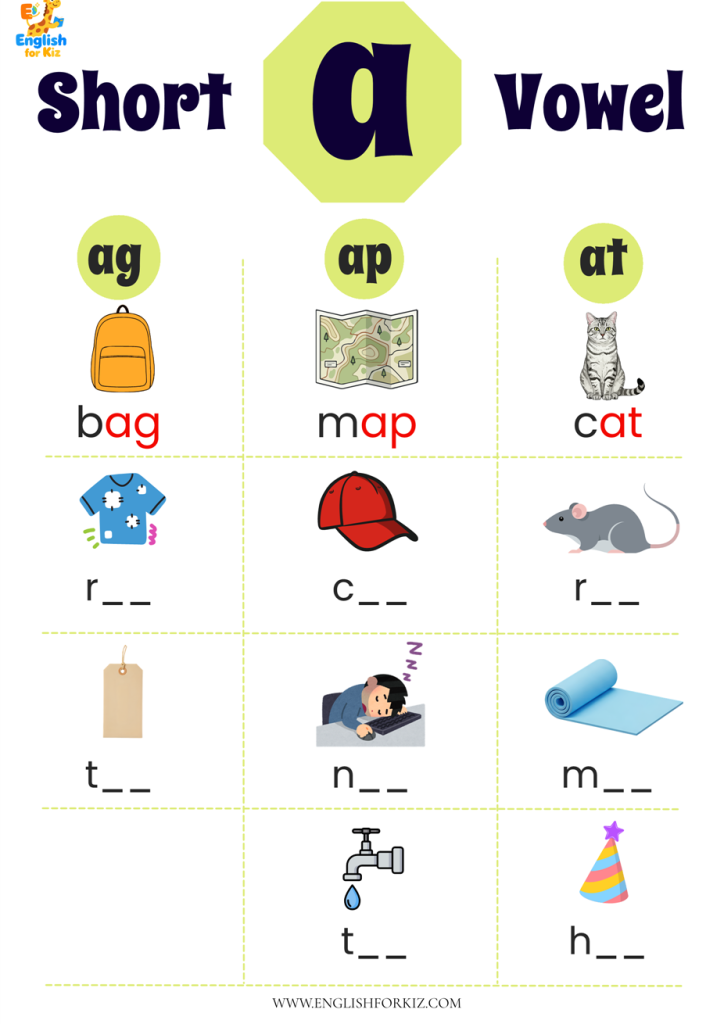
Use a Page That Makes the Sound Position Visible
A focused CVC page can help when the repeated error involves one short vowel, a missing sound, or one position in the word. The adult can listen while the child reads each word, then compare the written response with what the child says aloud.
For example, if the child says all three sounds but repeatedly leaves the vowel blank, the follow-up question is different from a child who cannot hear the middle sound at all.
Explore Kindergarten CVC WorksheetsUse Several Short Samples Before Calling It a Stable Pattern
Several small checks can help separate an occasional attention slip from a mistake that keeps appearing under similar conditions.
The samples should test the same underlying skill without simply repeating the same answers. Slightly changing the format is helpful because it shows whether the problem travels with the skill or only appears on one page.
Printed Reading
The child reads sit as sat and pin as pan.
What you notice: the middle vowel changes repeatedly.
Quick Oral Check
Ask for the middle sound in sit, map, and pin.
What you notice: the child is also inconsistent without printed words.
Fresh Examples
Use new CVC words with familiar consonants and the same vowel contrast.
What you notice: the same vowel confusion appears again.
The repeated pattern may suggest that middle-vowel listening or sound segmentation needs focused practice. It still does not prove a learning disorder, and the interpretation should be checked again after teaching.
Compare this with a child who misses one item, then handles the same skill accurately in two follow-up samples. That first answer is more likely to be an isolated slip.
Keep the checks short. A long retest can introduce fatigue and create new mistakes that were not part of the original pattern.
Match the Error Pattern to the Next Practice
The best follow-up activity is usually the smallest task that directly addresses the repeated mistake.
Guessing needs another type of adjustment. If the child chooses a word from the picture, the first letter, or the general shape of the word, remove the clue that makes guessing easy.
Cover the picture for a moment. Ask the child to point under each letter or letter group. Then blend the whole word. The aim is to make looking through the word more successful than making a fast guess.
Do not repeat the full page just because the score was low. If six mistakes include five failed blends and one skipped row, blending is the stronger instructional signal.
Change the Energy Without Changing the Target
A game can be useful after the adult already knows what needs practice. For letter-sound recall, beginning sounds, or short review, the goal should stay the same even when the child moves away from paper.
A child who confused a specific letter sound on a worksheet should review that sound, not jump into an unrelated game simply because it looks more engaging.
Practice with Phonics Games
Know When to Step Back, Switch the Task, or Check Orally
Repeated difficulty does not always mean “give more of the same.” Sometimes the task is too advanced, sometimes the response format gets in the way, and sometimes the adult simply needs a cleaner check.
Step Back One Skill
Do this when a prerequisite is missing. A child who cannot hear the three sounds in a CVC word is unlikely to benefit from repeatedly spelling that word.
Switch the Format
Do this when the phonics answer is stronger than the written response. Let the child point, sort, say, or build the answer before deciding that the sound knowledge is weak.
Check Orally
Do this when handwriting, picture naming, reading directions, or visual clutter may be hiding the target skill.
Suppose a spelling page shows bt for bat. Ask the child to stretch the word.
If the child says only /b/ /t/, the missing middle sound begins in listening or segmentation. If the child clearly says /b/ /a/ /t/ but cannot choose the letter for /a/, letter recall becomes a stronger possibility.
If the current worksheet format makes it difficult to separate those possibilities, the EnglishForKiz phonics materials area provides other resource types for practice and review.
When the gaps cover more than one stage
If letter sounds, blending, spelling, and reading all need to be reviewed in sequence, a grade-level learning path is more useful than collecting unrelated pages one at a time.
Get additional instructional help when needed. If the same difficulty remains frequent across carefully chosen tasks despite targeted teaching and repeated checks, share the examples with the child’s teacher, reading specialist, or another appropriate education professional. The worksheet record can support that conversation without acting as a diagnosis.
Retest With New Items, Not Memorized Answers
A repeat check should show whether the original error pattern is changing. It should not simply show that the child remembers what was written on yesterday’s page.
Use different words that require the same skill. If the original difficulty involved final sounds, choose fresh words with clear final consonants. If the problem involved short i and short e, change the words while keeping that vowel contrast.
A short record like this is much more useful than “needs more phonics.” It tells the next adult what was tested, what happened, and what has already been checked.
Progress can also appear before every answer becomes correct. The child may start looking through the entire word, make fewer substitutions, blend more smoothly, or correct an error after one prompt.
Check Whether the Pattern Transfers Into Reading
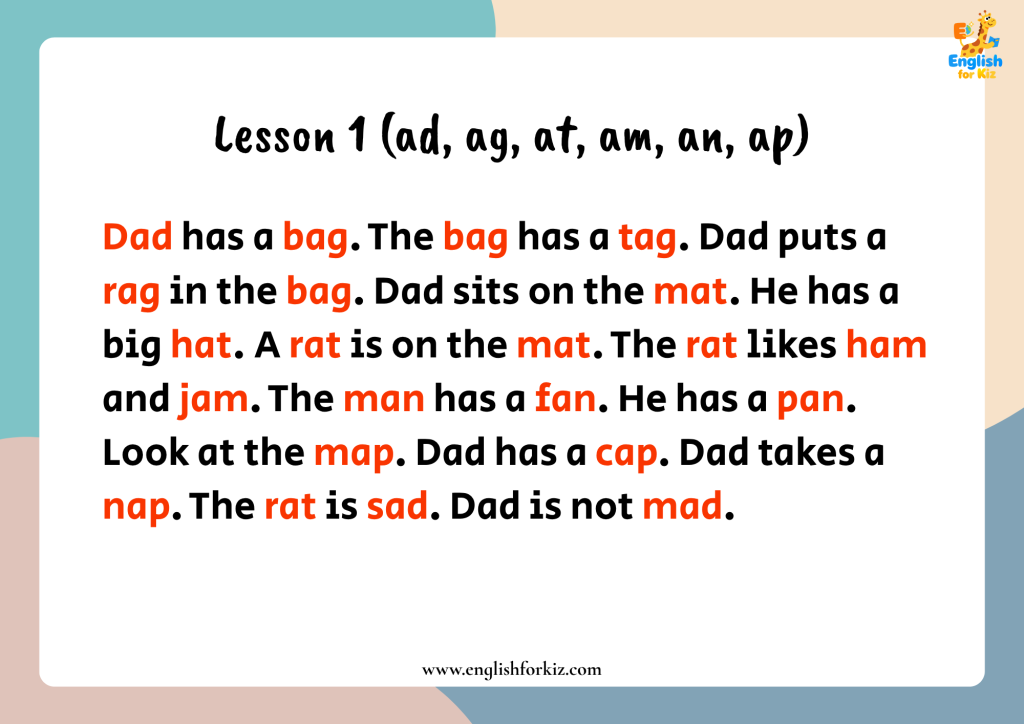
A worksheet can show that a child can handle a word pattern in isolation. Connected text asks a different question: can the child still use the pattern while reading a sentence or short passage?
Move to a matching reader only after the target words are reasonably manageable. If the same error returns in connected text, record it and decide whether the child needs another short round of word-level practice.
Read Decodable StoriesUse the Error to Choose the Next Worksheet, Not to Label the Child
The most useful question after a wrong worksheet answer is not “What is the child bad at?” It is “Where did the process break down, and what is the smallest thing I can check next?”
Repeated omissions may lead to a segmentation or tracking check. Repeated sound substitutions may call for a direct contrast between two sounds. Correct oral answers with weak written answers may call for a different response format. Correct individual sounds with failed word reading point toward blending.
That is what makes phonics worksheet errors useful. They can guide the next lesson when adults compare patterns across tasks, rule out simple explanations, and retest with fresh material.
The goal is not to create a bigger pile of worksheets. It is to choose one better-matched practice task and then see whether the original error changes.
Choose Practice for the Skill Gap You Actually Found
Once a repeated pattern is clear, choose the worksheet or learning path that targets that skill. Keep the next practice narrow enough that you can tell whether it helped.
Frequently Asked Questions
Does one wrong answer show a reading gap?
No. One answer may be affected by attention, fatigue, directions, vocabulary, handwriting, or a simple slip. Look for the same type of mistake across several fresh examples before planning targeted practice.
What is the difference between an attention slip and a repeated phonics error?
An attention slip is usually inconsistent. The child may miss one item and then show the same skill accurately elsewhere. A repeated phonics error pattern tends to recur in a similar form across several words or short checks.
Which errors suggest a blending problem?
Blending needs a closer check when the child can say the individual sounds correctly but cannot combine them into the whole word. Confirm this orally before assuming that letter recognition is the problem.
Should a child repeat the same worksheet?
Usually not as the first response. Identify the repeated error, practice that skill with a smaller task, and then use new examples. Repeating the identical page may measure memory of the answers rather than improvement.
How soon should the skill be retested?
A brief check during a later relevant practice session is often enough. Use new items that test the same skill and look for changes in the original error pattern rather than expecting a fixed score.