
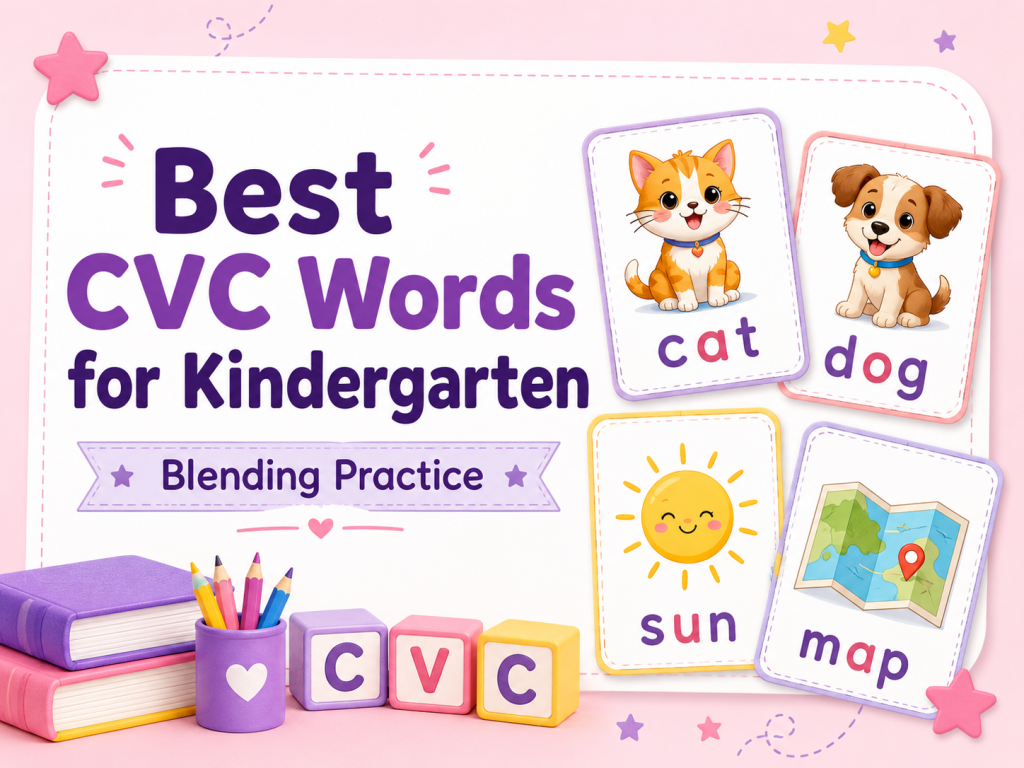
CVC words for kindergarten help early readers turn letter sounds into real words. This guide explains which short vowel words to practice first, how to teach blending step by step, and which EnglishForKiz resources can support parents, teachers, homeschool families, and classroom reading routines.
Jump to Section
Many kindergarten children can say letter sounds one by one. However, blending those sounds into a real word takes a different kind of practice. A child may know /m/, /a/, and /t/, but still need help hearing how those sounds become mat.
Therefore, the best practice does not begin with long word lists. It begins with short, regular, decodable words that make sense to young readers. These words help children read by sound instead of guessing from pictures.
For focused printable practice, EnglishForKiz offers CVC words worksheets that support short vowel blending, word family practice, handwriting, spelling, and early reading review.
Why CVC Words Work for Kindergarten Blending
First, CVC words follow a simple consonant-vowel-consonant pattern. Words like cat, sit, hop, and sun have three clear sounds. As a result, children can hear each sound and blend from left to right.
In addition, these words give children a fair reading task. The letters usually match the sounds directly. Therefore, children can use phonics knowledge instead of memorizing a whole word shape.
This approach also matches the broader idea behind structured early reading. The What Works Clearinghouse foundational reading skills guide from IES focuses on early reading foundations for kindergarten through grade 3, including sound awareness, decoding, word recognition, and connected reading practice.
However, CVC practice should not stop at isolated word calling. Strong lessons connect oral blending, letter-sound review, worksheet practice, games, and decodable sentences. In other words, children need to see how sounds become words and how words become reading.
Best Short Vowel CVC Words to Practice First
To begin, one short vowel focus at a time usually works best. This keeps the lesson clear and helps children hear the middle sound. Later, mixed vowel review can help children become more flexible readers.
Also, word lists should stay small. Five to eight words are enough for one focused lesson. A short list with accurate blending is better than a long list that encourages guessing.
Short A Words
Short a is often a strong starting point because many words are familiar and easy to picture. For example, cat, mat, sat, map, tap, and pan work well for early blending.
- -at: cat, bat, mat, sat, hat
- -an: can, man, pan, fan, ran
- -ap: map, tap, cap, nap, lap
- -ad: sad, mad, dad, pad
Short E and Short I Words
Next, short e and short i need careful listening. Some children confuse pen and pin. Therefore, slow modeling and vowel contrast practice are useful.
- Short e: pen, ten, hen, bed, red, pet, net
- Short i: sit, pin, pig, lip, fin, dig, win
Short O and Short U Words
After that, short o and short u can extend practice. These words are useful for movement games, simple sentences, and early decodable stories.
- Short o: dog, log, hop, top, pot, fox, mop
- Short u: sun, run, bug, rug, cup, mud, hug
Printable Practice
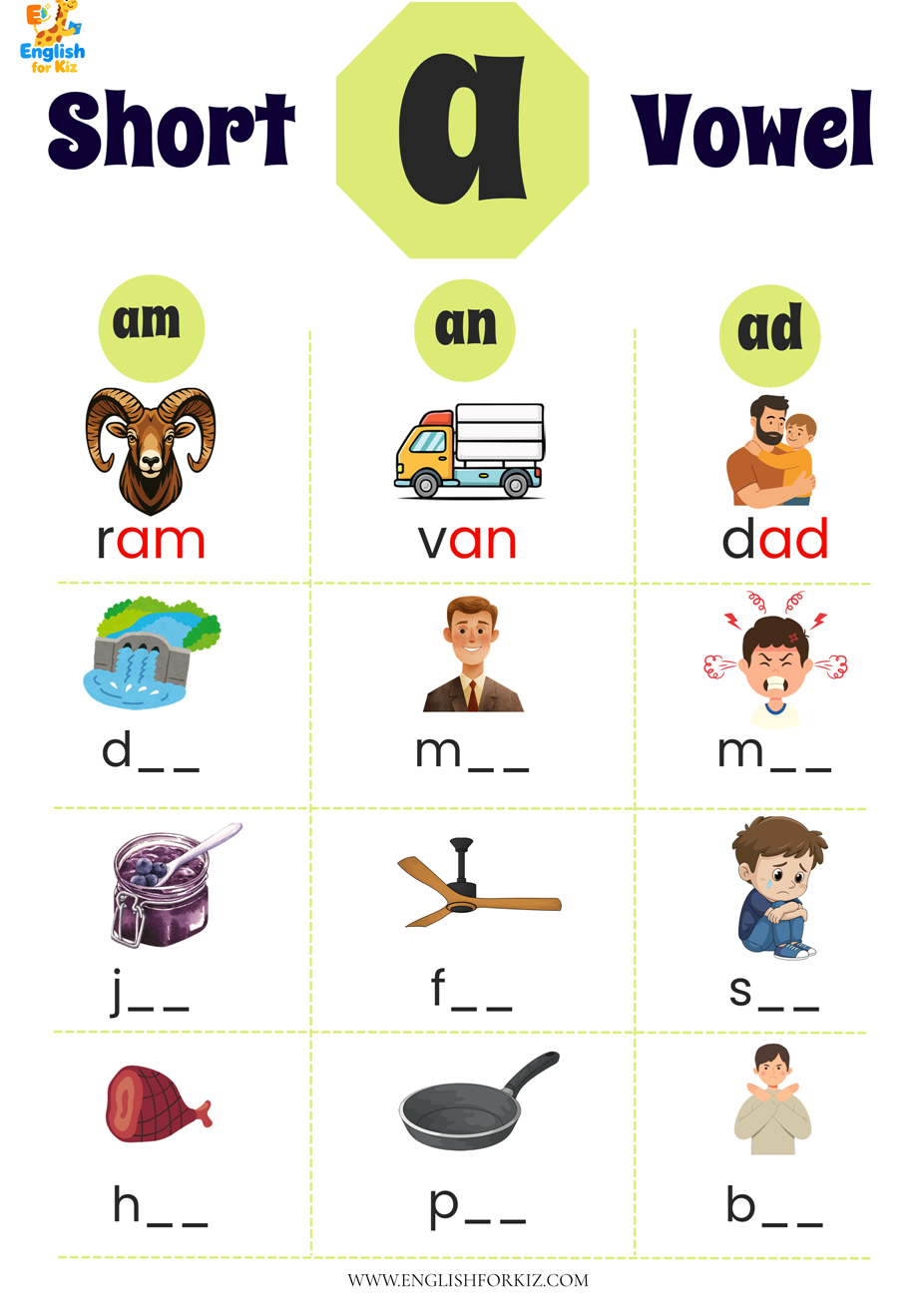
Start with Short Vowel CVC Worksheets
This worksheet set is a better first step for children who need focused practice with short vowel word families, blending, spelling, and handwriting. It works well for home review, small-group lessons, and homeschool phonics routines.
Best for: parents, kindergarten teachers, tutors, and homeschool families who want simple printable CVC practice before moving into games or readers.
Explore CVC WorksheetsHow to Teach CVC Blending Step by Step
First, begin with oral blending. Say the sounds slowly, such as /m/ /a/ /t/. Then, children say the whole word. This step helps children understand that separate sounds can become one spoken word.
Next, connect the sounds to print. Point under each letter while saying the sound. After that, sweep under the whole word and read it smoothly.
However, the sounds should stay clean. A child should hear /t/, not “tuh,” and /p/, not “puh.” This small detail makes blending easier and spelling more accurate.
A Simple Lesson Routine
- Warm up: Review three to five target letter sounds.
- Blend orally: Say sounds first without showing print.
- Read words: Blend a short list from left to right.
- Write words: Tap the sounds and write one letter for each sound.
- Apply reading: Read a short phrase, sentence, or decodable text.
For a broader grade-level path, the phonics for kindergarten program connects CVC blending with short vowels, sight words, games, worksheets, and simple decodable sentences.
Which CVC Resource Should Start First?
A clear next step matters. Some families need printable practice. Some classrooms need a full lesson path. Some children need game-based review after direct teaching. Therefore, the best resource depends on the learning situation.
Best for Parents
Start with printable CVC worksheets. They are easy to use for short home practice, quick review, and focused short vowel blending.
Best for Teachers
Use a kindergarten phonics path. It helps organize sounds, CVC word families, games, worksheets, and sentence practice.
Best for Homeschool
Combine worksheets, games, and decodable readers. This creates a weekly rhythm from word practice to real reading.
Best for Review
Use phonics games after teaching. Games add repetition, but they work best after children know the target sounds.
Turn Word Lists into Worksheets, Games, and Decodable Reading
Worksheets are most useful after direct teaching. First, children blend words aloud. Then, they can match words, trace letters, write sounds, and sort word families.
Meanwhile, games make review feel lighter. A child can pick a card, blend the word, and move a counter. Another activity can ask children to sort cat, cot, and cut by vowel sound.
Finally, decodable readers move children beyond word lists. A sentence such as Sam can run gives children a reason to use blending for meaning.
This is the main conversion path for the article: start with focused worksheet practice, add games for review, and then move into controlled decodable reading.
Related EnglishForKiz Resources
These resources give readers a clear next step after learning which CVC words to practice.
CVC Worksheets
Best for parents, tutors, and teachers who need printable short vowel practice for blending, spelling, and word families.
Start with Worksheets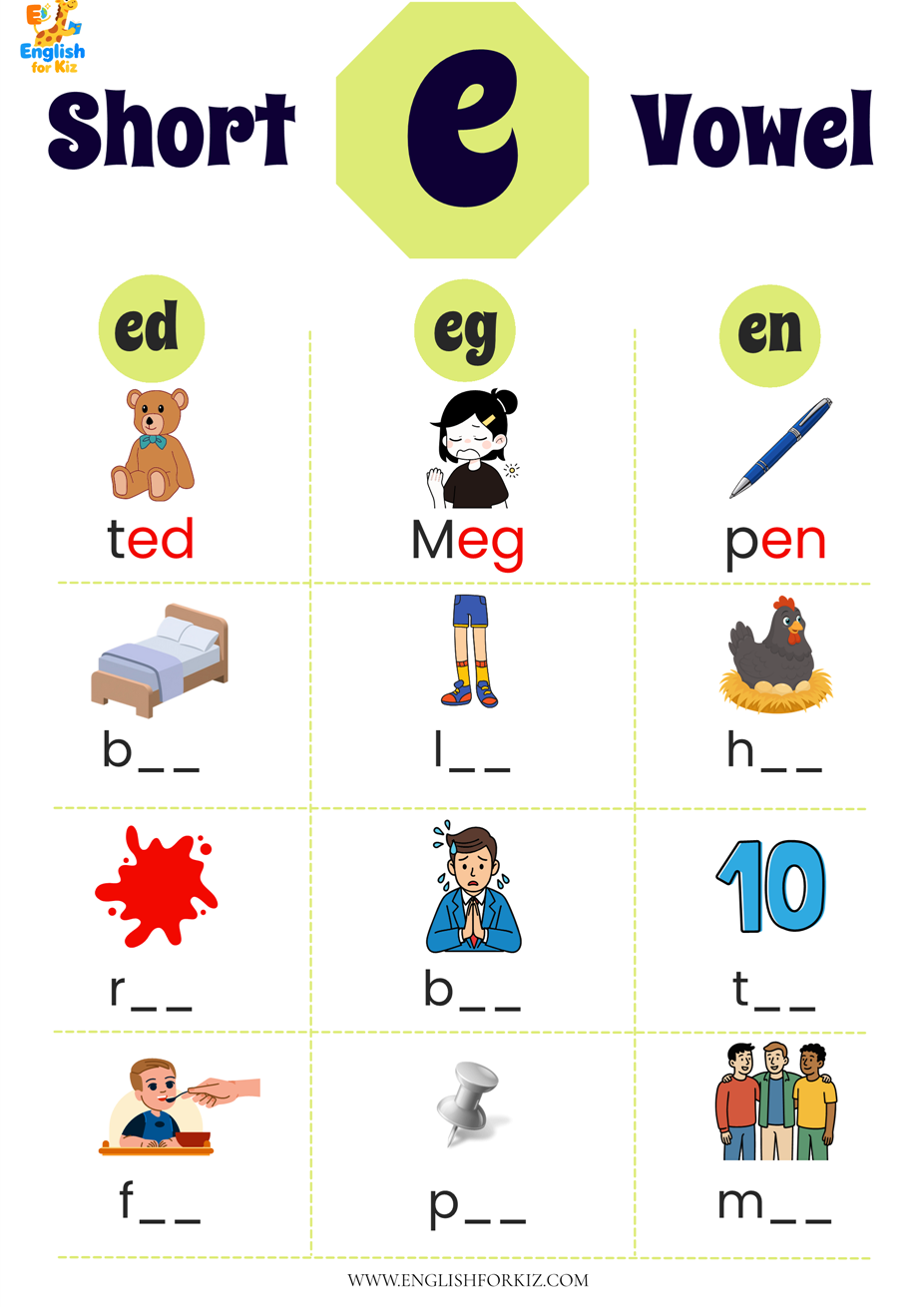
Kindergarten Program
Best for classrooms and homeschool routines that need a structured path from sounds to CVC words and sentences.
View Kindergarten Path
Phonics Games
Best for review after a lesson. Games help children repeat target sounds and words in a more active way.
Practice with Games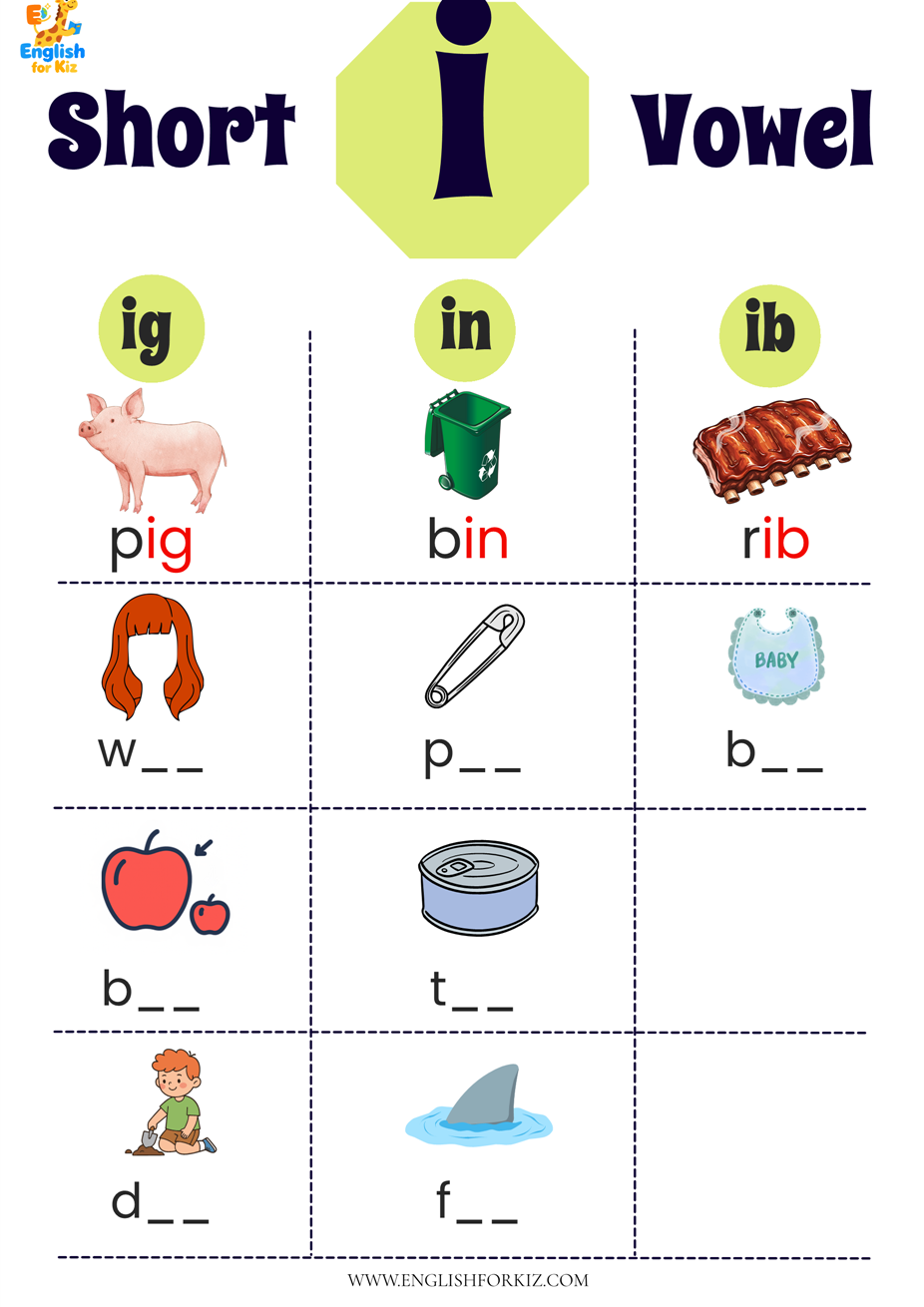
Decodable Readers
Best for children who can blend single CVC words and are ready to read short sentences and simple stories.
Read Decodable StoriesA Simple Five-Day CVC Blending Plan
A weekly routine can make blending practice easier to manage. Instead of adding too many new words, each day adds one small layer. This keeps practice clear and calm.
- Monday: Introduce one short vowel and three words.
- Tuesday: Add two more words from the same word family.
- Wednesday: Sort words by vowel sound or ending pattern.
- Thursday: Practice spelling by tapping sounds.
- Friday: Read short phrases, sentences, or a decodable story.
For example, short a practice can begin with cat, mat, and sat. Then, map and tap can join the list. Finally, children can read a short sentence such as Sam sat or Tap the map.
Common Blending Problems and Simple Fixes
Sometimes, a child can say each letter sound but cannot blend the word. In that case, oral blending should come back for a few minutes. Say /s/ /u/ /n/, then let the child say sun.
Another common issue is first-letter guessing. A child may see m and say mat, even when the word is mop. Therefore, pointing under each letter can guide attention across the full word.
Vowel confusion can also happen. A child may read pin as pen. In this situation, short listening games can help children compare the middle sound.
Most importantly, practice should stay short. Five to ten minutes of focused blending is often more useful than a long session with tired guessing.
Start with CVC Worksheets, Then Build a Full Reading Routine
In summary, CVC words for kindergarten should help children move from sounds to words, then from words to connected reading. The best routine starts small, keeps short vowels clear, and gives children many chances to blend with success.
For a focused first step, start with printable CVC worksheets. For a complete routine with worksheets, games, videos, flashcards, and stories, explore EnglishForKiz membership and unlock full access to the phonics library.
- Choose one short vowel focus for each early lesson.
- Blend aloud before moving into writing or worksheet practice.
- Move into games and decodable stories when single-word reading becomes smoother.
FAQ
What CVC words should kindergarten learn first?
Short a words are often a helpful starting point. Examples include cat, mat, sat, map, tap, and pan. These words are short, regular, and easy to blend aloud.
How do you teach CVC blending?
Start with oral sounds, then connect each sound to a printed letter. After that, sweep under the whole word and read it smoothly from left to right.
Should children memorize CVC words?
Children should not rely only on memorization. Instead, they should learn to decode each word by sounds. With repeated reading, familiar words become faster naturally.
How many CVC words should kids practice at once?
Five to eight words are usually enough for one focused lesson. A smaller list with accurate blending is better than a long list that creates guessing.
What comes after CVC words?
After CVC words, children can move into consonant blends, digraphs, double final consonants, silent e words, and more decodable sentence reading.