
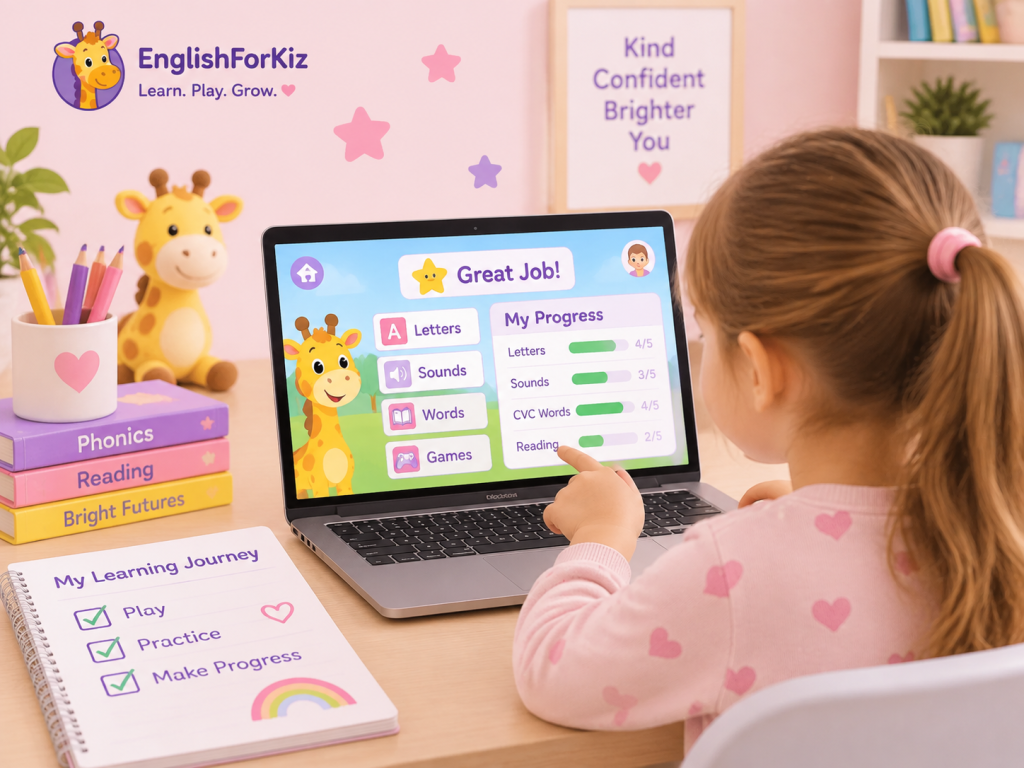
A simple phonics game progress tracking routine keeps the question practical: Is the child becoming more accurate, more independent, and better able to use the same phonics skill away from the game? The method below helps you answer that question without turning everyday practice into a formal test.
Start by Separating Game Performance from Phonics Progress
The strongest evidence is not simply “the score went up.” It is “the child handled the same sound or word pattern with less support and could use it in a fresh example.”
Imagine a child practicing short-a CVC words. During the game, map, cat, and sat appear several times. By the final round, the child answers almost everything correctly, but often checks the picture before looking through the letters.
Now remove the screen and show fan, rag, and ham on plain cards. If the child can blend those unfamiliar examples independently, the result gives stronger evidence of learning. If the child returns to guessing, the high game score needs more context.
The game also needs to match what you are measuring. If the current goal is beginning sounds, choose a beginning-sound activity. If the goal is CVC blending, use a task that actually requires the child to blend the full word.
EnglishForKiz organizes online phonics games around stages including letter sounds, beginning sounds, CVC blending, short vowels, and later phonics patterns. A broad review game can still be useful, but a focused game gives cleaner evidence when you are tracking one specific skill.
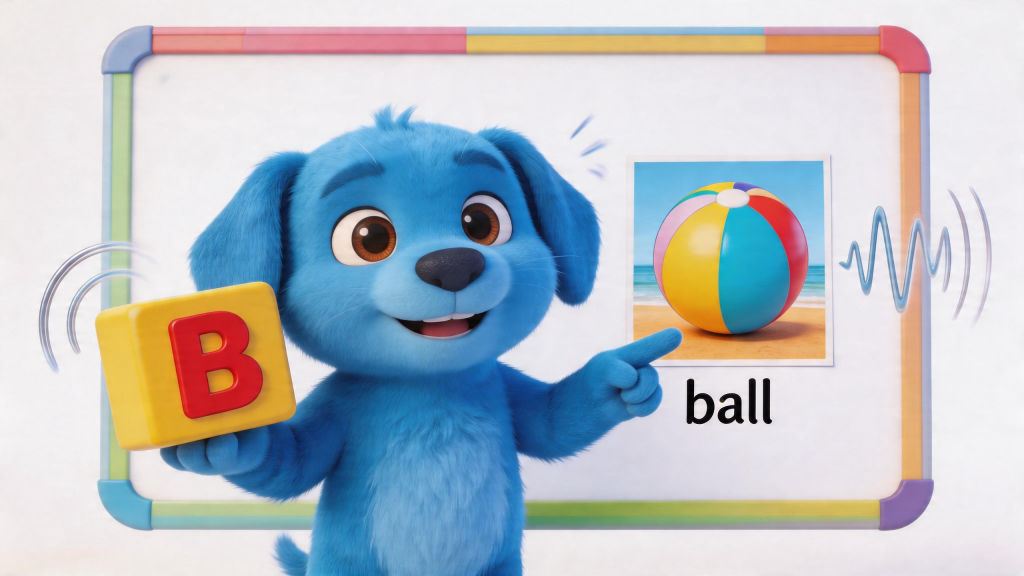
Choose the Game After Naming the Skill
A game is easier to interpret when one response matters. For beginning sounds, the child should listen to the word and connect its first sound with the printed letter. For CVC practice, the word itself should guide the answer rather than a familiar picture.
Check first: can the child succeed without using the phonics skill you want to observe? If yes, choose a more focused activity before using the result as evidence.
Explore Skill-Based Phonics GamesWhat Phonics Game Progress Tracking Should Record
A useful attempt log should take less time to complete than the game. Record only the information that can change the next lesson.
A One-Page Attempt Log
Why These Five Fields Are Enough
The exact target tells you what the result is about. “Phonics” is too broad; “short a in CVC words” or “initial /m/” is useful.
The first attempt reduces the effect of repeated feedback. The prompt shows what the child still depends on, while transfer checks whether the skill survives outside the game.
For useful phonics accuracy tracking, separate the first response from an answer corrected after feedback. A corrected response still matters, especially when the child self-corrects without help, but it should not be recorded as if the first response was already secure.
The wording does not need to sound technical. A teacher might write “middle vowel confused twice,” while a parent writes “mixed up a and i.” Either observation note is useful if it is clear enough to guide the next activity.
Look Across Several Attempts, Not One Percentage
A phonics game progress chart becomes more useful when it shows a pattern across short sessions. The numbers below are only an example of how a record might develop; they are not mastery benchmarks.
The useful change is not simply 6/10 to 9/10. The child also depends less on pictures, makes a more specific error, and transfers the pattern to unfamiliar words more consistently. That combination gives you a stronger reason to move forward.
Do not turn the log into a universal pass score. Different activities provide different cues, item sets, and response formats. Compare the child with their own previous attempts on the same skill instead of assuming that a fixed percentage equals a reading level.
When Several Children Use the Same Game
A teacher does not need to watch every item for every child. Choose one target behavior before the center begins—for example, “blend all three sounds before clicking”—and record one short note for each learner.
If one child needs the picture for most answers while another blends unfamiliar words independently, they should not automatically receive the same next activity even if their game totals look similar.
Use the Same Three-Part Check Around Each Game
A short baseline, a focused observation during play, and a fresh example afterward make online phonics game progress easier to compare from one session to the next.
Before: Take a Tiny Baseline
Show one to three examples before the game supplies pictures, audio, or feedback. For letter sounds, show several letters and ask for their sounds. For blending, use one or two words such as map or sit.
The baseline is not a separate test. It simply shows what the child can already do before game cues appear.
During: Watch the Response
Notice what happens before the click. Does the child sound out the item, scan the pictures first, wait for audio, copy an answer pattern, or use feedback to correct a guess?
One phrase such as “blended independently,” “needed vowel reminder,” or “guessed from picture” is usually enough.
After: Check Transfer
Give two to five new examples using the same sound relationship. After practicing cat, map, and sat, try fan, cap, rag, or ham.
Fresh items tell you more than asking the child to repeat words that were just seen several times.
The routine stays the same even when the phonics stage changes. A child working on beginning sounds might identify /s/ in sun before play, complete a matched game, and then identify /s/ in sock afterward. A Kindergarten learner might blend short-o CVC words before and after a game instead.
Read the Pattern Behind the Result
One strong or weak session can happen for many reasons. Repeated behavior across several attempts is more useful because it shows where the learning process is changing—or staying stuck.
The Child Gets Faster but Still Guesses
Faster clicking may mean the controls have become familiar. If the child still answers from pictures or the first letter, speed is not the part that needs more practice.
If this happens: slow the response down. Ask the child to say the sound or blend the word before choosing an answer. Record whether first-attempt accuracy improves when guessing is no longer rewarded by speed.
The Game Is Easy but Paper Is Difficult
The screen may be providing visual choices, audio support, familiar pictures, or repeated layouts. Those cues disappear when the same word appears alone on paper.
If this happens: keep the phonics target unchanged and change only the format. A few unfamiliar printed items will show whether the child can use the sound pattern without the interface.
Use Print When You Need to Remove Game Cues
Printable work is useful here because it changes the response environment without forcing you to teach a new phonics rule. Keep the same vowel, letter-sound set, or blending pattern that appeared in the game.
EnglishForKiz phonics worksheets include practice for letter sounds, beginning sounds, CVC words, short vowels, blending, and later spelling patterns. Choose the page by the skill in your record rather than by the number of activities on the page.
Choose Matching Phonics Worksheets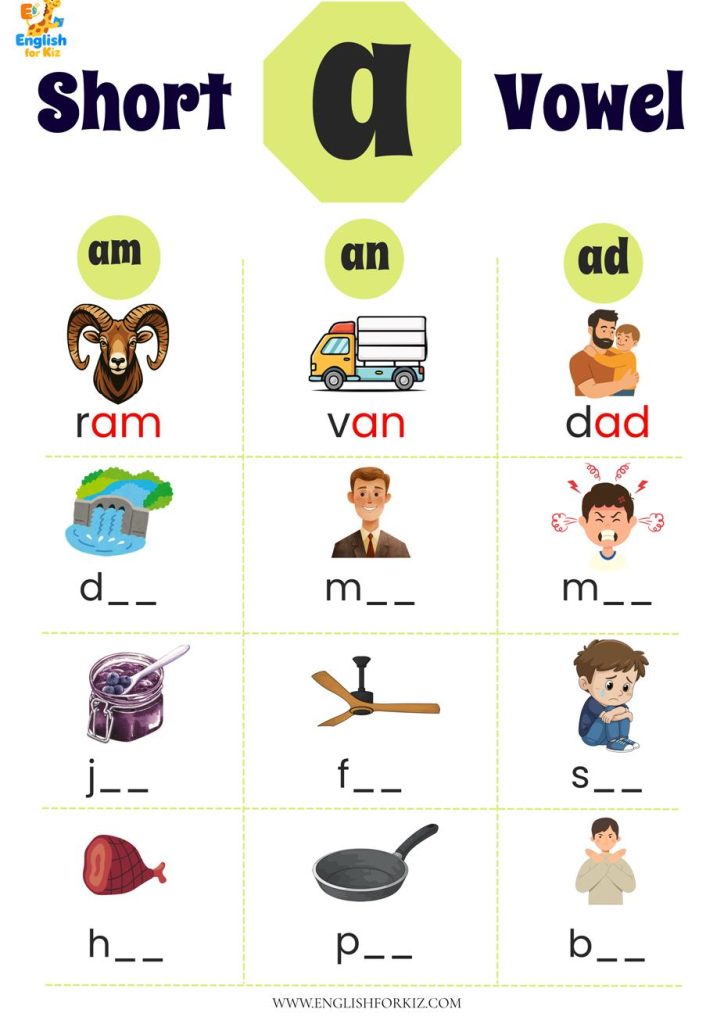
The Same Error Keeps Returning
A repeated error is more useful than an isolated miss. A child may repeatedly substitute one short vowel, skip the final consonant, or confuse the same two letter sounds even while the overall score rises.
Check first: is the difficulty hearing the sound, connecting the sound with print, or blending the full word? Narrow the next practice to that step instead of assigning another broad review.
A Quick Result-to-Action Flow
Before choosing another resource, follow the evidence through three questions.
Choose the Next Practice from Accuracy, Independence, and Transfer Together
The record has done its job when it makes the next choice clearer. The child does not need more activities simply because more resources are available.
- First attempts are improving.
- Prompts are becoming less frequent.
- Transfer is beginning but not yet stable.
Good fit: another short, skill-matched game with fresh examples and slightly less help.
- Errors remain frequent even with support.
- Required letter sounds are not secure.
- The child cannot keep all sounds together while blending.
Better when: one demand is reduced rather than repeating the same difficult level.
- Game results are strong.
- Accuracy falls when cues disappear.
- The child may be remembering pictures or positions.
Try next: the same target on paper, letter cards, magnetic letters, or a short spelling task.
- The pattern is stable across several attempts.
- Responses require little or no prompting.
- Fresh examples also work outside the original activity.
No perfect score required: reliable use of the skill matters more than 100% on one familiar round.
For a child blending CVC words, “harder” should not mean jumping to an unrelated advanced activity. If short-a words are secure but short-i words are not, the better next choice may be a focused short-i task. If several short vowels are already accurate in unfamiliar words, the child may be ready to use them in sentences.
Families who repeatedly need to decide between letter sounds, CVC words, short vowels, games, worksheets, and early stories may benefit from following one connected learning sequence instead of choosing isolated activities. The EnglishForKiz Kindergarten phonics program organizes short vowels, CVC blending, worksheets, games, and decodable reading around the Kindergarten stage.
Review the Log Weekly Without Turning It Into a Report Card
A weekly review should take only a few minutes. Look across several entries and ask what the child can now do with less help.
- Accuracy: Are more first attempts correct on fresh examples?
- Independence: Are verbal, picture, or audio prompts decreasing?
- Error pattern: Is the same mistake becoming less frequent?
- Transfer: Does the skill work in another format?
- Review interval: Does this skill still need frequent checking, or can practice move forward?
Do not expect a perfectly rising line. A child might record 8/10, then 6/10, then 9/10 while becoming more independent. The middle session may simply contain less familiar words or fewer prompts.
If results are inconsistent, shorten the review interval and keep the next practice close to the same target. If the skill remains stable across new examples and different formats, check it less often and spend more practice time on the next phonics step.
Look for repeated behavior instead of reacting to one error. If the child reads most short-a words but repeatedly loses the final consonant, the next practice should draw attention to all three sound positions. If accuracy falls only near the end of a long session, the better change may be a shorter session rather than easier phonics.
Avoid Four Recording Mistakes
Recording only the final percentage removes the reason behind the number. Recording every click creates too much information. Rechecking only identical words can confuse memory with transfer. Changing several variables at once makes the next result difficult to compare.
Good tracking stays selective. Write down only the information that could make you choose a different task in the next session.
When Is It Time to Check the Skill in Reading?
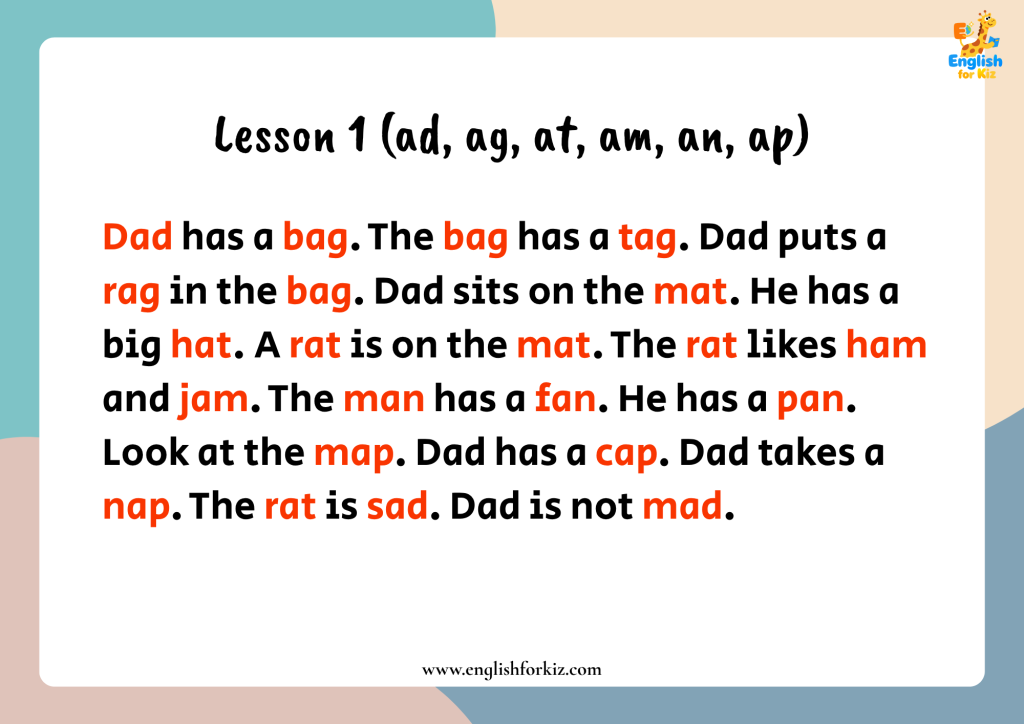
A successful game and worksheet are still isolated practice. When the child can blend fresh CVC words with little support, connected text can show whether the same pattern survives inside a sentence.
The EnglishForKiz Kindergarten decodable stories include short-vowel and CVC word-family practice. Use a reader after the target words are reasonably secure rather than using a harder game as the only sign of advancement.
Read Kindergarten CVC StoriesTurn the Record Into One Clear Next Action
The best next resource depends on what the evidence shows, not on which activity looks newest. Keep the skill stable long enough to see whether the child is becoming more accurate and independent.
Choose another focused game using the same sound or word pattern. Use fresh items and reduce prompts gradually.
Move the same target onto paper. Remove game cues before increasing phonics difficulty.
Check the pattern inside simple connected reading, then introduce the next logical phonics target.
Before choosing the next activity, check four things: the exact skill, the most common error, how much prompting is still needed, and whether the child can use the skill away from the original game. Those observations are usually more useful than collecting more scores.
That is the practical value of phonics game progress tracking: it turns a game result into a small, repeatable teaching decision. If another interactive review is the right next step, choose a game for the skill being measured. If transfer is the missing piece, keep the same target and check it in print before increasing difficulty.
Frequently Asked Questions
What should I record after a phonics game?
Record the exact target skill, first-attempt accuracy, any repeated error or prompt, whether the child responded independently, and the result of a short off-screen recheck. Skip details that will not affect the next practice choice.
Is a higher game score enough to show phonics progress?
No. A higher score can reflect stronger phonics knowledge, but it can also reflect familiarity with repeated words, pictures, controls, or answer positions. Check independence and fresh examples as well.
How often should I recheck the same phonics skill?
Recheck sooner when performance is inconsistent or prompts are still frequent. Once the skill works across fresh examples and different formats, increase the review interval and spend more time on the next target.
What if a child succeeds in the game but not on paper?
Keep the phonics target the same and change only the format. Use a few unfamiliar printed examples to see whether the child can apply the sound or spelling relationship without game cues. If the gap remains, work on transfer before increasing difficulty.
When should a child move to a harder phonics skill?
Move on when the current skill is reasonably stable across more than one attempt, requires little or no prompting, and also works with fresh examples outside the original game. A perfect game score is not required.