

A child can read coin and boy correctly, yet hesitate when asked to spell them. Both contain the /ɔɪ/ sound, so how do you know whether to write oi or oy?
The usual choice comes down to position: OI usually appears at the beginning or middle of a word or syllable, as in oil, coin, and point, while OY often appears at the end of a word or syllable, as in boy, toy, and enjoy. That is the main clue behind oi vs oy words. It helps children make a spelling choice without pretending that every English word follows a perfect rule.
OI or OY: what is the usual spelling choice?
English commonly writes /ɔɪ/ with oi or oy. The sound is a diphthong: the mouth moves between vowel positions while producing one vowel sound. Children may already hear it clearly in toy, boil, and joy; spelling it is a different task.
A useful way to choose between OI and OY is to look at where the /ɔɪ/ sound appears in the word or syllable. These two groups show the usual tendency:
Think of this as a spelling clue, not a test that every word must pass. It works especially well with familiar, one-syllable words.
Compare coin and boy
In coin /kɔɪn/, the /ɔɪ/ sound is followed by /n/. The spelling oi sits between consonants. In boy /bɔɪ/, the same sound ends the word, so oy is the expected spelling.
Ask a child to compare soil with toy, or point with joy. The words share a sound, but they do not end in the same way. In enjoy, the last syllable ends with oy, even though the complete word is longer.
Once children can hear /ɔɪ/ reliably, the next challenge is spelling it in words with more than one syllable.
Look inside the syllable, not only at the final letter
In longer words, look at the syllables and check whether the spelling belongs to a familiar base word. This helps explain why OY can appear away from the end of the complete word.
Adding a suffix usually leaves the original OY spelling unchanged, even when the complete word no longer ends in OY.
Some words need a closer look. In royal and loyal, oy appears at the end of the first syllable (roy-al, loy-al). Oyster is less common but begins with OY. Meanwhile, avoid uses oi at the beginning of its second syllable, before the final consonant sound.
Introduce these less predictable words after children are comfortable reading and spelling familiar OI and OY examples.
After discussing these less predictable spellings, children can revisit the pattern with a worksheet that includes both familiar and less familiar examples.

The worksheet includes familiar examples such as soil, boy, and coin, along with oyster and word-completion prompts. It also introduces OU words, so use it once the child is comfortable working with more than one vowel pattern on the page.
Explore 2nd Grade WorksheetsThis worksheet is marked VIP Exclusive on the collection page. Review current access conditions there.
Choose a spelling, then check it
Once the /ɔɪ/ sound is familiar, a short sorting and writing activity can show whether the child is using the position clue. Keep the words visible only when checking; during the spelling part, say each word aloud first.
Sort the words
Read the words and sort them into OI and OY groups. Notice where the /ɔɪ/ sound appears in each word.
Fill in OI or OY
Say each word, choose the spelling, and then read it again.
- c__n
- b__
- s__l
- enj__
- p__nt
- t__
Complete the sentence
Show the answers
Sort: OI — oil, coin, point, soil, join. OY — toy, joy, boy, enjoy.
Fill in: 1. coin; 2. boy; 3. soil; 4. enjoy; 5. point; 6. toy.
Sentence: “The boy found a coin near his toy.”
If a child writes coyn, compare it with boy and point out the final n in coin. Return to two or three familiar words before adding more.
Rescue the Missing Vowel Teams
Six words in this short story are missing OI or OY. Tap a blank, read its clue, and choose the vowel team that completes the word.
The found a beside his car. He used to loosen its squeaky wheel. At the aquarium, he saw an . At the museum, a sign asked visitors to touching the royal crown.
Tap any incomplete word in the story to begin.
Which vowel team completes the word?
Story rescued!
You repaired all six words. Remember: OI can begin or appear in the middle of a word; OY often ends a word or syllable. Oyster begins with OY, and royal has OY at the end of its first syllable.
When the pattern is not enough
When an unfamiliar word does not fit the usual OI/OY position clue, check its spelling and pronunciation in a learner’s dictionary. Say it aloud, notice the letters around /ɔɪ/, and compare it with a familiar example. A verified spelling is more useful than forcing the word to follow a simplified rule.
For review, keep a small group of regular examples and another of less predictable spellings. If recognizing /ɔɪ/ is still difficult, spend more time listening and reading. If the child hears the sound accurately but hesitates when writing, choose short spelling activities instead.
For an interactive reading review, the second-grade OI/OY phonics game is another option after the pattern has been introduced. It is listed as VIP Exclusive; it is not a substitute for checking the child’s written spelling.
FAQ
Can OY appear inside a longer word?
Yes. Boyish keeps OY from boy, while royal and loyal have OY at the end of the first syllable. Oyster begins with OY. The common ending pattern is a useful clue, not an exception-free rule.
Do OI and OY have different sounds?
Not in the examples here. Both represent /ɔɪ/ in coin and boy in standard British and American dictionary pronunciations. Individual accents may differ in how the sound is realized.
Should spelling choices be taught before the sound is familiar?
Usually, no. Begin with hearing and reading /ɔɪ/ in familiar words. Once the sound is recognizable, OI and OY can be compared as spelling choices rather than guessed as unrelated letter pairs.
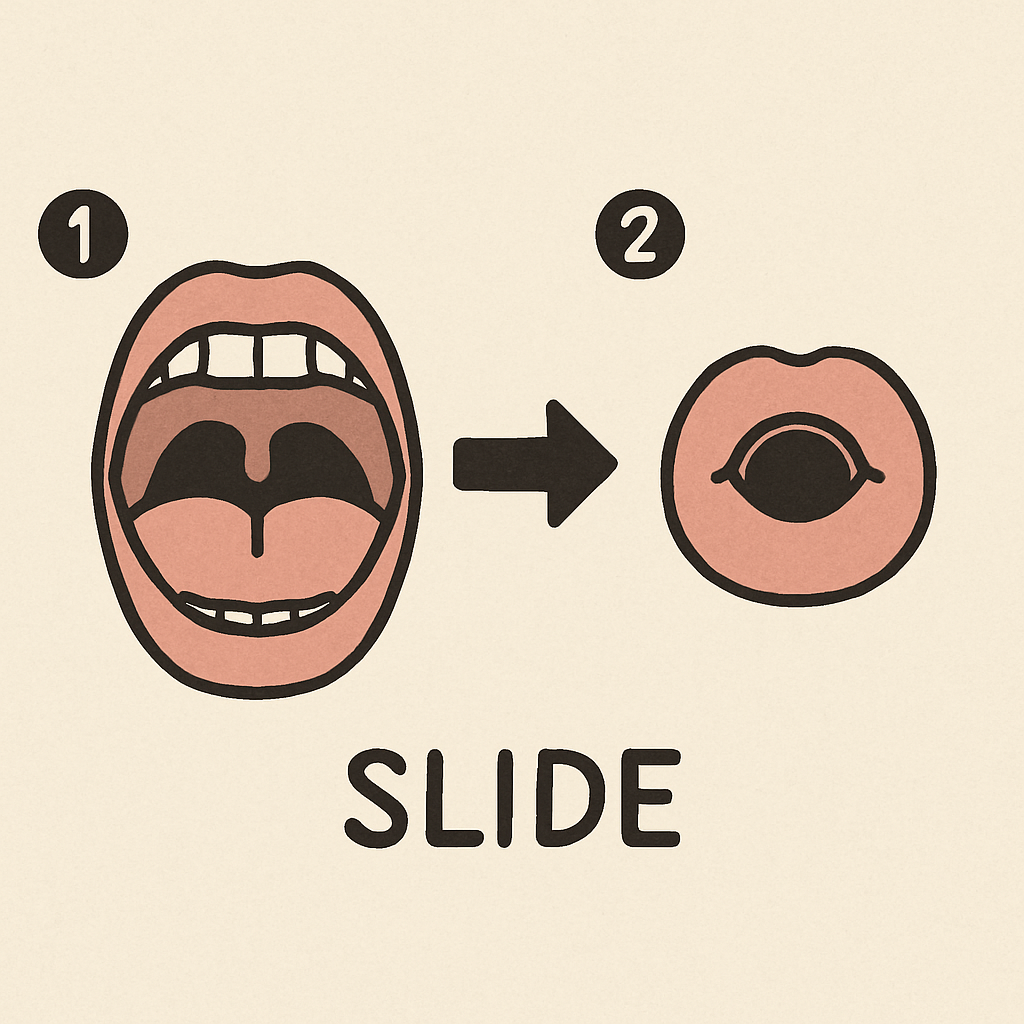
What makes /ɔɪ/ a moving vowel sound? Compare a diphthong with a steady vowel sound before returning to OI/OY spelling.
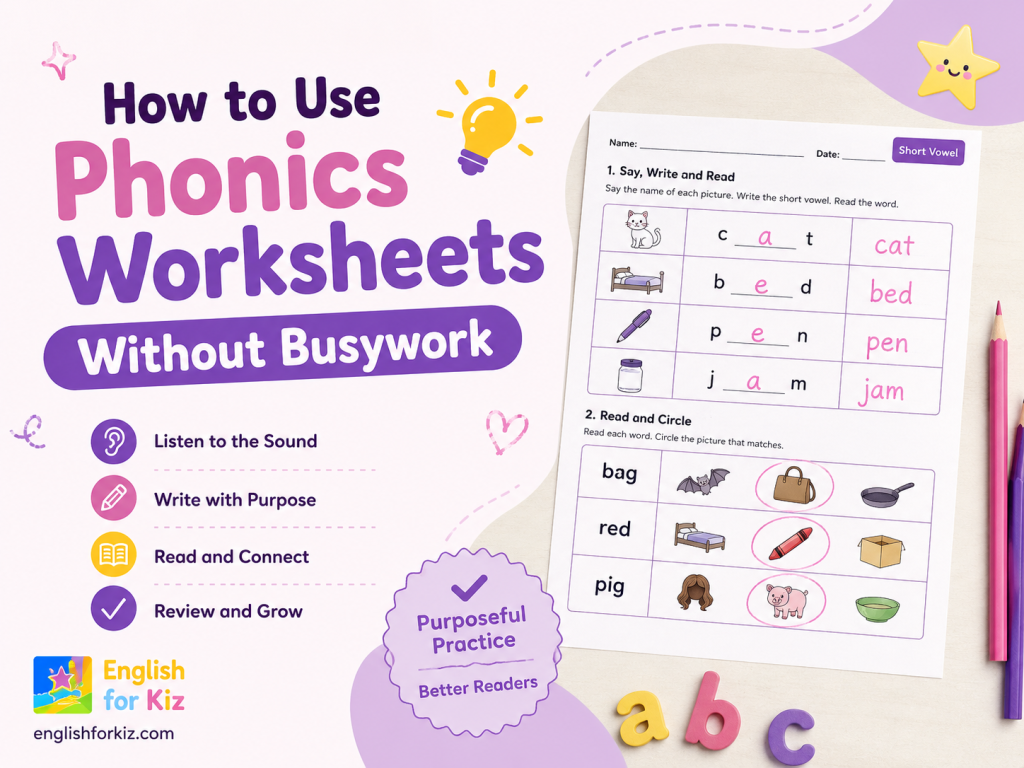
Make a short OI/OY practice page more purposeful by pairing spelling with saying the word, reading it aloud, and revisiting errors.
One sound, two usual positions: OI usually appears at the beginning or middle of a word or syllable, while OY often appears at the end of a word or syllable. For longer or unfamiliar words, check the syllable and base word rather than relying on the shortcut alone.
Complete the short exercise and compare the answers before adding more material. For a further paper-based spelling task, explore the second-grade worksheet collection below and check that its content matches the child’s current vowel-pattern practice.