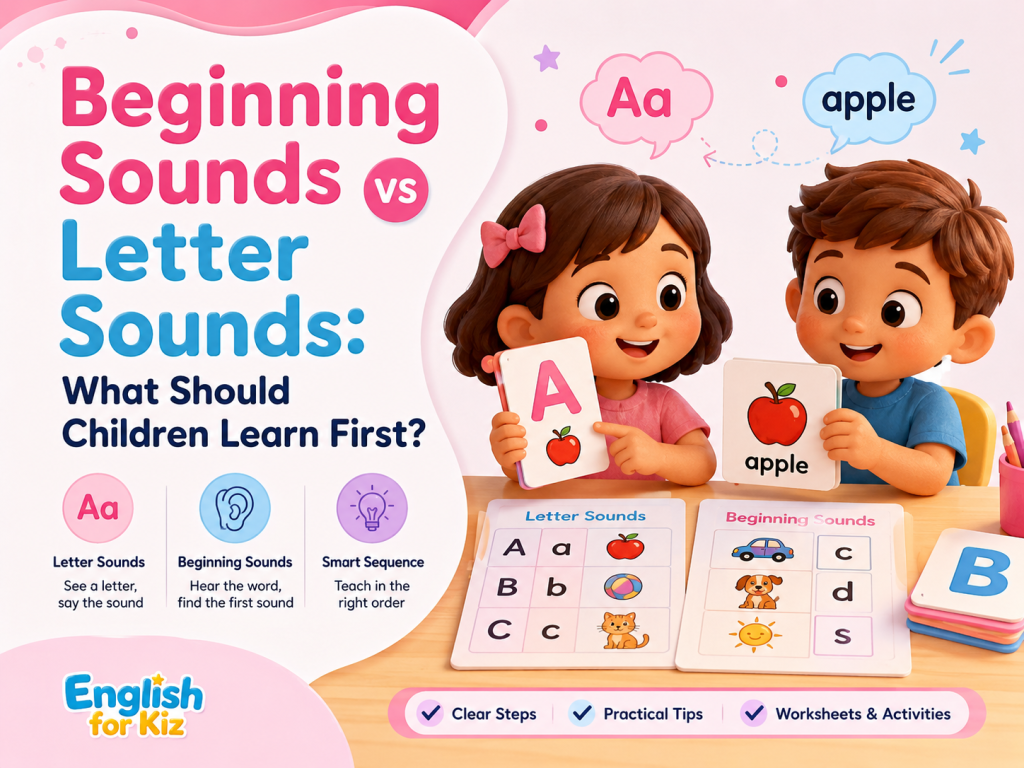
In most cases, a small group of known letter sounds should come before printed beginning sounds worksheets . Oral listening games can begin sooner. The important question is not whether a child knows the whole alphabet, but whether the sounds used on the page are already familiar enough to hear, compare, and match.
What Letter Sounds Practice Teaches
Letter-sound practice begins with print. A child sees a letter, recalls the sound connected to it, and says or points to the answer.
For example, an adult shows m and asks, “What sound does this letter make?” The expected response is /m/. This is different from asking for the letter name, which is “em.” Both forms matter, but the prompt should make the lesson target clear.
The visual symbol comes first. The child may see one lowercase letter, an uppercase and lowercase pair, or a small set of familiar cards.
The child says /m/, points to a matching picture, or chooses the same sound from a small set. Writing is optional at this stage.
Clear sound modeling makes this work easier. Continuous sounds such as /m/, /s/, and /f/ can be held briefly. Stop sounds such as /t/, /p/, and /b/ should stay short. An added vowel, such as “tuh,” can later interfere with smooth blending.
Preschool practice also needs repetition without overload. Three sounds recalled in mixed order are more useful than ten sounds remembered only during an alphabet song. Shuffling cards shows whether the letter itself carries meaning.
Well-matched letter sounds worksheets may include tracing, letter matching, picture naming, and simple sound recognition. Neat handwriting should not become the only measure of progress. A child can know /s/ while still developing the fine-motor control needed to form the letter.
A useful check: place three taught letter cards on a table. Say one sound and ask for a point response. If the correct card is found after the order changes, that sound is ready to appear in a listening activity.
What Beginning Sounds Practice Teaches
Beginning-sound practice begins with speech. A child hears or names a word, then listens for the first sound.
In moon, the first sound is /m/. In sun, the first sound is /s/. The task belongs to phonemic awareness because the child is noticing an individual sound inside spoken language.
This skill can develop without printed letters. A child may sort a toy mouse and a sock into two sound groups. Printed letters become useful when the activity asks the child to connect that heard sound back to m or s.
Name the picture or object clearly. Vocabulary must be settled before the sound question begins.
Stretch a continuous first sound when helpful: “mmmmmoon.” Then repeat the word naturally.
After the sound is heard, choose the matching letter from two or three known options.
Pictures support this stage, but they can also hide the real problem. One child may call an image “rabbit,” while another says “bunny.” A couch may become a sofa. Since those labels begin with different sounds, adults should name uncertain pictures before expecting an answer.
Children may also sort by meaning instead of sound. A dog and a bone belong together in real life, but a beginning-sound sort pairs dog with duck. The lesson asks the child to ignore the category and listen to the spoken beginning.
The central difference: letter-sound practice moves from print to sound. Beginning-sound practice moves from a spoken word to its first sound and, once that sound is secure, back to print.
Which Skill Usually Comes First and Why
A small bank of letter sounds usually comes first when the final task includes printed answer choices. Oral sound play can run beside that instruction from the beginning.
This removes the false choice between “letters first” and “listening first.” A preschool learner can hear that Mia and milk start alike before recognizing the printed letter m. Choosing m on a page requires the sound-symbol link as well.
Children do not need all twenty-six sounds before moving forward. Two or three secure sounds can support a meaningful comparison. A page using unfamiliar letters as distractors does not make the lesson more advanced; it mainly makes guessing more likely.
Continue with one-letter modeling, matching cards, songs, and short recognition checks. Keep the sound set small enough for real recall.
Use objects, names, or clear pictures that begin with the taught sounds. Start orally, then add two printed choices.
A practical sequence is teach, recognize, hear, and connect. Teach /m/ with the letter m. Recognize it among two familiar cards. Hear it in map and moon. Then connect those words back to the letter.
Progress should be based on consistency, not speed. A thoughtful pause can show careful listening. A fast answer may be a guess based on picture position or page layout.
Transfer offers a stronger clue. When /m/ is recognized in milk after being taught with moon, the child is beginning to form a sound category. The learning is no longer tied to one memorized keyword.
When to Start Beginning Sounds Worksheets
Beginning sounds worksheets are most useful when the child already knows the target letter sounds well enough to compare them. Readiness should appear across several short activities, not only on one completed worksheet.
Several taught sounds can be found after the cards are shuffled. Alphabet order is no longer the main cue.
The child hears that map and moon begin alike, even before naming /m/ independently.
After hearing fish, the child can choose between f and m without relying on position.
A known sound appears in several familiar words, not only in the original teaching picture.
Clear picture naming is another important sign. If the word itself is uncertain, the result does not accurately measure sound awareness. Name every picture together before using it as an independent item.
A child should also be able to follow one short routine, such as “name it, listen, choose.” Complicated directions add a language task that can hide the phonics skill.
Writing readiness is not required. Pointing, clipping, sorting, stamping, and moving counters are valid responses. This is especially useful when oral listening is developing faster than pencil control.
When answers remain random, reduce the number of choices. When one sound causes repeated errors, review that letter separately. Small adjustments provide clearer information than repeating a difficult page unchanged.
Quick decision: if the child knows the letter but cannot hear it at the beginning of a word, return to oral sorting. If the child can hear the sound but cannot choose the printed letter, review the sound-symbol link. If both work with two choices, a short beginning-sound worksheet is a sensible next step.
A Simple Teaching Sequence with Examples
Keep the sounds familiar while changing the response one step at a time. This makes it easier to see exactly where the child needs help.
Show m, say /m/, and connect it with moon. Keep the explanation brief and the pronunciation clean.
Place m beside two known cards. Say /m/, shuffle the cards, and ask for a point response.
Say “mmmmmap,” then repeat map naturally. Ask which sound comes first.
Introduce /s/ with sun. Sort map and sun before adding more pictures.
Use a sock, spoon, map, and toy mouse. Name each item, listen, and place it under s or m.
Complete four familiar picture items. A point or counter can replace circling when writing adds too much effort.
An Eight-Minute M-and-S Activity
On the next day, keep m and s but change the examples. Milk, muffin, soap, and sandwich check transfer without changing the sound set. New vocabulary should remain easy to name.
When an error occurs, give one clear model and one retry: “Listen: sssun. The first sound is /s/.” A long explanation can overload working memory and turn a small correction into a frustrating test.
Common Mistakes That Make Beginning-Sound Practice Harder
When a child struggles, first check whether the activity is measuring the intended skill. Several common design problems can make real knowledge look weak.
“What letter starts sun?” invites the letter name. “What sound starts sun?” asks for /s/. Use both prompts at different moments, but do not treat the answers as identical.
Ask for the picture name before showing the answer choices. Then listen for the first sound. This keeps color, object preference, and position from driving the response.
Begin with two contrasting choices. Add a third only after the routine feels familiar. A large answer bank creates a memory and visual-search task.
Pairs such as /p/ and /b/ or /f/ and /v/ may be harder to separate. Start with clear contrasts such as /m/ and /s/, then introduce closer pairs later.
Allow pointing, sorting, clipping, or stamping when letter formation is still tiring. Sound awareness and handwriting can develop together without being scored as one skill.
Another mistake is jumping directly from first-sound identification to full word reading. Hearing /c/ in cat does not yet mean the child can blend /c/ /a/ /t/. This guide stays within the Preschool foundation rather than expanding into the complete Kindergarten decoding sequence.
Choose the Right Preschool and Worksheet Resources
Choose a connected Preschool program when several foundation skills are still developing. Choose a focused worksheet when the target letter is already familiar and the child needs short beginning-sound practice.
A useful page should contain familiar letters, clear picture names, and a manageable number of choices. It should allow the child to say the word and hear the sound before marking an answer. Decorative complexity should never be the source of difficulty.
Use a Connected Preschool Path
This route fits children who still need a steady sequence across letter recognition, phonemic awareness, first-sound listening, and short review activities.
- Use when several letter sounds are still emerging.
- Use when oral listening and print matching need to grow together.
- Use when a repeatable Preschool routine is more helpful than isolated pages.
Choose Focused Sound Practice
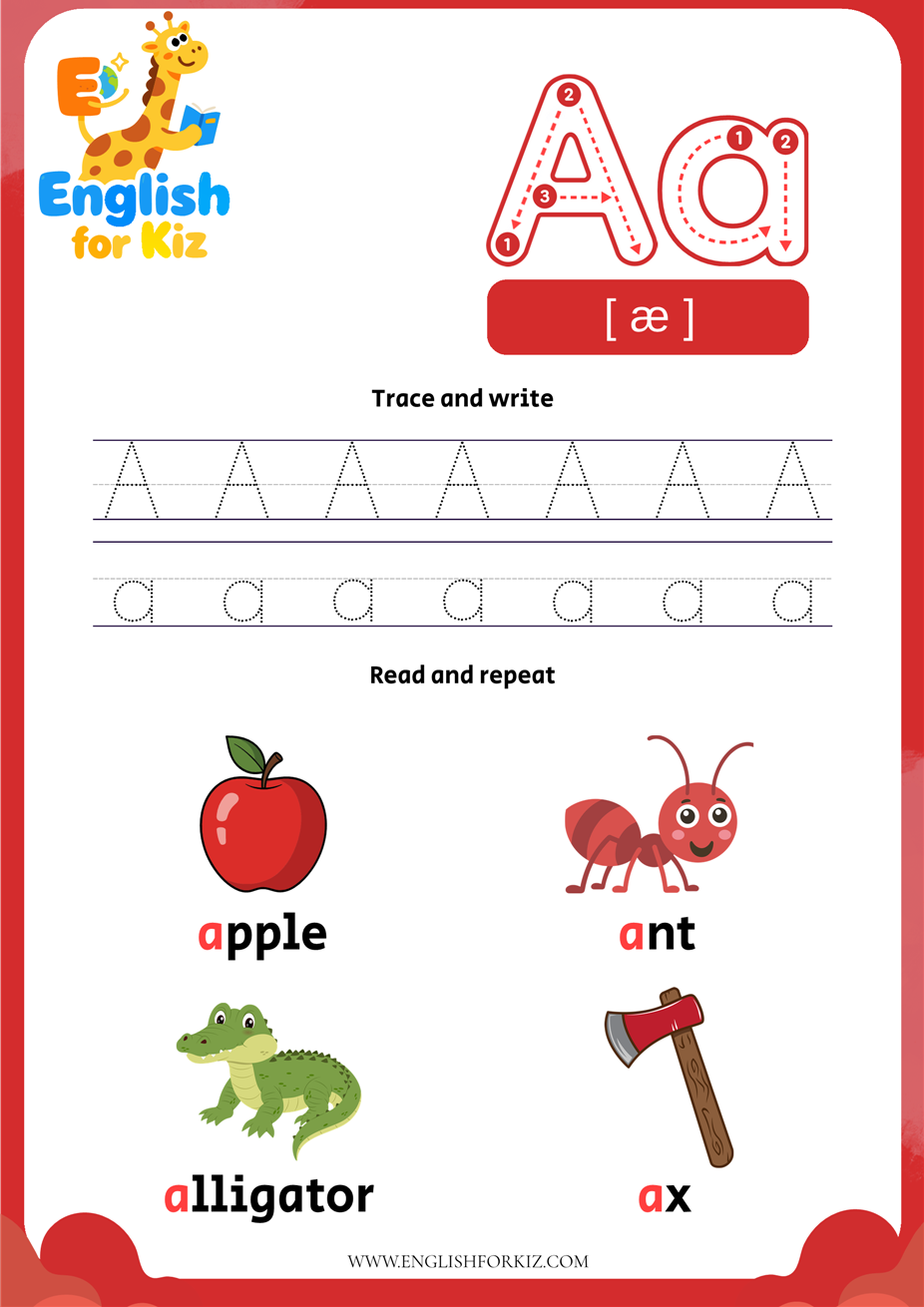
This route fits children who already recognize the target letter and need a short page for picture naming, sound matching, tracing, or review.
- Use a letter page when the symbol-sound link still needs practice.
- Use a beginning-sound page once two or three printed choices feel manageable.
- Split the page when attention fades before the final row.
A Simple Resource Decision Rule
Cannot identify the target letter? Return to letter-sound instruction. Knows the letter but cannot hear the first sound? Use oral sorting. Can hear and match the sound with two choices? Move to a short beginning-sound worksheet.
Frequently Asked Questions
Are letter sounds and beginning sounds the same?
No. Letter-sound work begins with a printed symbol and asks for its sound. Beginning-sound work begins with a spoken word and asks for the first sound heard in that word.
Should children know every letter sound before beginning sounds?
No. A child can work with two or three secure sounds. The activity should use known letters, clear pictures, and a small answer set rather than waiting for complete alphabet mastery.
Can children practice beginning sounds without writing letters?
Yes. Pointing, object sorting, counters, clothespins, and spoken answers all show sound awareness. Writing can remain a separate part of the lesson until pencil control becomes easier.
How do I know which worksheet level to choose?
Choose a page that uses sounds already taught. Two choices suit an emerging learner, while three choices suit a child who already compares several sounds. Frequent guessing signals that the page should be simplified.
What should happen after beginning-sound matching becomes easy?
Change the examples before adding many new letters. When the child can hear and match the same sound across several different words, gradually introduce another familiar sound and later move toward early blending work.
What to Do Next
If the child can recognize two or three familiar letter sounds, hear those sounds at the beginning of known words, and choose the correct letter from a small set, beginning-sound worksheet practice is a sensible next step. If one of those steps is still difficult, return to that skill instead of making the worksheet harder.
- 1 Review known sounds Mix two or three familiar letter cards instead of showing them in alphabet order.
- 2 Name before listening Say each picture name clearly before asking for the sound at the beginning.
- 3 Keep the next task small Change the picture set, sound, or response format one step at a time so you can see what the child actually knows.