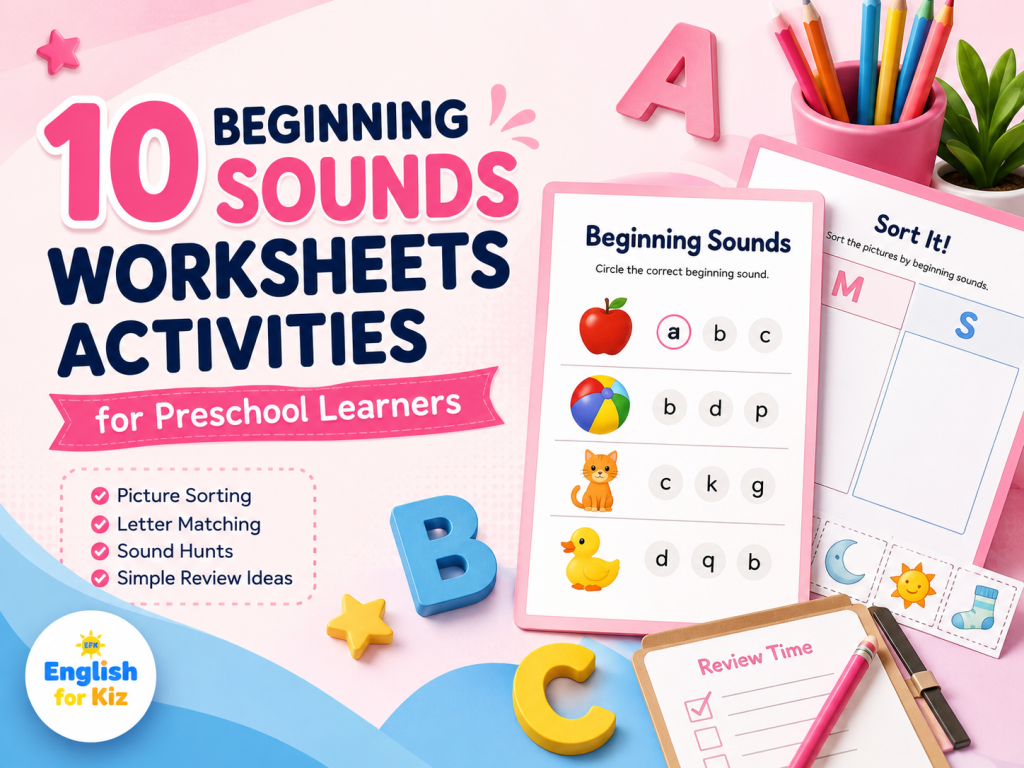
Preschool learners often recognize a picture before they can explain its first sound. The activities below turn beginning sounds worksheets into short, guided listening sessions that connect spoken words with printed letters. Each idea stays centered on a worksheet, so parents, teachers, and homeschool families can see exactly what to practice, which page format fits the learner, and when the next phonics step is appropriate.
Before You Start with Beginning Sounds Worksheets: Choose Familiar Pictures and One Sound Set
A worksheet cannot measure sound awareness accurately when the picture name is unclear. Begin by naming every image aloud and checking that the expected word matches the learner’s everyday vocabulary.
A sofa may be called a couch, and a rabbit may be called a bunny. Both answers make sense, but they begin with different sounds. Clear pictures such as sun, sock, map, moon, fish, fan, top, and tent keep the listening task fair.
For a new lesson, use two sounds that are easy to tell apart. M and S create a clearer starting contrast than B and P. Once both sound groups feel familiar, add a third letter without changing the worksheet routine.
Keep stop sounds short and clean. The sound for t should not become “tuh,” and p should not become “puh.” Extra vowel sounds can later interfere with blending words such as tap, pin, or mat.
Pencil control should not hide listening ability. Pointing, clipping, stamping, or placing counters can replace circling when handwriting is still developing. The response method may change, but the order remains the same: hear the word before choosing the letter.
Activities 1–3: Picture Sort, Circle the First Sound, Match Picture to Letter
These three activities move from sound grouping toward printed letter selection. They work best for children who can name familiar pictures but still need visible choices and adult modeling.
Make Two Sound Homes
Use a worksheet with two letter headings and four to six movable pictures. Name each image, say its opening sound, and place it beneath the matching letter before any glue appears.
Try this sequence- Review both letter sounds.
- Handle one picture at a time.
- Sort every piece without glue.
- Read each completed column aloud.
Listen Before the Pencil Moves
Choose a page with one picture and two or three letter options in each row. Cover the letters at first, ask for the picture name, and reveal the choices only after the opening sound is heard.
What the adult watches- The picture is named before scanning.
- The sound is spoken or identified.
- The letter is pointed to before circling.
- The finished row is checked aloud.
Build a Picture-to-Letter Bridge
Place pictures on one side of the worksheet and letters on the other. Children draw a line only after saying the picture word and identifying the sound at its beginning.
Keep the page readable- Start with three pictures and three letters.
- Use wide spacing between choices.
- Check both ends of every line.
- Review from letter to picture afterward.
What a Useful Preschool Worksheet Looks Like
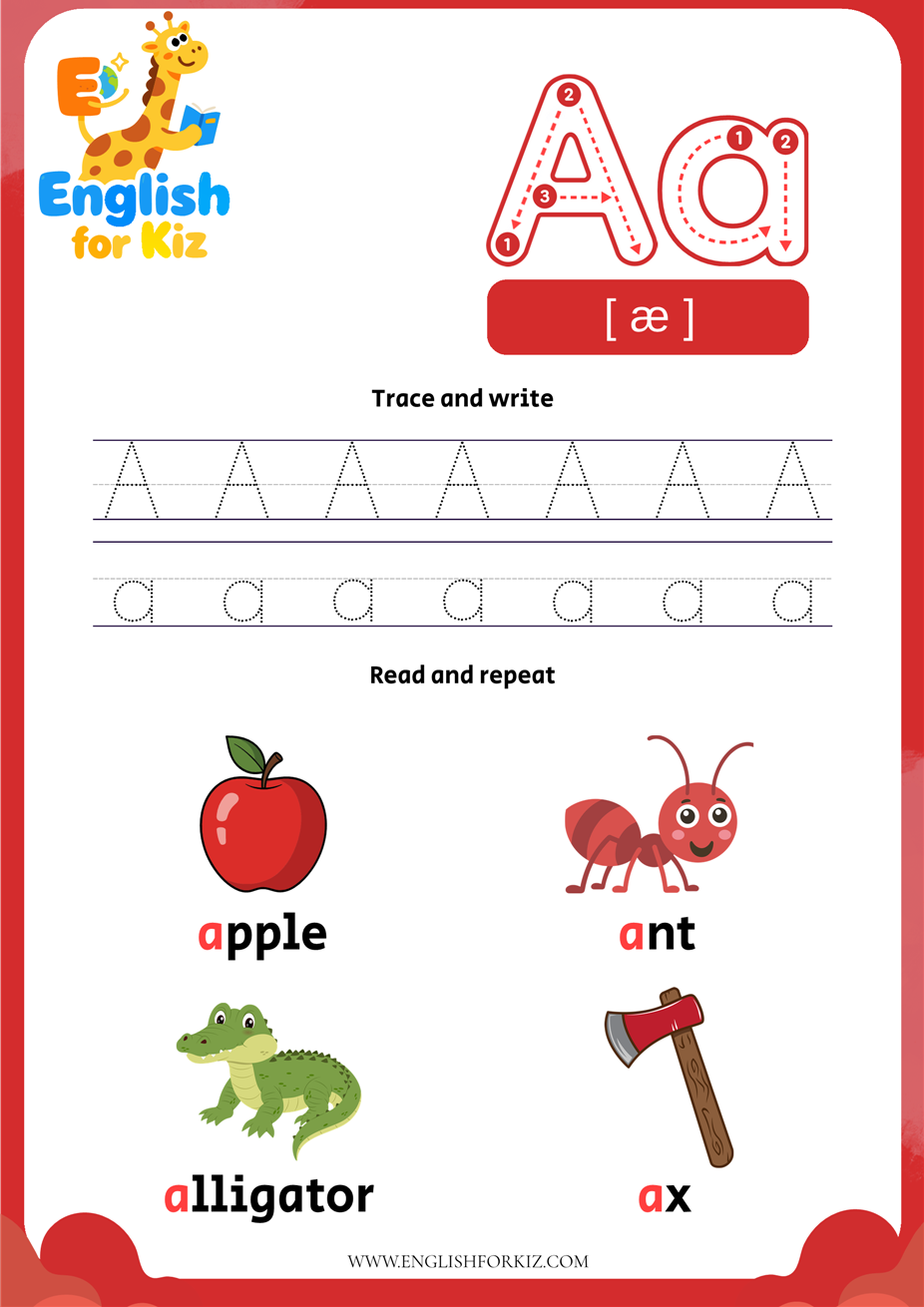
A helpful page uses a large, readable letter and a small group of pictures with familiar names. The picture examples should clearly share the target sound, while the tracing area should remain short enough for preschool hands.
This Letter A page shows the right relationship between sound, print, and picture vocabulary. Similar letter sounds worksheets can support trace-and-say practice after the child has heard the target sound in spoken words.
Browse Preschool WorksheetsActivities 4–6: Cut-and-Paste Sort, Trace and Say, Find the Odd Picture
The next group adds cutting, tracing, and comparison. Fine-motor actions still come after listening, so the worksheet records a phonics decision rather than becoming a craft page.
Place Every Picture Before Gluing
Cut-and-paste pages work best when all pieces are sorted first. This trial stage makes correction easy and keeps glue from turning an early guess into a permanent answer.
Simple workflow- Cut or pre-cut the picture strip.
- Name one picture at a time.
- Place it in a sound box.
- Check the full sort, then glue.
Trace, Say, Then Find
Tracing becomes meaningful when every movement connects to sound. Finger-trace the letter first, pencil-trace it once or twice, and then find pictures beginning with that sound.
Use three short rounds- Name the letter during a finger trace.
- Say the sound during a pencil trace.
- Circle two matching pictures.
- Add one spoken example not on the page.
Find the Picture That Breaks the Sound Pattern
Use a row where three words begin alike and one begins differently. Leave letters off the first version so children must compare spoken words rather than search for a familiar symbol.
Ask for a reason- Name the full row.
- Repeat it at a calm pace.
- Point to the outsider.
- Explain the shared sound group.
Activities 7–10: Sound Hunt, Clip or Point Choice, Partner Check, Mini Review Page
These activities help preschool learners use familiar sound knowledge with less prompting. The tasks remain worksheet-based, yet each page asks for a different kind of thinking.
Scan the Page for One Target Sound
Place eight to twelve familiar pictures on one page and show one target letter at the top. Children scan from left to right, cover possible matches with counters, and confirm each word before making final marks.
A sound hunt for S might include sun, sock, fish, map, seal, tent, moon, and fan. Only sun, sock, and seal receive counters.
Point, Clip, or Cover the Letter
Use rows with one picture and two letter choices. The learner names the picture, identifies its opening sound, and then points to, clips, or covers the matching letter.
This format removes unnecessary writing while keeping the decision visible. A clear sleeve and small counters can make the same page reusable for quick review.
Explain One Answer to a Partner
After completing a short page, one child points to a picture and explains the choice. The partner repeats the word and checks whether the letter matches the sound.
A useful sentence frame is, “Map begins with /m/, so M matches map.” Switch roles after every item so both children speak and listen.
Finish with a Four-Box Review Ticket
Create a small review page with four familiar response types: one sound circle, one picture match, one odd-picture row, and one short trace. Use only letters that have already appeared in earlier lessons.
The purpose is to see whether the skill transfers across formats. If several errors involve one sound, pause the review and return to a two-sound contrast.
Use Interactive Practice After the Worksheet Decision Is Clear
A short digital review can refresh attention after focused table work. The same target sound should carry across both formats, so the activity reinforces a known connection instead of introducing a new skill.
EnglishForKiz phonics games include letter-sound and beginning-sound practice. They fit best after a child has already named, matched, or sorted the same sounds on paper.
Review with Phonics Games
How to Adapt the Activities for Home and Preschool Groups
The learning goal does not need to change across settings. Timing, turn-taking, and response tools can change while the target sounds remain consistent.
For a Short Home Session
Divide a page into small sections rather than finishing everything at once. Picture naming can happen first, followed by four choices and a one-minute review later.
- Use one worksheet for two brief sessions.
- Pre-cut pieces when scissors would take over.
- Stop after repeated guessing or skipped rows.
- End with one sound the child can explain.
For a Preschool Group
Review the sound set before handing out pages. Complete one row, pause for a shared check, and then continue so fast workers do not race through the listening stage.
- Assign speaker, listener, and letter-finder roles.
- Offer pointing or stamping as equal responses.
- Keep voices quiet during sound comparison.
- Ask early finishers to review from letters to pictures.
A partly completed page can still show strong progress. Four accurate, explained choices provide more useful information than fifteen hurried circles. Save the remaining items for another session rather than turning practice into endurance.
What to Do When Children Confuse Similar Sounds
Repeating a difficult mixed page rarely fixes a sound contrast. Remove extra choices, confirm the picture names, and return to spoken word pairs before showing the letters again.
For B and P, compare ball and bus with pig and pan. For T and D, use top and tent beside dog and duck. Familiar words make the sound difference easier to hear.
| What appears on the page | Likely problem | Better next step |
|---|---|---|
| The child uses an unexpected word for the picture. | Vocabulary mismatch | Agree on the picture name before comparing sounds. |
| The spoken sound is correct, but the wrong letter is chosen. | Letter-form confusion | Separate oral sorting from letter matching. |
| Answers become random after several rows. | Too many items or choices | Cover the page and present one row at a time. |
| B and P words enter the same group. | Close sound contrast | Use two anchor pictures and a short airflow cue. |
An anchor picture gives each sound a stable reference. Ball can stand for /b/, while pig stands for /p/. A new word such as bus can then be compared with the known examples.
A small tissue near the mouth may show stronger airflow for /p/ than /b/. Keep this cue brief and return quickly to whole words. The goal remains accurate listening, not a technical speech lesson.
Continue with Preschool Resources and Worksheets
Resource choice becomes easier after the worksheet shows where the difficulty sits. Keep the sound set stable, then choose the format that addresses listening, letter recognition, or independent review.
Choose picture sorts, odd-picture rows, and two-sound listening pages. Avoid adding handwriting or several new letters at the same time.
Choose trace-and-say pages, uppercase and lowercase matching, and two-choice letter rows with familiar pictures.
Choose a mixed mini review, then add a short game using the same sounds. Early blending can begin once letter-sound links stay consistent.
The Preschool phonics program is the clearest starting point when a connected sequence is needed across phonemic awareness, letter recognition, printable practice, and review. After identifying the current sound range, the worksheet library can provide the matching paper activity.
Frequently Asked Questions
What are beginning sounds worksheets?
They are printable pages that help children identify the first sound in a pictured word and connect that sound with a letter. Common formats include picture sorts, letter choices, matching lines, tracing tasks, and odd-picture rows.
The spoken step matters most. Children should name the picture and listen before making a mark.
Should preschoolers learn letter names or letter sounds first?
Both can develop together, although one task should have one clear focus. During a beginning-sound activity, the child should hear /m/ in moon before selecting M. The letter name can then confirm the printed symbol.
How many sounds should appear on one preschool worksheet?
Two clearly different sounds are a practical starting point. A third or fourth sound can enter a review page after the first pair is familiar. New sounds and unfamiliar picture vocabulary should not be introduced together.
What helps when a child confuses B and P?
Return to spoken picture pairs such as ball and bus beside pig and pan. Use one anchor picture for each sound, then move back to a worksheet with only B and P as choices. A brief airflow comparison can support the contrast without replacing natural word practice.
When is it time to move from first sounds to simple words?
Early blending can begin when several familiar sounds are identified and matched with letters across more than one worksheet format. First-sound review can continue while children begin blending short words such as sat, map, pin, or top.