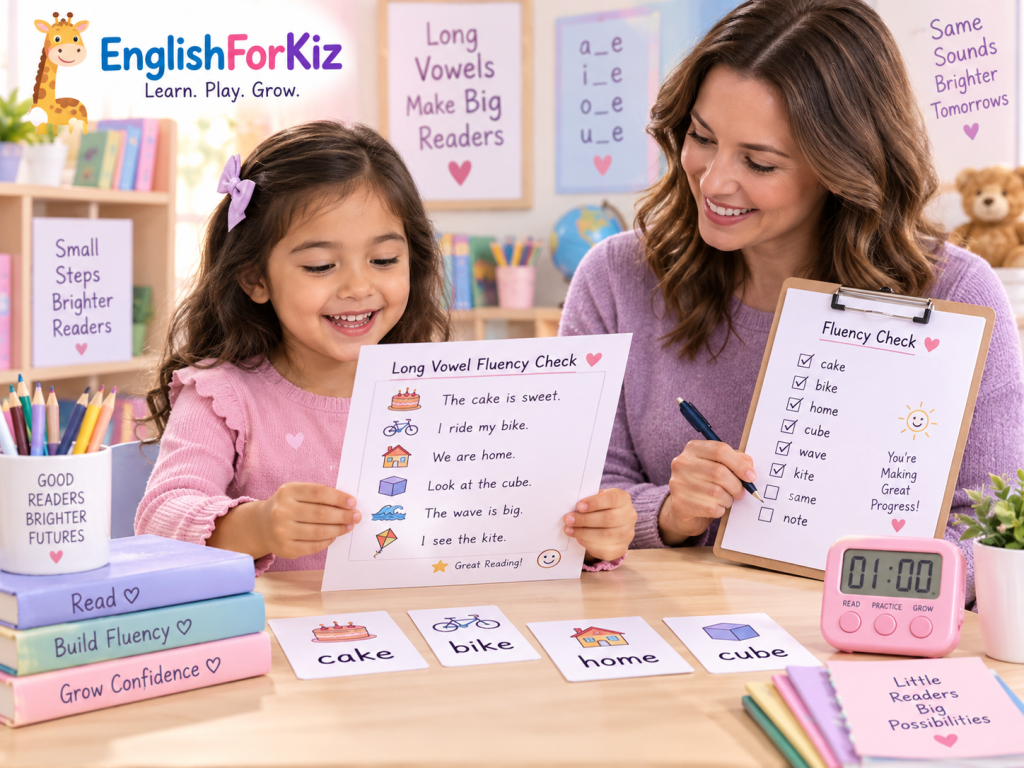
A preschooler may be ready to try CVC words when they can recall the sounds in a simple word and are beginning to blend them in order. They do not need to know every letter first. Start with a few words made from sounds that already feel familiar.
Knowing letter sounds and reading CVC words are related but different skills. A child may say the /m/ sound, the short-a sound, and the /p/ sound separately but still need help blending them into “map.” Watching how a child handles each step is more useful than deciding readiness by age alone.
If letter recognition or beginning sounds are still developing, the preschool phonics program may be a better fit for now. CVC practice can follow as those sounds become more familiar.
Children move at different paces. Use these signs to choose a helpful next step, not to set a deadline.
What Readiness Looks Like
Knowing a few letter sounds is a useful start, but it does not automatically mean a child can read a word. Some children can blend sounds they hear before they can follow the same sequence in print; others need more practice remembering the sounds themselves.
Recognizing Letter Sounds
Show a familiar letter and ask for its most common sound. Repeat with the letters needed for one simple word; a child does not need to name every letter in the alphabet before trying CVC words.
Blending Sounds Aloud
Say the /m/ sound, short-a sound, and /p/ sound slowly, then model how they run together to make map. Invite the child to try after hearing the example. If blending is still difficult, continue with spoken sounds before adding print.
Following the Word in Print
Place m-a-p from left to right and point to each letter as you say its sound. If the child loses the sequence when looking at print, use letter tiles or finger-pointing to make the order easier to follow.
Begin with Words Built from Familiar Sounds
Children do not need to know all 26 letter sounds before trying CVC words. Start with one short-vowel pattern and a few consonants the child already recognizes, so the word presents a manageable blending task rather than several new skills at once.
If the child knows m, a, and p, begin with map. When that word becomes easier to blend, introduce another word made from familiar sounds and the same short vowel. The Kindergarten CVC worksheets provide more practice organized by short-vowel pattern.
Keep the first set small. A child who has to learn a new consonant, a new vowel sound, and the blending process at the same time may struggle for reasons that are hard to separate. Add unfamiliar sounds gradually.
Foundation Practice
Review Letter Sounds Before Adding Words
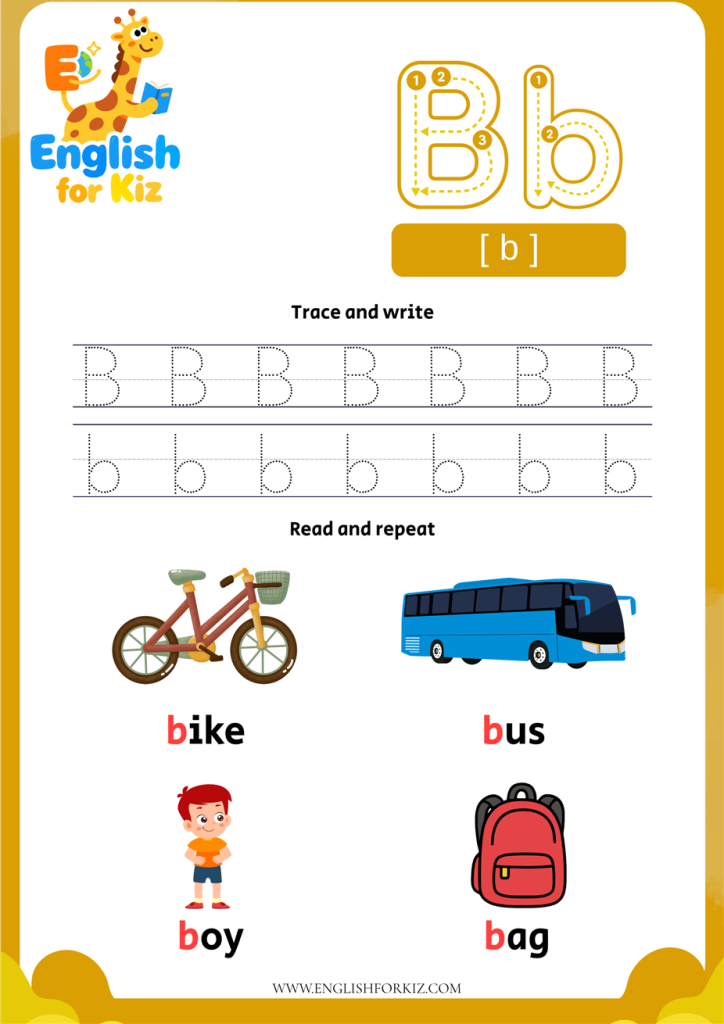
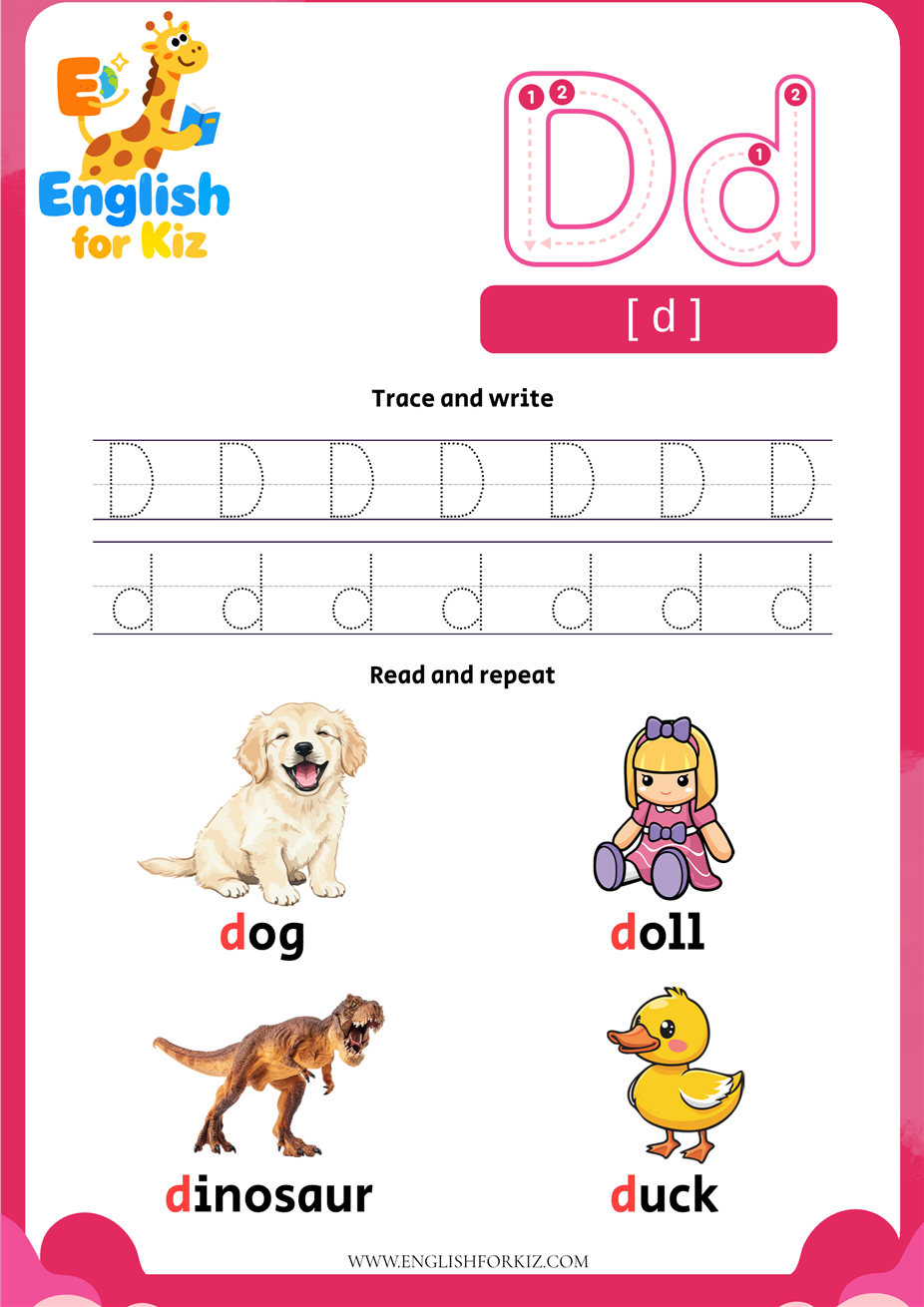
If one of the letters needed for a CVC word is unfamiliar, return to an individual letter page first. The Preschool worksheet collection offers letter recognition, tracing, and familiar picture-word practice for this earlier stage.
After reviewing the sound, return to a simple printed word and check whether the child can connect the letters and blend them. Tracing can support letter familiarity, but it does not by itself show that a child can blend a word.
When the Sounds Get Lost Along the Way
A CVC word asks a beginner to hear three sounds, keep them in order, connect them with letters, and blend them into a word. Pointing from left to right or placing one counter for each sound can make that sequence easier to follow.
Begin with one word. Point under each letter as the child says its sound, then slide a finger across the whole word and blend it. If the sequence breaks down, model the blend again instead of adding a long list of new words.
EnglishForKiz also has an A–Z handwriting and letter-sound video library that can support earlier letter recognition when a child is not yet secure with the printed letters used in a word.
Foundation Support
Strengthen Letter Recognition Before Blending
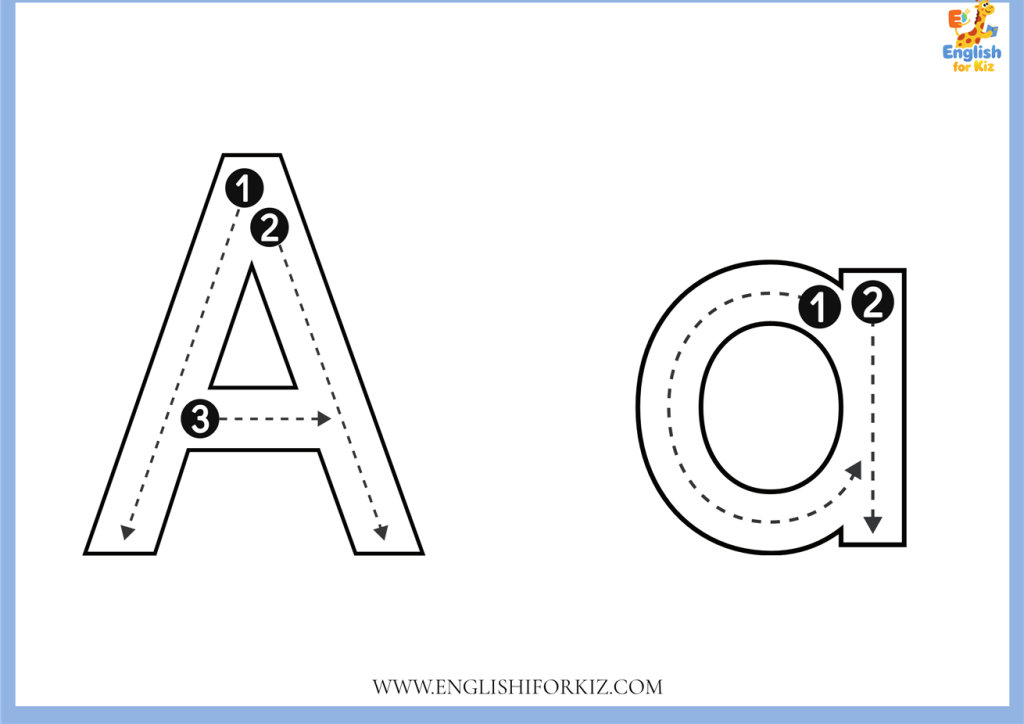
If the child cannot reliably identify a letter or recall its sound, a larger alphabet model can provide a focused review. Return to CVC blending when the child can recognize the sounds needed for a simple word.
Keep this review short and focused on the letters the child needs. The goal is to support sound-to-letter recognition, not to require perfect handwriting before beginning word reading.
Why Following Each Letter Helps
Blending depends on using the sounds represented by the printed letters, not simply naming the letters or guessing from a picture. Start by connecting each letter with its sound, then move across all three letters in order.
Say each sound as you point to its letter from left to right.
Blend the sounds into one word, then read it again.
Once the child can blend one word with support, try a second word made from familiar sounds. Ask the child to look through the whole word rather than stopping after the first letter. Reveal a related picture only after the word has been attempted, so the picture supports meaning instead of giving away the answer.
Try One Word Together
Try this with a word made from sounds your child already knows. If the word does not come together, you can see whether they need help hearing the sounds, following the letters, or blending everything into one word.
- Hear: Say one simple CVC word naturally, such as map.
- Say: Stretch the word into its three sounds: /m/, short a, /p/.
- Point: Track each printed letter from left to right as the child says its sound.
- Blend: Slide a finger under the whole word and say it smoothly.
- Check: Ask the child to say the whole word and connect it to its meaning.
- Transfer: Try another word that uses the same vowel and familiar sounds.
Stop before attention fades. Repeating a small set on another day is more useful than adding unrelated activities. Look for accurate blending and gradually reduced prompting, not simply how many words the child completes.
Games Can Help After the First Try
Play can reinforce a skill, but it should match what the child is ready to practice. If letter-sound recall is still uncertain, use an alphabet game for review. Once those sounds are familiar, move to print-based CVC blending rather than treating letter recognition as proof of word-reading readiness.
The EnglishForKiz phonics games section includes activities for letter sounds and CVC blending, so choose a game that matches the child’s current skill.
Sound Review
Review Letter Sounds Before Returning to Print
If the child still needs practice recognizing letters and recalling their sounds, use the Preschool Alphabet Explorer for a short review. This is an earlier-stage support activity, not a test of CVC blending.
After the game, show a printed letter and ask for its sound. When recall is steadier, return to a printed CVC word and check whether the child can blend it from left to right.
See Whether the Skill Carries Over to Print
Once the child can blend a few CVC words, check whether the skill transfers to another word made from familiar sounds. Change the word order and avoid relying on a memorized picture or sequence.
If blending is not yet steady, return to familiar letter sounds and short oral blending rather than moving straight into longer text. When the child can read several words with the taught pattern, short decodable phrases or sentences can provide a meaningful next step.
Early Reading Review
Revisit Familiar Letters Before CVC Practice
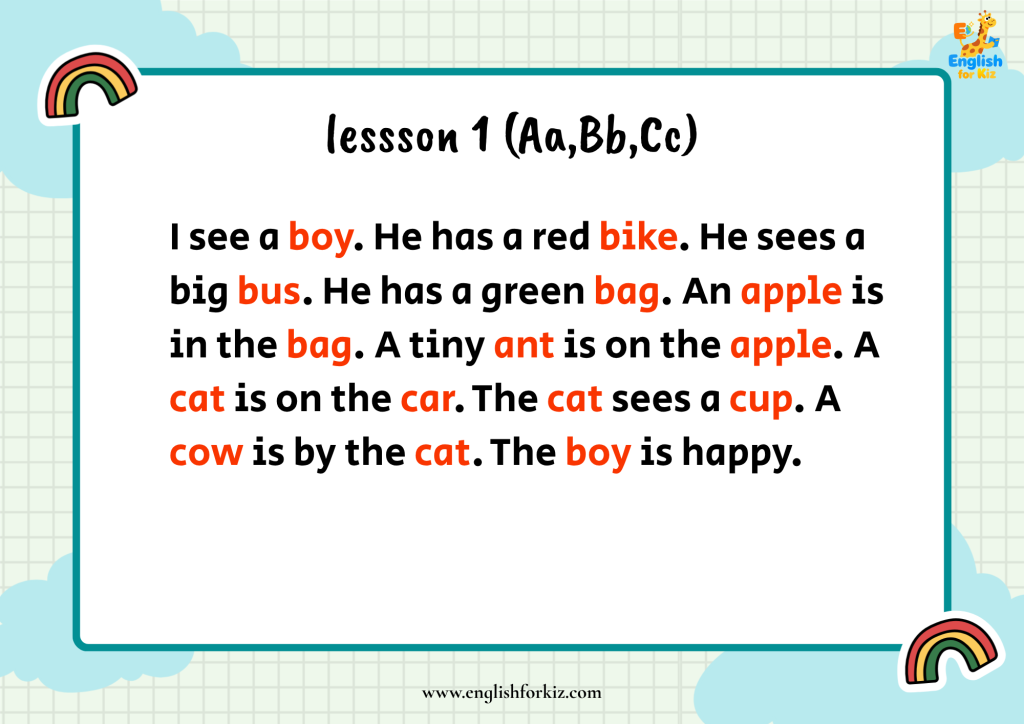
The story preview shown here supports earlier letter-focused practice. Use familiar print to reinforce letter-sound recognition if the child is not ready to blend CVC words independently yet.
Once the child can blend CVC words, choose reading material that uses the letter sounds and short-vowel patterns already taught. Keep the text controlled enough that the child can work through the words rather than guess from illustrations.
If the Sounds Do Not Come Together Yet
If the child knows the sounds but cannot blend them
Model how two sounds run together, then add the third. Use a finger sweep or letter tiles and invite the child to try again without demanding speed.
If the middle vowel is often missed
Keep the practice set small and use one short-vowel sound at a time. Say the vowel clearly, point to its letter, and compare only a few words with that same vowel.
If the child guesses from a picture or first letter
Cover the picture and point to each letter, including the final consonant. Prompt the child to check the whole word instead of guessing from its first sound.
If printed words are harder than spoken blending
Use spoken blending and movable letters before adding handwriting. This separates the phonics task from the extra demands of forming letters on paper.
If progress remains difficult despite short, explicit practice, discuss the pattern with the child’s teacher or a qualified reading specialist. One difficult word or one practice session is not enough to determine readiness.
Build on the Sounds Your Child Already Knows
If letter sounds are still new, a little more preschool practice may help. Once your child can recall the sounds in a simple word and is beginning to blend them, CVC worksheets and the Kindergarten Phonics Program offer a natural next step. Start with familiar sounds and short-vowel words.