
A first grader may read cake without a pause, then stumble over wave. Another may get both words right but have to sound them out slowly each time. Those differences matter. An informal long vowel fluency assessment helps parents and teachers see how comfortably a child reads spelling patterns that have already been taught. It is a brief word-reading check, not a standardized reading fluency test.
The question is not simply how fast the child finishes. A quick guess can hide a shaky understanding of the vowel pattern, while a thoughtful self-correction may show that the child is beginning to notice it. What matters is whether accurate reading becomes easier and carries over to words the child has not rehearsed.
What a First Grade Long Vowel Check Can Reveal
Two children can read the same number of words correctly and still need different kinds of support. One recognizes the spelling patterns quickly; the other pauses at nearly every vowel. That is why accuracy matters alongside hesitation, self-correction, and the ability to apply a pattern to a less-familiar word.
With practice, a taught pattern such as a-e, i-e, ai, ee, or oa should take less effort to recognize. A noticeable pause is not automatically a problem, but repeated pauses at the same spelling can tell you more than the total number of correct answers.
For example, cake may be easy simply because the child knows it well. If tape takes much longer, the a-e pattern might not yet be as flexible as that familiar answer suggests. That is the kind of small difference this check is meant to uncover.
Why the Word List Matters
The words have to match the child’s instruction. A first grader who knows Magic E but has not learned vowel teams may struggle with rain for a perfectly understandable reason: ai is new, not necessarily a pattern the child reads too slowly.
For a child who has learned a-e, a small group such as cake, tape, late, made, game, and wave offers a useful starting point. Some words will feel familiar; a few should be less rehearsed but still decodable. Seeing them without picture clues helps show whether the child is reading the print. Later, a phrase such as ride home or green leaf can reveal whether already-taught patterns hold together outside a word list.
If one pattern keeps causing difficulty, it makes sense to work on that spelling before moving ahead. EnglishForKiz includes Magic E and common long vowel patterns in its first grade phonics learning path .
When Magic E Still Feels Unfamiliar
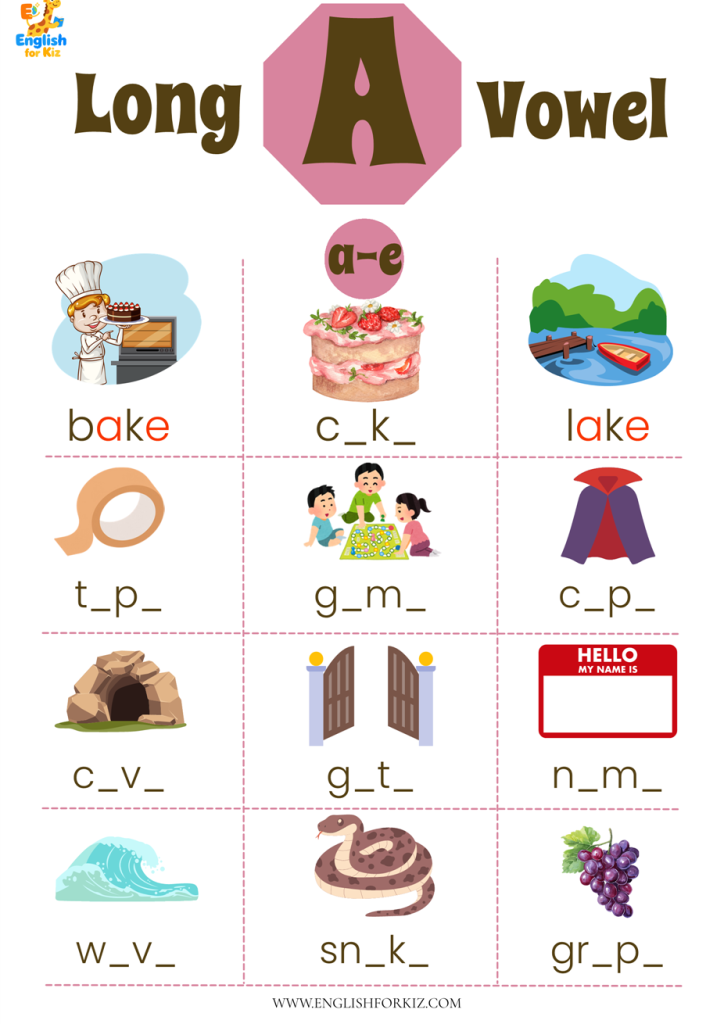
Suppose cape keeps coming out as cap. The child may need more time noticing what the final e changes, not a harder word list. A focused worksheet offers space to compare, read, and spell similar words when the assessment is over.
The EnglishForKiz first grade phonics worksheets include long vowel practice that can be matched to the spelling the child found difficult.
Browse Long Vowel WorksheetsWhy a Little Too Much Help Can Blur the Result
It is tempting to help as soon as a child hesitates, especially when the answer seems obvious. But this first reading is a chance to hear what the child can do independently. A simple invitation such as “Read these words aloud as best you can” is usually enough to begin; keeping the wording similar also makes later checks easier to compare.
Pointing to the silent e, stretching the vowel, or supplying the first sound may help the child succeed, but it changes what the answer tells you. There is still a place for that support—just make a quick note of the hesitation or cue before turning the moment into teaching.
The Small Details Worth Writing Down
“Four out of five correct” can hide quite a lot. Did the child fix a word without help? Read it correctly only after a hint? Pause for several seconds? A few notes beside individual words often reveal the next teaching need more clearly than a single score.
| Item | Child’s Response | Code | What It May Show |
|---|---|---|---|
| cape | “cap… cape” | SC | Self-correction after initially missing Magic E |
| train | “tran” | V | Vowel team read with a short vowel sound |
| seed | Correct after a noticeable pause | P | Accurate, but not yet automatic |
| home | Correct after an adult cue | T | Correct with prompting rather than independently |
| boat | Correct and prompt | ✓ | Accurate with little hesitation on this item |
There is no need to memorize a complicated coding system. What helps is being consistent and keeping the child’s actual response when it tells a story. “cap … cape” points to a different kind of reading behavior than cape supplied only after an adult names the vowel pattern.
Magic E Is Secure, but Vowel Teams Aren’t
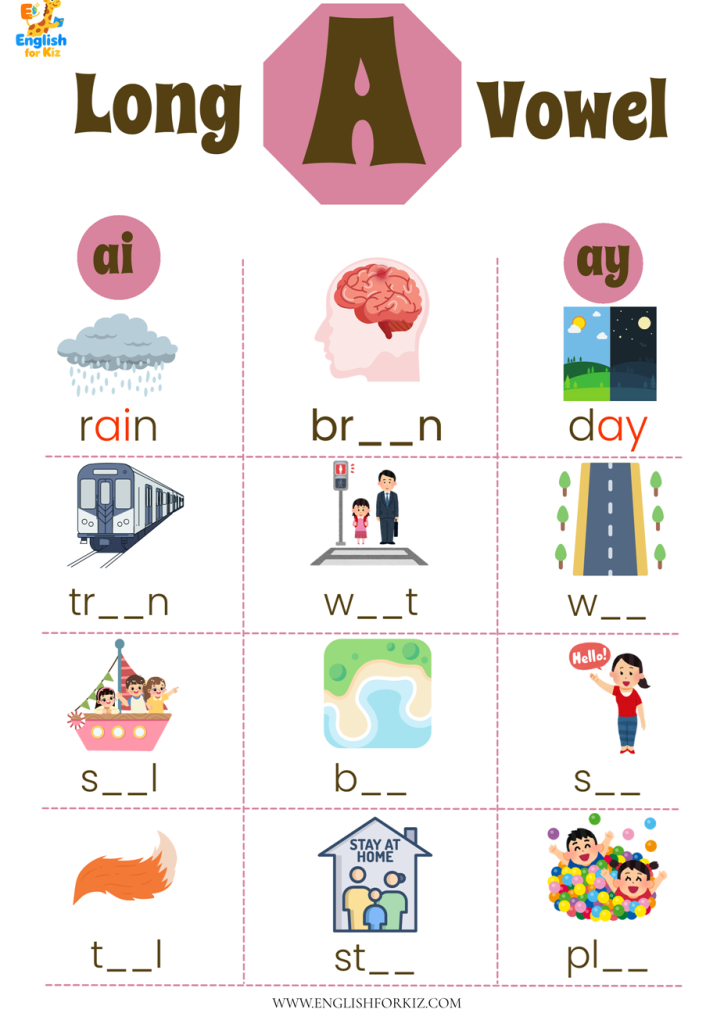
A child who reads cake easily may still hesitate over rain or day, even after those vowel teams have been taught. That does not erase the progress made with Magic E. It points to a narrower skill that needs attention.
A small set of ai and ay words, followed by a different but comparable set later, will tell you more about that progress than repeating an entire long vowel packet.
Choose Matching Vowel PracticeProgress Is More Than a Faster Time
A stopwatch can make a homemade word list feel like a formal test. Yet a words-per-minute number has little interpretive value without a validated measure and an appropriate benchmark. For this kind of informal check, a child’s reading across comparable sessions is more revealing than an arbitrary speed target.
Imagine the child who paused on nearly every a-e word last week. This week, the same pattern appears in a similarly difficult list, and most words are read smoothly. That is encouraging—especially when the improvement is not limited to words the child has practiced by heart.
The strongest evidence comes from several observations pointing in the same direction: fewer vowel mistakes, less effortful sounding out, quicker self-corrections, and more confident reading of short phrases. A single better score can be a good sign, but it is not the whole picture.
What the Mistakes Are Really Telling You
The same number of mistakes can have very different causes. If one vowel spelling causes most of the trouble, repeating every long vowel lesson would miss the point. If the words are accurate but painfully slow, the child may need successful reading practice rather than another explanation of the rule.
When short-vowel CVC words are still uncertain, the EnglishForKiz short vowel and CVC practice is a more appropriate place to revisit the foundation.
The related guide Long Vowel Worksheets: When Children Are Ready for Magic E explores that transition in more detail.
When ee Comes Easily but ea Does Not
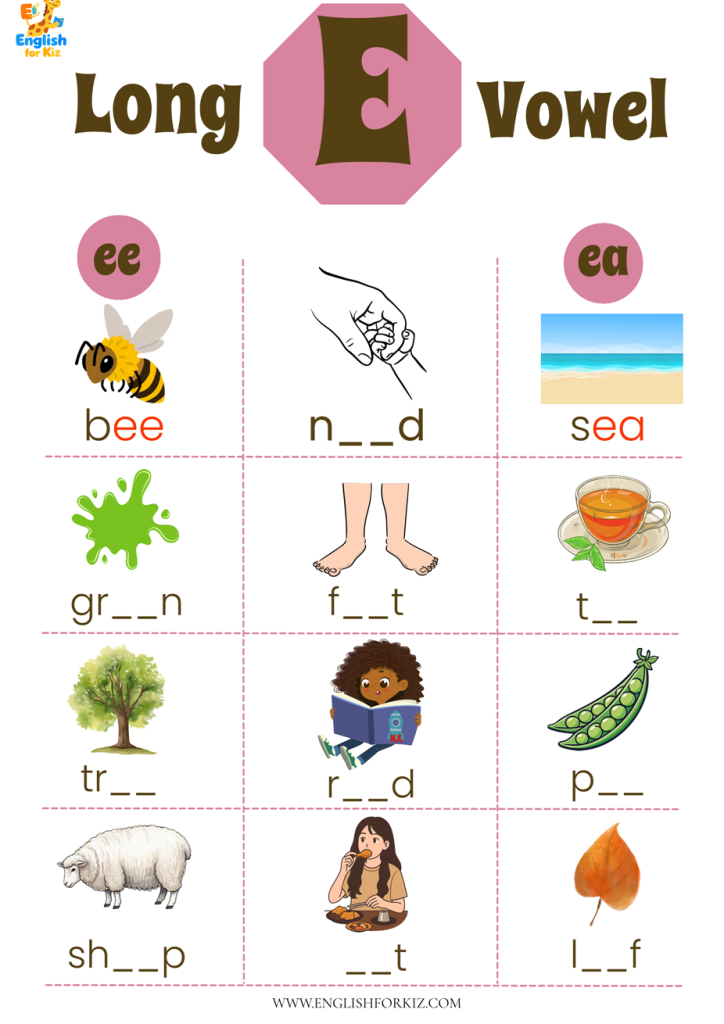
Reading seed confidently does not guarantee that leaf will be just as easy. When a child knows one long-e spelling better than another, a few carefully chosen words can bring that difference into focus without sending them back through every long vowel lesson.
Explore 1st Grade Vowel PracticeWhen the Pattern Has to Work in a Sentence
Word lists make it easy to focus on one spelling at a time. Sentences are different: a child has to recognize the word while also keeping track of what the sentence means. A pattern that seems comfortable in isolation may still slow reading down in connected text.
That does not mean choosing the hardest passage available. If the child is working on Magic E, a short decodable text built around already-taught patterns offers a fairer look than one crowded with unfamiliar spellings.
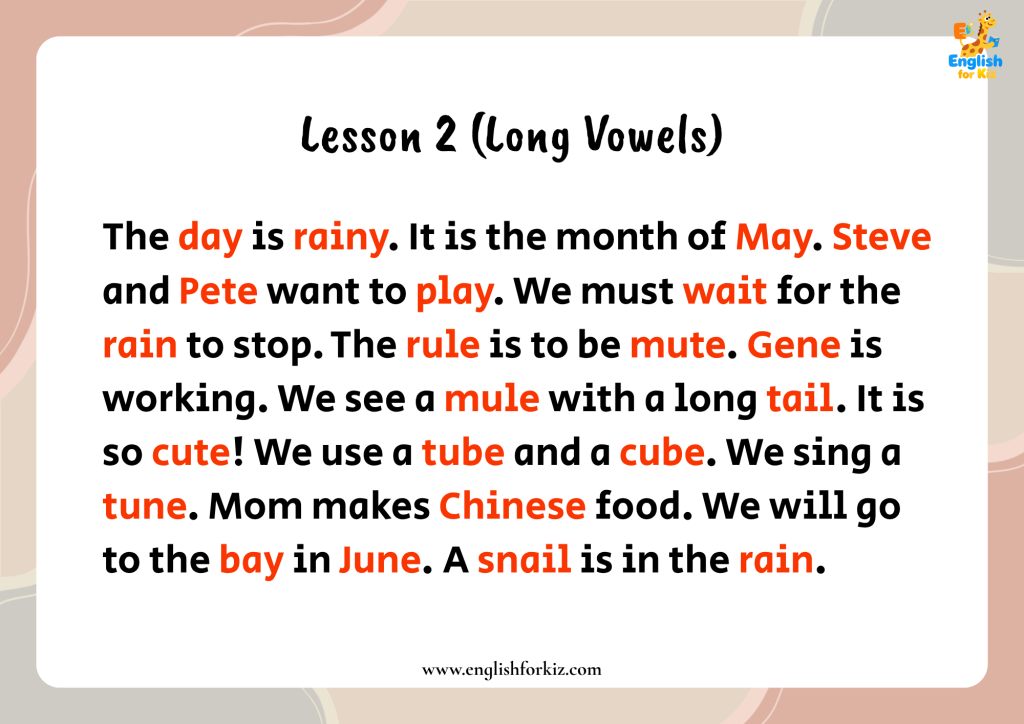
Move Into a Long Vowel Decodable Story
When individual words become more accurate and automatic, short reading passages can show how well those patterns transfer into connected text. EnglishForKiz offers first grade Magic E and long vowel stories for this next stage. These stories require VIP access, so check the lesson and access details before choosing one.
Explore 1st Grade Phonics StoriesWhat Can Make a Fluency Check Misleading?
Familiar Words Can Look Like Mastery
After days of practice, cake may come out instantly. A less-practiced, decodable a-e word helps show whether the spelling itself is becoming familiar too.
Different Lists Can Hide Progress
A harder list can make a child appear to have lost ground, even when the underlying skill has improved. Comparisons work best when the target spelling, list length, and overall difficulty are similar.
A Fast Guess Can Look Fluent
A quick answer means little if the vowel keeps changing. Smooth, accurate reading is a more meaningful sign than a fast finish with several guesses.
Helpful Hints Change What You’re Measuring
There is nothing wrong with explaining a word after a child struggles. The distinction is whether the answer came before or after that help. Keeping those responses separate makes the record more useful.
Make the Next Activity Fit the Reader
One child may need a few more days with the a-e pattern; another may be ready to find that pattern in a story. EnglishForKiz’s first grade program brings Magic E and common long vowels into a broader sequence, so practice can follow the skill the child is actually working on.
Can Phonics Games Help?
A game can make familiar spelling patterns worth revisiting, especially when a child is tired of another word list. But a correct answer in a game may come with clues that are absent from ordinary print. Games can support practice; independent reading still shows whether the pattern is becoming secure.
EnglishForKiz has a phonics games library, along with a guide to deciding when games are useful alongside more focused reading practice.
What a Useful Reading Note Looks Like
A parent or teacher should be able to glance at the record a week later and remember what actually happened. The most helpful notes describe the reading behavior, not just the score or a broad label such as “needs more phonics.”
For instance, “Reads a-e accurately but pauses on less-familiar a-e words; revisit that pattern and try a comparable list” is much easier to act on. It says what the child can do, where reading slows down, and what would be worth noticing next time.
That is ultimately what makes a short fluency check worthwhile: not a perfect-looking score, but a clearer understanding of the reader in front of you.
Choose the Next Long Vowel Practice
If one spelling needs attention, a focused worksheet may be enough. If the child is beginning to carry familiar patterns into longer reading, the first grade program offers more opportunities to practice them in context.
Continue Reading
Long Vowel Fluency Check FAQs
What should a long vowel fluency check measure?
Record independent accuracy, automaticity, noticeable hesitation, self-correction, prompting, and whether taught patterns transfer to less-familiar words or short phrases.
Should speed or accuracy come first?
Accuracy should remain central. Faster reading is useful when the child is also reading the spelling pattern correctly and with less effort.
Can familiar worksheet words be used?
Yes, but do not use only familiar items. Add some less-practiced decodable words so the check can show whether the child applies the pattern rather than recalls a memorized answer.
How often should the same skill be checked?
Recheck after enough focused practice has occurred for change to be plausible. Keep the materials and conditions reasonably comparable rather than following an arbitrary universal schedule.
What if accuracy is high but reading is slow?
Keep the same pattern and provide successful repetitions with controlled words and short phrases. Watch whether pauses decrease across repeated checks before adding substantially harder material.