

A child can point to m, a, and p, say each sound correctly, and still be unable to read map. Knowing individual letter sounds and joining those sounds into a spoken word are connected skills, but they are not the same task.
That gap can be puzzling: the letters are familiar, yet the word never arrives. Sometimes the sounds themselves are uncertain. Sometimes the child can blend what they hear but loses the sequence once print is added, especially when there is a long pause between letters. What matters is finding where the sounds stop coming together, rather than returning automatically to the alphabet.
First, Find Where the Blend Is Breaking
Two children can look at the same three letters and get stuck for different reasons. One cannot hear the spoken sounds as a word; another can hear the word but loses it between hesitant, separated letter sounds. Those children do not need exactly the same practice.
Familiar words such as sat, map, sun, or fin make the difference easier to notice, provided their letter sounds have already been taught. A few attempts can reveal more than a long word list when the question is where the sequence falls apart.
Choose Phonics Games for Blending by the Sticking Point
A useful game makes the missing reading action necessary. It should not let a child bypass blending through a familiar picture, repeated button position, or memorized answer.
That distinction matters when choosing phonics games for blending. A listening game suits a child who cannot combine /s/ /u/ /n/ aloud; a child who hears sun but stalls over its printed letters needs the sounds and the print brought together. The activity is useful only if the child is still doing the blending.
Start with Oral Blending
“Robot Talk” gives the listening task a playful frame. Without putting letters on the table, an adult says /a/ and /m/ as a robot might, and the child works out am. When two sounds begin to join, the robot can try /s/ /u/ /n/ for sun. The picture stays out of sight until the word has been heard.
Why this helpsIt removes letter recognition from the task, making it easier to see whether the child understands that separate sounds can become one spoken word.
Connect Sounds with Continuous Blending
A child who blends aloud may still stop at every printed letter. In “Sound Slide,” three familiar letter cards stay in view as a finger travels beneath them without stopping at each one. After hearing the sounds joined together, the child takes the next turn. The movement links the letters into one word instead of treating each as a separate question.
Useful starting soundsSounds such as /m/, /s/, and /f/ can be held briefly, which makes the movement into the vowel easier to demonstrate.
Use the Picture After the Blend
Pictures can make a game look successful before a child has read anything. In “Read, Then Reveal,” the printed word is visible but its matching picture stays covered until the child attempts the blend. The picture then checks what was read instead of giving away the answer.
Why the order mattersThe word has to come from the letters first; the picture confirms its meaning afterward.
Remove Pictures and Try a New Word
Once sun comes together, a single letter change can show how secure that skill is. In “Change One Sound,” replacing s with f turns it into fun. Reading the new word without a picture is more revealing than another turn with the same familiar answer.
What to noticeAn attempt that begins with the new letters, rather than waiting for an adult cue, is an early sign that blending is becoming more independent.
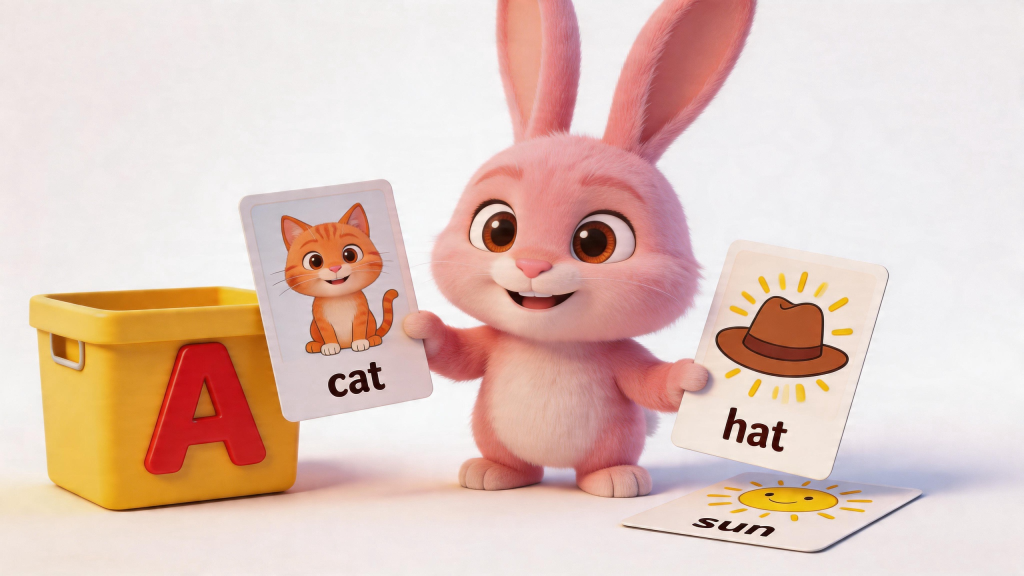
Choose a Game That Still Makes the Child Read
The EnglishForKiz phonics games collection brings listening, short vowels, CVC words, and early blending into the same practice area. A child who still pauses between sounds may benefit more from revisiting one appropriate activity than from moving to a harder level simply because the last screen was completed.
Finishing a level is encouraging, but working through a different word is a clearer sign that the blending itself is taking hold.
Explore Phonics Games by StageMove from Adult Modeling to Independent Blending
A child who is stuck between individual sounds and CVC reading may need to see and hear the complete blending movement first. The important part is that adult help becomes smaller rather than permanent.
With sun, an adult can let /s/ flow into the short vowel and close with /n/, then say sun. A finger moving beneath the letters shows how the sounds stay connected. The child hears a complete example before being asked to find the word independently.
This gradual reduction is prompt fading. If the adult always supplies the first sound, stretches every phoneme, or finishes each word after a brief pause, the child may appear successful without yet controlling the process.
Keep Stop Sounds Short and Clean
Sounds such as /p/, /t/, and /k/ cannot be stretched naturally in the same way as /m/ or /s/. Keep them short. Avoid adding an extra “uh,” as in “puh” or “tuh,” because the child then has extra sounds to remove before the word can be recognized.
Continuous blending does not mean distorting each phoneme. It means reducing unnecessary gaps and moving through the word as smoothly as the sounds allow.
What Happens When the Game Is Gone?
A child can learn how a particular activity works before the reading skill itself is secure. Short off-screen checks show whether the blending process is beginning to transfer.
Before Play
Two or three plain CVC words made from familiar sounds provide a starting point without picture or button clues.
Right After
Different words using the same taught sounds reveal whether the blending process holds once the screen is gone.
Next Session
Another small set shows what remains once the previous game is no longer fresh in the child’s mind.
The answer alone does not tell the whole story. A child who tracks from left to right and joins the sounds without an adult starting every word is making different progress from one who can only repeat an answer after a cue, even if both finish with the right word.
The most useful transfer check uses a word the child did not just see on the screen. Repeating map five times can make map familiar. Reading mat or sat with the same process tells you more about whether blending is becoming portable.
Common Mistakes That Can Keep CVC Blending Stuck
When blending stalls, adding more words is not always the answer. A smaller, clearer task often reveals what the child actually needs.
A child may be joining their first three sounds just as clusters, digraphs, or unfamiliar vowels appear. When the attempt fails, it becomes hard to tell which part caused the difficulty.
A smaller set of CVC words with familiar sounds gives the child room to practise the connection between phonemes without also learning a new spelling pattern.
The picture of a cat may prompt the right answer before the child has even looked across the printed letters.
Keeping the picture covered until after a reading attempt makes it easier to tell whether the answer came from decoding or recognition of the image.
Faster is not necessarily better when /s/ /a/ /t/ are still three separate responses rather than one recognizable word.
A slow, connected “sss-a-t, sat” shows the sounds coming together; three rapid, isolated sounds followed by a guess do not.
A pause after a difficult sound can feel long, and it is tempting to say the word for the child. Constantly finishing it, though, makes independent blending hard to judge.
A finger moving beneath the letters may be enough to restart the blend. If not, one clear model offers something the child can attempt again rather than simply a ready-made answer.
When to Return to Letter Sounds and When to Move Forward
Going back through A–Z can feel like the safest response when reading stalls. That review helps when particular sounds are not secure; when the sounds are already accurate, it leaves the blending difficulty untouched.
Refresh Letter Sounds When Recall Is Unstable
Step back briefly if the child repeatedly gives the wrong phoneme, substitutes a letter name, or cannot retrieve one of the sounds in the current word set.
- Review the specific uncertain sound rather than the whole alphabet.
- Keep oral blending separate while that sound is refreshed.
- Use familiar vocabulary instead of introducing new picture words too.
- Return to printed CVC words when the needed sounds are easier to recall.
Continue Blending When the Sounds Are Accurate
If /m/, /a/, and /p/ are all reliable but map still does not emerge, isolated sound drills are no longer targeting the main difficulty.
- Use oral blending when spoken sounds still do not combine.
- Use continuous blending when long pauses break the sequence.
- Remove pictures when guessing begins to replace decoding.
- Try a new word after practice to check transfer.
When a child starts handling unfamiliar CVC words with less help, a change of format becomes revealing. Printable phonics worksheets remove game animations and button positions, so the child has to bring the same blending skill to paper.
Move from the Game Screen to a Focused CVC Worksheet
The EnglishForKiz kindergarten worksheet collection includes short-vowel and CVC word-family practice. A short a page such as the example shown here keeps the spelling pattern narrow while changing the response from clicking to reading, completing, and checking words on paper.
This is a useful next step when the child can blend some words independently but still needs repeated practice with familiar short-vowel patterns.
Continue with Kindergarten CVC Worksheets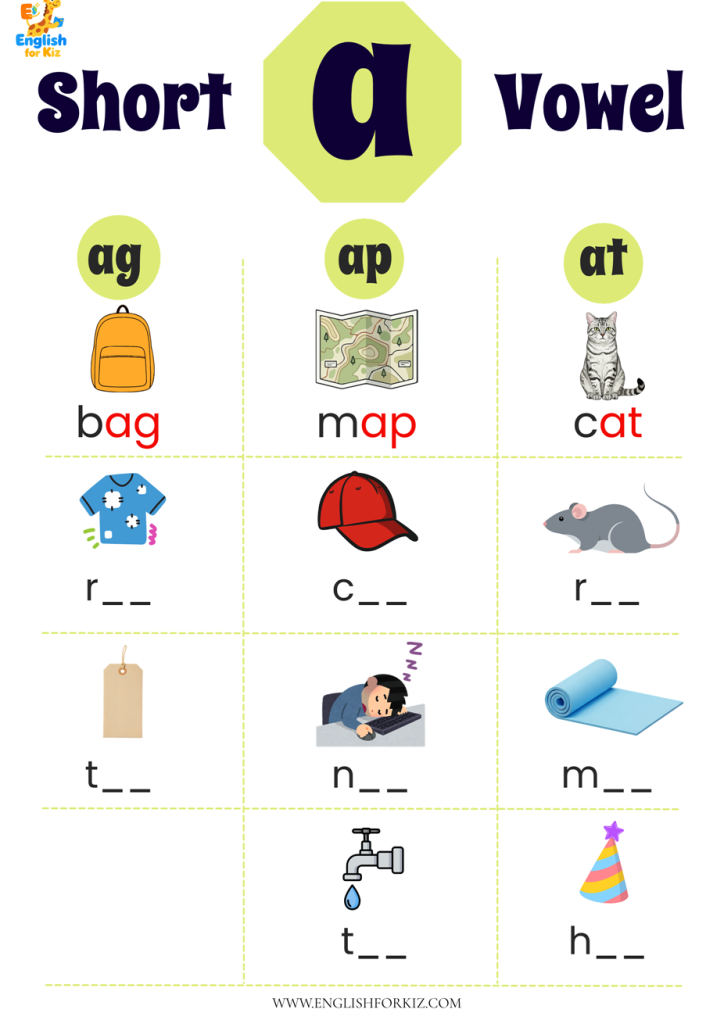
When CVC Words Are Ready for a Short Story
Reading a word on a card and reading the same pattern inside a sentence are different levels of demand. Connected text becomes useful after the child can blend at least some of the target CVC words without a full adult model each time.
A short decodable passage asks the child to decode several words, keep their place on the line, and hold meaning across a sentence. If nearly every word still needs to be supplied, stay with word-level blending a little longer rather than turning a story into another guessing activity.
When CVC blending is becoming more stable, the EnglishForKiz decodable readers library provides the broader reading stage. For a closer match to this skill transition, the kindergarten story collection focuses on CVC words and short-vowel word families.
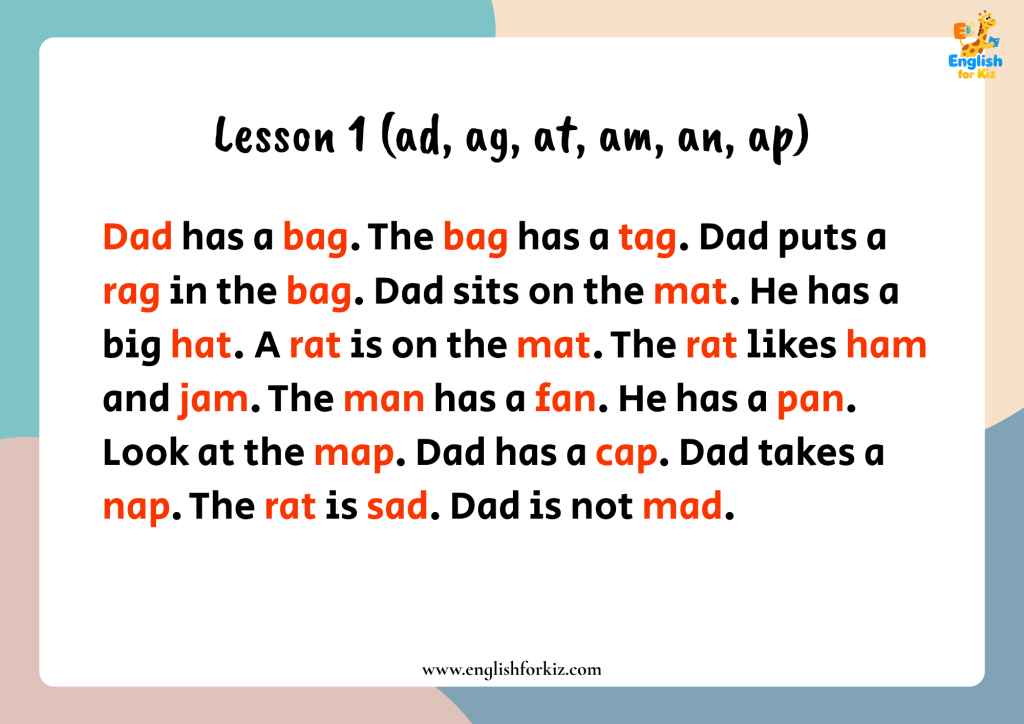
Use a Short-Vowel Story to Check Reading Beyond One Word
This kindergarten reading example focuses on short a word families. Before using the passage for independent reading, check whether it includes other words or spelling patterns the child has not yet learned. The linked story lessons are marked VIP Exclusive.
Even a short passage can feel new after individual word cards. Previewing genuinely unfamiliar words can help, while the familiar left-to-right blend gives the child something to rely on in each sentence. Rereading then brings the meaning back into focus.
Explore Kindergarten CVC StoriesBuild a Simple Sounds-to-Reading Path
The next resource depends on how independently the child can blend. The same short-vowel target may appear first in a game, then on paper, and eventually inside a sentence.
Short games give a hesitant blender several turns with sounds they already know.
Explore phonics games →Paper practice changes the setting without changing the familiar short-vowel pattern.
Browse CVC worksheets →A structured kindergarten sequence brings short vowels, games, print, and early reading together.
View the Kindergarten program →Short CVC stories make more sense once familiar word patterns need less support.
Read CVC phonics stories →The Small Signs That Blending Is Taking Hold
Progress often looks small before it looks fluent. A child who once said /m/ … /a/ … /p/ as three separate answers may begin to hold the sounds together, or read a changed word without looking for a picture.
Those moments tell you more than finishing another game level. A game offers another supported attempt, while a worksheet helps show whether the same reading skill holds up without the screen’s cues.
Used thoughtfully, phonics games for blending can help a child move from familiar sounds to new words without rushing into harder patterns before the earlier ones make sense.
Frequently Asked Questions
Why can a child say every sound but not blend the word?
Saying individual phonemes and holding those phonemes together as one word are different tasks. A child may know /m/, /a/, and /p/ but pause long enough between them that the beginning of the sequence is no longer easy to hear by the time the final sound is reached.
Should blending begin with oral practice or printed letters?
If the child cannot combine a spoken sequence such as /s/ /u/ /n/, begin with oral blending so print does not add another demand. If oral blending already works, add printed CVC words and teach the same left-to-right joining process with letters.
Which CVC words are easiest to blend first?
Begin with words built from letter sounds the child already knows. Initial sounds that can be held briefly, such as /m/, /s/, and /f/, can make continuous blending easier to demonstrate. Keep unfamiliar digraphs, clusters, and new spelling patterns out of the first set.
How much prompting is too much?
Prompting is becoming too heavy when the child waits for an adult to begin every word, repeats only after hearing a complete model, or cannot use the same process on a different word. Reduce support from full modeling to shared blending, then a brief cue, and finally an independent attempt.
When should a child move from games to worksheets?
There is no universal number of correct words that marks the transition. Add worksheets when the child is beginning to blend unfamiliar CVC words without depending on constant modeling, game buttons, or pictures. Games can still remain part of review while paper practice checks transfer in another format.