

A useful long vowel word mapping routine follows the same path every time: hear the word, say it, stretch it, segment the sounds, map those sounds to letters, write the word, and reread it to check.
The important part is the order. A child who sees cake first may simply copy four letters. A child who hears cake first has to notice /k/ /ā/ /k/ and connect the middle sound with the taught a_e spelling pattern.
Use one predictable sequence: Hear → Say → Stretch → Segment → Map → Write → Reread and Check. Change the words, not the routine.
Use the Same Long Vowel Word Mapping Routine Every Time
The routine works because each step has one job. The pencil stays out of the process until the child has listened to and segmented the spoken word.
Try the sequence with “cake”
Say cake without showing the spelling. The child repeats it, stretches it, and segments /k/ /ā/ /k/. A finger tap, counter, or sound box can mark each phoneme.
Only then bring in the spelling. If the current pattern is a_e, ask which part represents /ā/. The child maps the sound, writes cake, reads the finished word, and checks whether the spelling matches the pattern being practiced.
Useful prompt: “Say it. Stretch it. Touch each sound. Which sound is the vowel? What pattern are we using? Write it. Read it back.”
Choose One Long-Vowel Pattern the Child Already Knows
First grade word mapping should reinforce a taught pattern, not ask the child to discover several new spellings at once.
One session might focus on a_e with cake, game, late, name, and made. Another might use oa with boat, road, coat, and goat.
If a pattern has not been taught yet, introduce it first. The 1st Grade phonics video lessons include Magic E and common vowel-team patterns, while the long-vowel practice for first grade provides the broader learning path.
After oral mapping, first grade phonics worksheets can continue the same spelling focus on paper.
If basic three-sound segmentation is still uncertain, use CVC and short-vowel practice before adding a split vowel pattern. There is little benefit in making the spelling harder while the sound structure itself is still wobbly.
Map Magic E and Vowel Teams by Sound, Not Letter Count
Sound boxes represent phonemes. They do not automatically match the number of written letters.
3 phonemes. The long /ā/ is represented by a split spelling pattern.
3 phonemes. The letters oa sit together and represent the middle vowel sound.
This is the key difference in phoneme grapheme mapping for long vowels. In boat, the vowel-team letters are adjacent. In cake, the letters in the Magic E pattern are separated by a consonant.
Different classrooms may use different ways to show a split vowel spelling. In cake, the child hears three phonemes: /k/ /ā/ /k/, but writes four letters in the order c-a-k-e. The final e does not represent a separate sound; it works with the a to signal the long vowel. The a_e notation represents the spelling pattern, not two letters written next to each other.
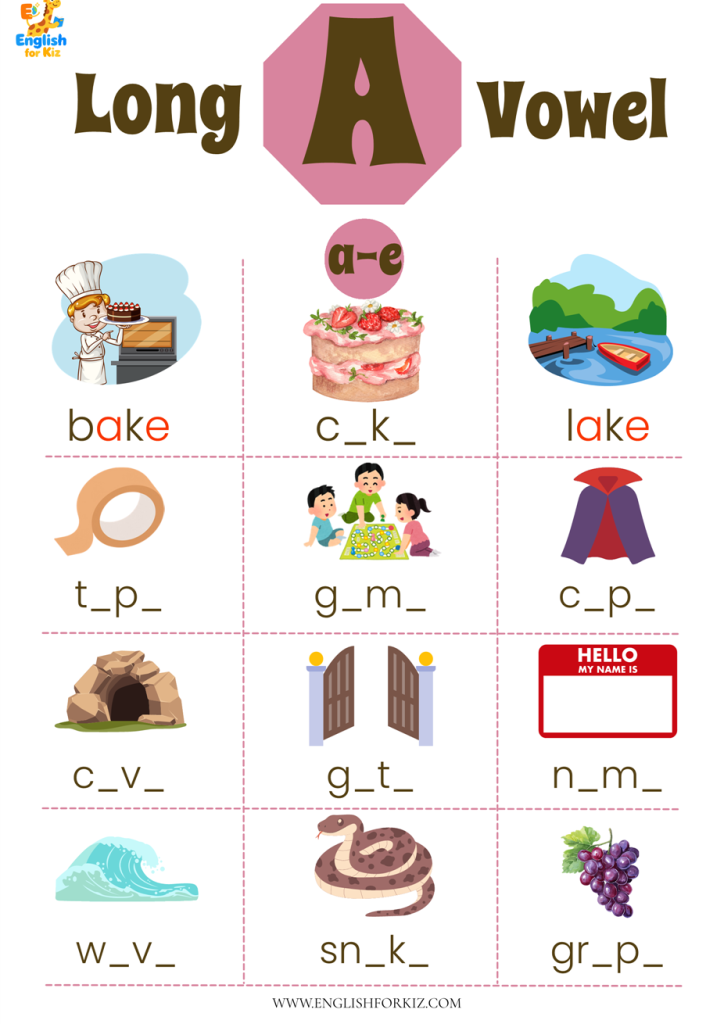
Practice a split vowel pattern
Use the Magic E page after the child has mapped several a_e words orally. Ask for the word first, then let the worksheet record the spelling decision.
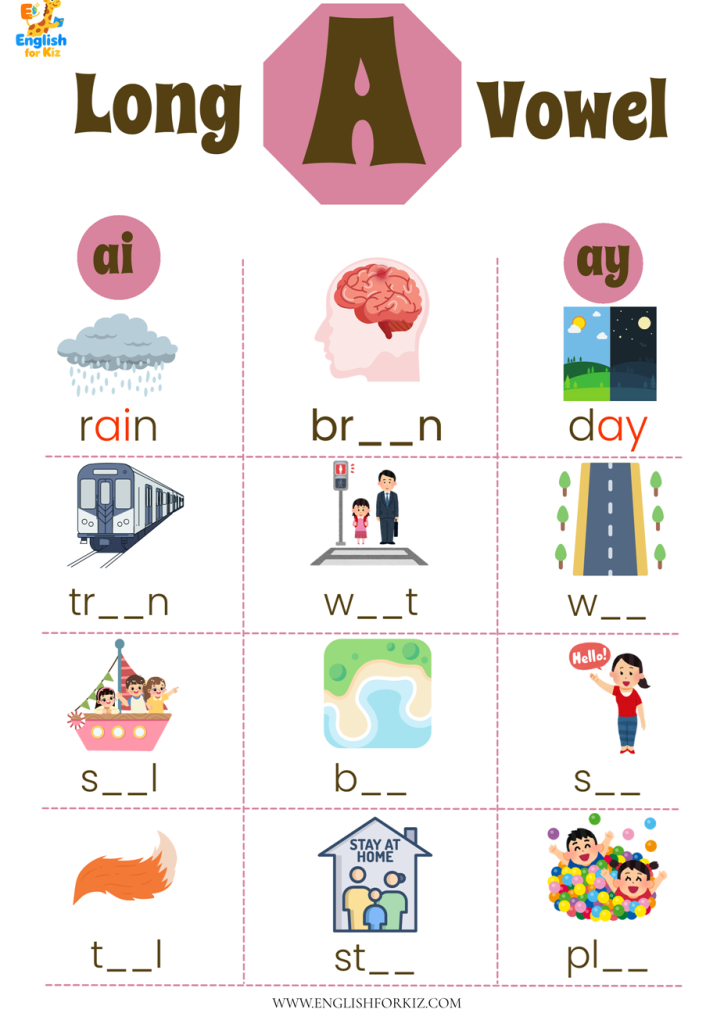
Practice adjacent vowel-team letters
A vowel-team page works best after ai or ay has been taught directly. Do not use the worksheet to make the child guess a new pattern.
Give Prompts That Can Gradually Disappear
Adult prompts should point the child toward the next thinking step without supplying the spelling.
Guide every step
“Say cake. Stretch it. How many sounds? Which sound is the vowel? What pattern are we using?”
Name the process
“Stretch it and map it.” If the child stops, ask one targeted question rather than giving letters.
Ask for a check
Give the word and wait. After writing, say, “Check the vowel pattern.”
Avoid prompts such as “Remember, it has an a and an e.” The answer may become correct, but the adult has done the mapping. When an adult supplies the letters too quickly, the child loses the opportunity to make the sound-to-spelling connection independently.
Check Transfer with One Practiced Word and One New Word
A practiced word may reflect recall, while a new word with the same taught pattern provides an initial check of whether the child can use the routine independently. Revisit the pattern with another word later to see whether the skill is becoming secure.
Map it together and confirm the a_e pattern.
Say it without showing the spelling and let the child run the same routine.
Keep the transfer word inside the same spelling pattern. If the lesson is about a_e, testing an ai word adds another spelling choice and makes the result harder to interpret.
Send Mapping Errors Back to the Step That Needs Repair
Do not automatically erase the word and dictate the answer. First identify where the routine stopped working.
Example: “boat” becomes “bot”
If the child still segments boat as /b/ /ō/ /t/, the sound structure may be intact. The difficulty is more likely in mapping /ō/ to the taught oa spelling.
Ask for the middle sound and the pattern being practiced. Then let the child revise the spelling. That tells you more than immediately announcing “B-O-A-T.”
Move from Mapping into Worksheets, Games, and Short Reading
Sound boxes are temporary supports. Once a word is mapped correctly, move it into normal print so the child sees the same pattern in writing and connected reading.
Ask for the word once without sound boxes. Then place it in a short sentence with otherwise manageable words, such as “The boat is red.” The sentence should test the target pattern, not every phonics skill the curriculum has ever encountered.
For worksheet practice, keep the pattern consistent with the mapping session. Follow the mapping routine with a worksheet for the same pattern, then reread several completed words instead of simply putting the page away.
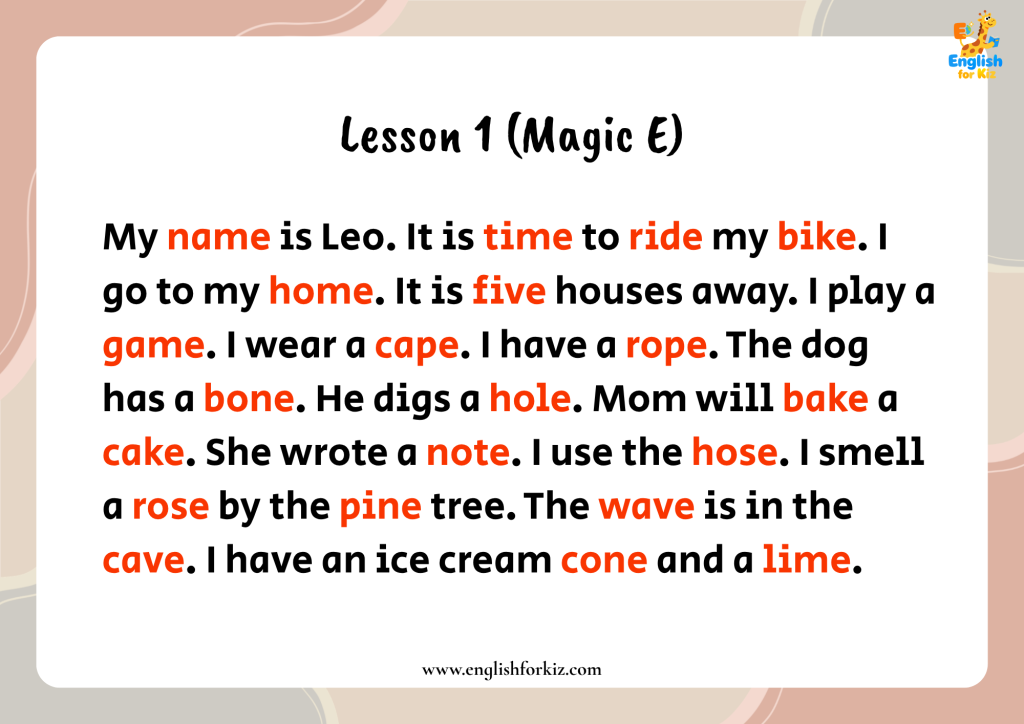
Use connected text after the word pattern is secure
A short passage gives the child a different job from isolated spelling. The target word now has to be recognized inside a sentence while meaning and phrasing continue around it.
The 1st Grade decodable stories include Magic E and long-vowel reading practice. Choose a story whose main spelling pattern has already been taught. Full access to these stories requires VIP membership.
Explore 1st Grade Phonics StoriesAvoid Three Mistakes That Break the Mapping Routine
Counting letters instead of sounds
Cake has four letters but three phonemes. Boat does too. Build the sound boxes from the spoken word before displaying the spelling.
Mixing too many spelling patterns
If the focus is oa, use mostly oa words. Mixed review can come later, after each pattern has received focused practice.
Copying without saying the word
Copying can produce a correct-looking answer without showing whether the child heard the phonemes. In step by step long vowel spelling practice, oral analysis should come before writing.
Quick adult check: If the model disappeared, could the child still say the sounds and identify the taught vowel pattern? If not, return to oral mapping before adding more written repetitions.
Keep Long Vowel Word Mapping Predictable
The value of long vowel word mapping comes from a stable process. Hear the word, segment it, map the sounds, write the spelling, and check it. Use one taught pattern at a time and let errors tell you which step needs another turn.
Frequently Asked Questions
What is word mapping in phonics?
Word mapping connects the phonemes in a spoken word with the graphemes used to spell them. The child says the word, segments it, maps the sounds to spelling, writes it, and rereads it.
Should sound boxes represent sounds or letters?
Sound boxes represent phonemes. The number of boxes therefore does not always match the number of letters. Boat, for example, has four letters but three phonemes.
How is Magic E mapping different from a vowel team?
A vowel team such as oa uses adjacent letters for the vowel sound. A Magic E pattern such as a_e is split by a consonant. Both can represent one vowel phoneme.
How many spelling patterns should be mixed at once?
During focused practice, keep the main activity to one already-taught long-vowel pattern. Add previously learned spellings later during brief cumulative review.
What should happen after a mapping error?
Return to the step where the difficulty appeared. Re-segment unclear sounds, remap an incorrect vowel spelling, or reread the written word when the child misses a mismatch.