
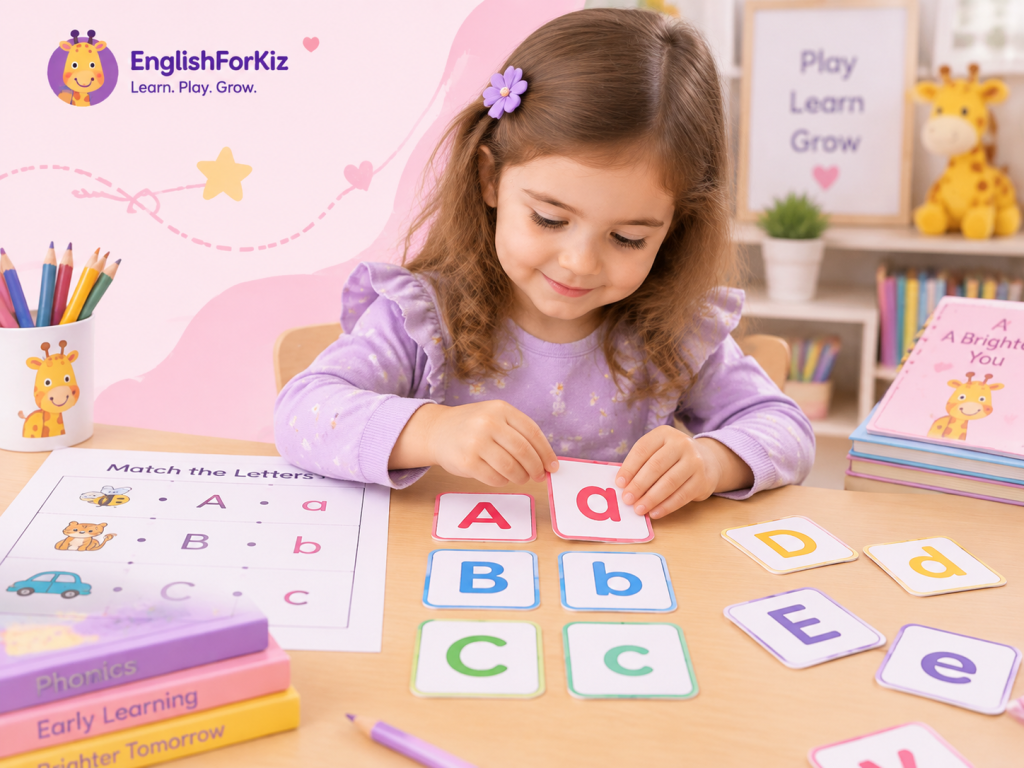
Uppercase and lowercase letter matching can begin before a preschooler knows every letter in the alphabet. A more useful readiness signal is that several familiar letters already have a stable identity: the child can recognize them away from the alphabet song and can retrieve a letter name, a previously taught sound, or both.
The next step is not to march through A/a, B/b, C/c in strict order. Begin with a small group the child partly knows, use visually clearer pairs to establish the idea of “same letter, different case,” and give more focused practice to pairs whose shapes change substantially.
A simple starting point: introduce a lowercase or uppercase partner when the other form already means something to the child. Add only a few pairs at once, change their positions often, and move forward when the child can still recognize the pair after the task or layout changes.
Start Matching Cases When Some Letters Are Already Stable
Children do not need complete alphabet mastery before they match capital and lowercase letters. Matching becomes meaningful when a new form can connect to a letter the child already recognizes.
Imagine a child who identifies M, S, O, and T on separate cards. The child may know all four names, know the sounds for only two, or show a mixture of both. Introducing m, s, o, and t now gives the lowercase forms an existing idea to connect with.
If M itself is still unfamiliar, asking the child to learn M and m together also adds the letter name, the sound relationship, and the idea of case. When an answer is wrong, it becomes difficult to see which part caused the problem.
Recognize
The child identifies several letters when they appear alone, not only while reciting A–Z.
Retrieve
The child can give a letter name, a taught sound, or another consistent response without copying first.
Transfer
The same letter is recognized on a card, worksheet, or simple piece of print rather than in one fixed display.
These are practical observations, not universal preschool benchmarks. If only four letters are stable, those four can form the first matching set. There is little benefit in waiting for all 26 letters just so the activity can look satisfyingly complete to an adult.
When letter identity is still developing, keep the lesson at the letter level. The Preschool Phonics Program keeps uppercase and lowercase recognition, letter sounds, and early sound awareness within the same preschool learning stage.
Why Capital and Lowercase Letters Should Not Be Paired Mechanically A–Z
Alphabetical order tells adults where letters belong in the alphabet. It does not tell children how visually difficult a pair will be.
Some pairs keep a strong family resemblance. C/c, O/o, S/s, V/v, W/w, X/x, and Z/z often retain similar curves, lines, or overall structure in common print styles.
Other pairs change more noticeably. A/a, B/b, D/d, E/e, G/g, Q/q, and R/r may give a beginning learner fewer obvious visual clues. These pairs are not “bad” or forbidden early letters. They simply deserve more direct comparison when they are new.
Clear visual relatives
Useful for establishing what “same letter, different case” means.
Some shared features
Children can compare what stayed recognizable and what changed.
More noticeable changes
Give these pairs extra visual attention when they are unfamiliar.
This is a planning guide, not a compulsory teaching order. A child whose name begins with R may already know R/r better than a supposedly easier pair. Familiarity can outweigh visual similarity.
Font choice matters too. Lowercase a and g can change noticeably between handwriting and printed typefaces. Before assuming that a child has forgotten a letter, check whether the letter itself is being shown in an unfamiliar form.
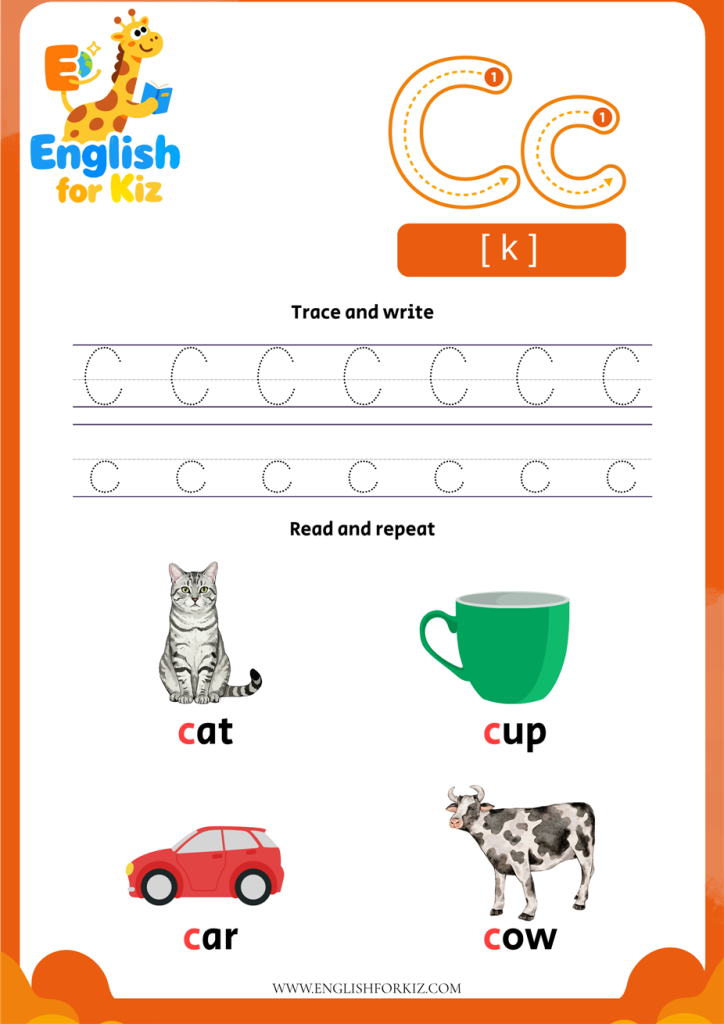
Use a Familiar Shape Pair Before Increasing the Visual Challenge
C/c is a useful example of a pair whose main shape stays recognizable across cases. A page that shows both forms together can help a child notice the relationship before the same letters are separated and mixed with other choices.
EnglishForKiz preschool phonics worksheets include A–Z uppercase and lowercase forms, tracing, and letter-level recognition practice.
Explore Preschool Letter WorksheetsA Practical Uppercase and Lowercase Letter Matching Sequence
There is no honest 26-pair list that can predict the easiest order for every preschooler. A better sequence responds to what the child recognizes, what the letter shapes look like, and what happens after the cards are shuffled.
Establish the idea of a pair
Choose two or three letters the child already knows in at least one case.
- Use only a few choices.
- Show both forms clearly.
- Notice one shared feature.
- Change card positions after each round.
Add less similar forms
Introduce familiar letters whose other case changes shape more noticeably.
- Add one challenging pair at a time.
- Keep known pairs in the activity.
- Compare differences directly.
- Reduce choices if guessing begins.
Mix and retrieve
Stop placing partners neatly side by side and ask the child to find them.
- Mix capitals and lowercase letters.
- Swap left and right positions.
- Present one form before the choices.
- Recheck the pair in another session.
Move forward because recognition is becoming flexible, not because a row is finished. A child who can find the same partner after the cards move is showing stronger letter pair recognition than a child who succeeds only in one fixed arrangement.
Suppose O/o, S/s, and A/a are being practiced. If O/o and S/s remain accurate after shuffling but A/a falls apart, keep A/a in a smaller comparison set. There is no need to hold the secure pairs back, and no need to rush the difficult pair forward simply because B comes next.
That is the useful answer to “which letter pairs should preschoolers learn first?” Start with a combination of familiarity and manageable visual demands, then let the child’s responses determine where extra practice belongs.
Use Three Tasks to Check That Matching Is Real
A correct matching page does not always prove that the pair can be retrieved. Fixed positions and repeated layouts can quietly teach the route to the answer.
Say
Show one form by itself. Ask for its letter name or, if the sound has already been taught, the sound used in current phonics practice.
Find
Say a letter name and ask the child to locate the correct form among three or four mixed choices. Change the positions for another turn.
Match
Place capitals and lowercase forms in a mixed arrangement. Do not keep partners directly opposite each other.
These tasks measure related but different things. “Say” checks retrieval from one printed symbol. “Find” checks visual recognition among competing choices. “Match” checks whether two forms are connected as one letter.
To reduce guessing in uppercase and lowercase matching activities, change at least one feature between rounds. Move the cards, reverse which case appears first, remove some choices, or show one form before revealing possible partners.
At home: after a successful matching round, collect the cards. Put one capital on the table and offer three loose lowercase cards. If the correct partner can still be found, the original row is less likely to have supplied the answer.
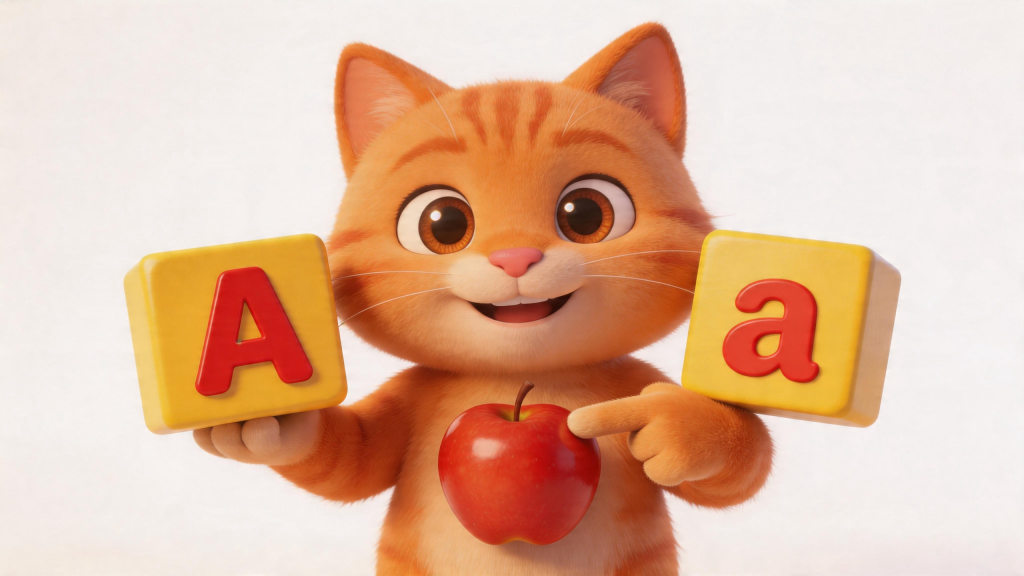
Change the Format After the Pair Is Familiar
The Preschool Alphabet Explorer provides a different setting for reviewing individual letters, with controls for uppercase and lowercase forms. Use it after a child has already met the target pair rather than asking the screen to introduce several new relationships at once.
After playing, return to two or three physical cards and check the same letters away from the screen. The site also has a broader collection of phonics games for later review.
Try the Preschool Alphabet ExplorerWatch Letter Name, Letter Sound, and Case Matching Separately
“Knowing a letter” is not one skill. A child can know the name of B, produce its sound, and still hesitate over b. Another child may match B with b correctly while forgetting the sound.
Letter Name
This checks whether the child can retrieve the conventional name attached to the printed form.
Letter Sound
This checks whether the visual symbol connects with the sound relationship being learned.
Case Matching
This checks whether the child understands that the capital and lowercase forms represent the same letter.
The visual case relationship may already be secure. Keep the pair in brief review and work on sound retrieval separately rather than reteaching the entire letter.
Letter-name knowledge is present, but connecting the two shapes still needs work. Compare the forms directly, then mix them with only a few known choices.
The page layout may be supplying a clue. Shuffle the choices and switch from matching to finding before deciding that the pair is secure.
This distinction also makes resource choice easier. Use alphabet worksheets for letter matching when the visual relationship needs practice, and keep sound work as a separate observation when that is the weaker response.
A related guide, Beginning Sounds vs Letter Sounds: What Should Children Learn First?, explains the difference between seeing a printed letter and retrieving its sound versus hearing a sound inside a spoken word. Keeping those tasks distinct prevents case matching from quietly becoming a different lesson.
When to Add Tracing and When to Use Recognition Only
Tracing can reinforce attention to letter shape, but it also requires pencil control. If the immediate question is whether a child recognizes A and a as the same letter, pointing or selecting gives a cleaner answer.
Use recognition-only tasks when the child is still deciding which symbol is which. A learner who confuses b and d does not need the extra demand of tracing both forms while trying to solve the visual problem.
Tracing becomes more useful after the target form is recognizable. At that point, the movement can draw attention to straight lines, curves, direction, height, and other discriminating features.
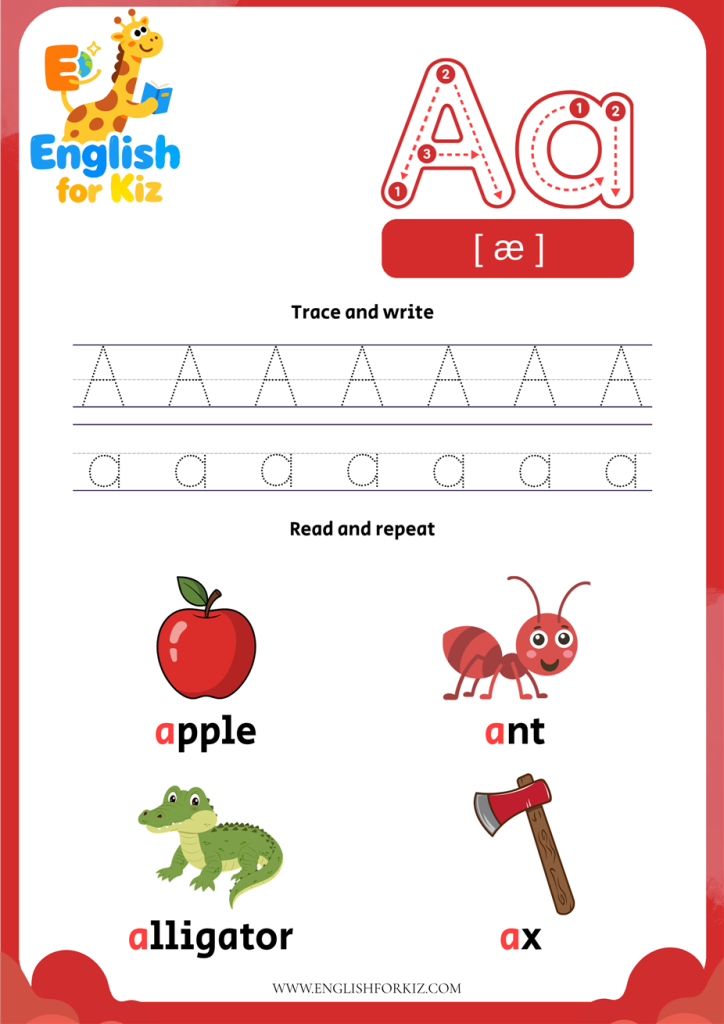
Identify the Pair Before the Pencil Starts
A/a is a useful example of a pair with a noticeable visual change. Before tracing, ask the child to point to capital A and lowercase a. The dotted forms can then support handwriting without becoming the clue that tells the child which letter is present.
A child can recognize lowercase a correctly and still find the pencil movement difficult. Treat those responses separately. Fine-motor difficulty should not automatically be counted as a failure of letter recognition.
Browse Preschool Tracing and Letter PracticeCommon Matching Mistakes That Create False Success
Most problems are not dramatic teaching disasters. They are small activity choices that either give away the answer or combine too many demands at once, because apparently even alphabet cards can find ways to become administratively complicated.
A full alphabet display is useful for reference, but it is a poor first matching task. A smaller set shows more clearly which relationships are known and which still need support.
If A is always first and a always sits beside it, location can become the strategy. Shuffle both groups and occasionally change which case appears on which side.
Naming a letter does not automatically show that the other case is recognized. Include separate find-and-match tasks.
Visually obvious and visually different pairs may need different levels of attention. Review according to actual responses rather than equal worksheet quotas.
New lowercase letters, new sounds, unfamiliar fonts, tracing, cutting, and a large matching array can hide the source of an error. Change one major demand at a time when you need useful information.
A Five-Minute Check That Reveals More Than Another Full Page
If accuracy disappears after the shuffle, reduce the set and practice the unstable relationship again. If the pair survives the change, try it in another simple format such as a worksheet, game, or piece of print.
Choose the Next Practice From What the Child Actually Missed
A completed page should lead to a decision. Do not automatically make the next activity harder. First decide whether the weak point is the shape relationship, the letter sound, or handwriting.
Stay with pointing, sorting, mixed-card matching, and short recognition checks. Reduce the number of choices before adding more letters.
Keep the visual pair in review and practice the already-taught letter sound separately. Do not turn the matching task into a beginning-sound lesson by accident.
Add brief tracing, a different print format, or another known letter pair. The goal is flexible recognition rather than faster completion.
When individual letters are still inconsistent, choose letter-recognition practice before adding CVC words. The Preschool pathway keeps the focus on letter forms, sounds, and reading readiness rather than forcing a jump into word decoding.
Once several pairs and their sounds remain recognizable across formats, familiar letters can also appear in a simple reading context. EnglishForKiz has preschool letter-sound stories organized around small groups of letters, so this step can be used as transfer rather than as a replacement for matching practice.
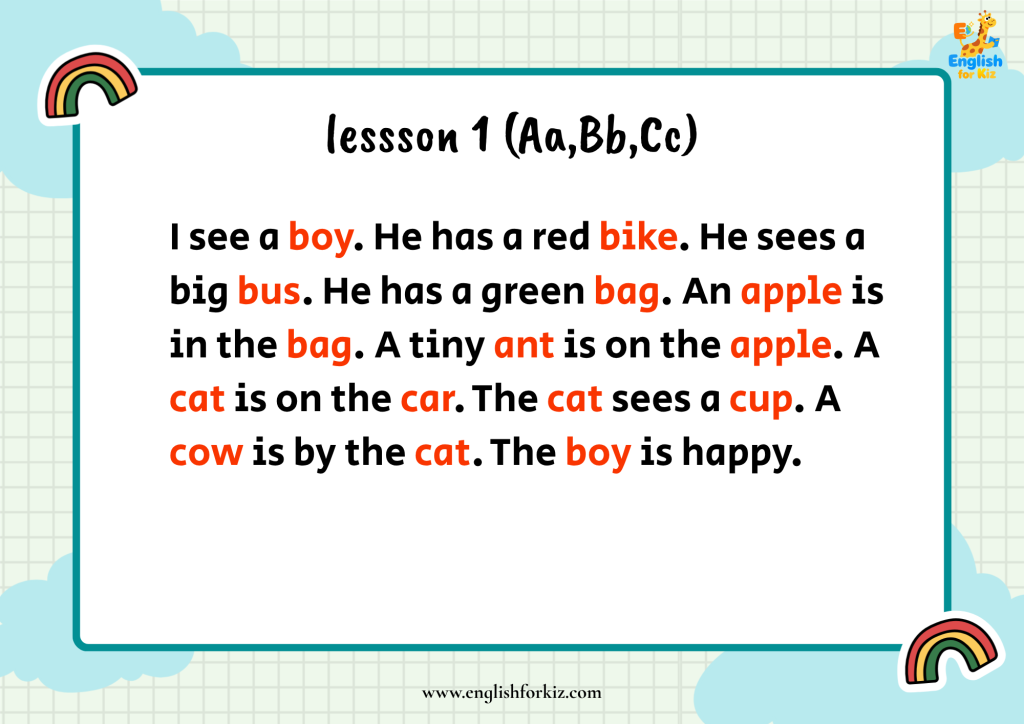
See Familiar Letters in a New Print Context
A child does not need a story while the basic case relationship is still unstable. After several letters are recognized reliably, a short preschool letter-sound page can show whether familiar forms are still noticed when they are no longer sitting on matching cards.
Keep this as a later transfer check. The core task in this guide remains capital-and-lowercase recognition, not CVC blending.
Explore Preschool Letter-Sound StoriesUppercase and lowercase letter matching works best as a gradual relationship-building task. Start with letters that already carry some meaning, use visual similarity as a teaching aid rather than a rigid ranking, and keep changing the layout so successful answers depend on the letters themselves.
Frequently Asked Questions
Should uppercase or lowercase letters be taught first?
There is no single starting case that suits every preschooler. Uppercase letters may be visually simpler in some situations, while lowercase letters appear frequently in ordinary print. More important than choosing one case universally is making sure a small set of letters has a stable identity before expecting reliable case matching.
Must children know every letter before matching uppercase and lowercase forms?
No. Begin with a few letters the child already recognizes reasonably well. Connecting three or four known letters with their other forms can be more meaningful than waiting for full A–Z knowledge and then presenting 26 pairs together.
Which uppercase and lowercase pairs look most alike?
C/c, O/o, S/s, V/v, W/w, X/x, and Z/z often retain obvious visual similarities in common print styles. Exact appearance varies by font, so use these as possible starting comparisons rather than a fixed difficulty ranking.
Should letter sounds be included during matching practice?
A previously taught sound can be included, but sound retrieval and case matching should still be observed separately. A child may match M with m correctly while hesitating on the sound, or know the sound while still confusing the lowercase form.
How can adults check that a child is not memorizing card positions?
Shuffle both sets, change which side contains capitals, remove some choices, and show one form before asking for its partner. Try the same letter in another simple print format as well. Recognition that survives those changes is less dependent on the original layout.