
A child writes rid for ride, ran for rain, or pale for pail. Marking the word wrong tells you the score. Looking at what the child kept, changed, or left out tells you what to check next.
Repeated long vowel spelling errors can point to different problems. A child may not reliably identify the intended vowel in an oral task. Another child may identify it correctly but choose the wrong spelling pattern. A third may recognize Magic E when it is shown but forget to use it during independent spelling.
Those children should not automatically receive the same correction. The useful sequence is simple: keep the original attempt, identify the visible error pattern, run one quick check, practice the smallest skill that matches the evidence, and retest with a different word.
Ask, “What did the child already hear or remember correctly?” before deciding what needs more practice.
What Long Vowel Spelling Errors Can Tell You
One wrong word is a clue, not a verdict. A repeated pattern across several attempts is much more useful because it helps separate an ordinary slip from a spelling decision the child has not yet secured.
Suppose a child writes rid for ride. The beginning and ending consonants are present. The word has a recognizable sound sequence. The missing final e gives you a reason to check whether the child can produce a CVCe spelling without a model.
Compare that with red for ride. That attempt raises an earlier question: did the child identify the intended vowel sound before choosing letters? If the spoken vowel itself is unclear, repeating a written Magic E rule may not address the problem.
A child may also preserve the correct long-vowel sound but choose a different spelling pattern. In that case, oral vowel identification may already be secure enough. The next task should make the relevant spelling choices clearer instead of returning to a general long-vowel lesson.
Once the pattern is clear, practice can become more precise. Instead of assigning a mixed page because several words were incorrect, choose first grade phonics worksheets that match the Magic E or vowel-team decision actually shown by the spelling.
A Simple Way to Group Long Vowel Spelling Errors
A simple tracking code keeps the adult focused on observable evidence. You do not need a complicated assessment system for this narrow check. This guide uses five practical categories for home, tutoring, and small-group spelling review.
The code is descriptive. It does not tell you why an error occurred by itself. Its job is to preserve the pattern long enough for you to test a reasonable explanation.
Where the Difficulty May Be Happening
The most useful question is where the process became uncertain. Was the child unsure of the sound, unsure of the spelling choice, or unable to retrieve a pattern independently?
The vowel sound is not secure
Start here when the child repeatedly substitutes another vowel and cannot reliably identify the intended contrast after the written word is removed.
Say the target word aloud, compare it with one contrasting word, and ask the child to identify the vowel. Keep the first correction oral.
Watch for: the same vowel-identification difficulty across several spoken examples.
The sound is right but the spelling is uncertain
The child says and segments the word accurately but chooses the wrong long-vowel representation.
Compare a small number of relevant spelling patterns. Do not introduce every possible way to spell that vowel at once.
Watch for: accurate oral production and complete consonants with repeated vowel-team mistakes.
The child recognizes the pattern but cannot retrieve it
Some children choose the correct spelling when it is visible but fail to produce it during dictation.
They may need fewer recognition tasks and more short cycles of hear → map → write → reread without a model.
Watch for: correct matching or multiple-choice answers followed by the same error in independent writing.
If the child also loses consonants, changes the sound order, or cannot account for each sound, the vowel may not be the main problem. Slow the word down and rebuild the full sound sequence before adding another long-vowel rule.
When repeated attempts fall back to basic short-vowel or CVC mapping, use short-vowel and CVC practice temporarily. The goal is to repair the foundation shown by the error, not to move backward through an entire curriculum.
The 1st Grade video lesson library includes Magic E and long-vowel-team lessons that can reinforce the target sound and pattern before written practice.
Move quickly from seeing the example to spelling a different word without the correct answer in view.
Use phonics games after the child understands the target. A game should review the correction, not replace the diagnosis.
What Different Misspellings Can Suggest
Three incorrect words can look similar on a spelling sheet but point to different next steps.
Most of the word is present
The consonants are accounted for and the child has produced a complete CVC spelling. That makes the absent final e worth checking.
Do not assume the vowel team is the problem
The child may have heard a short vowel, or may have heard the correct long vowel and chosen a familiar short-vowel spelling.
The child may expect a long-vowel spelling
This attempt can suggest that the long-vowel idea is present even though the written pattern is not the expected one.
Choosing Practice That Matches the Error
“Long vowels” is too broad to be a corrective plan. A useful activity should answer one specific question about the error.
Four questions that help narrow the cause
-
Can the child identify the target vowel?
If not, work orally first. -
Can the child account for all the sounds?
If not, repair the sound-to-letter sequence. -
Can the child choose the needed spelling pattern?
If not, compare only the relevant alternatives. -
Can the child retrieve it without seeing the answer?
If not, use independent spelling rather than another explanation.
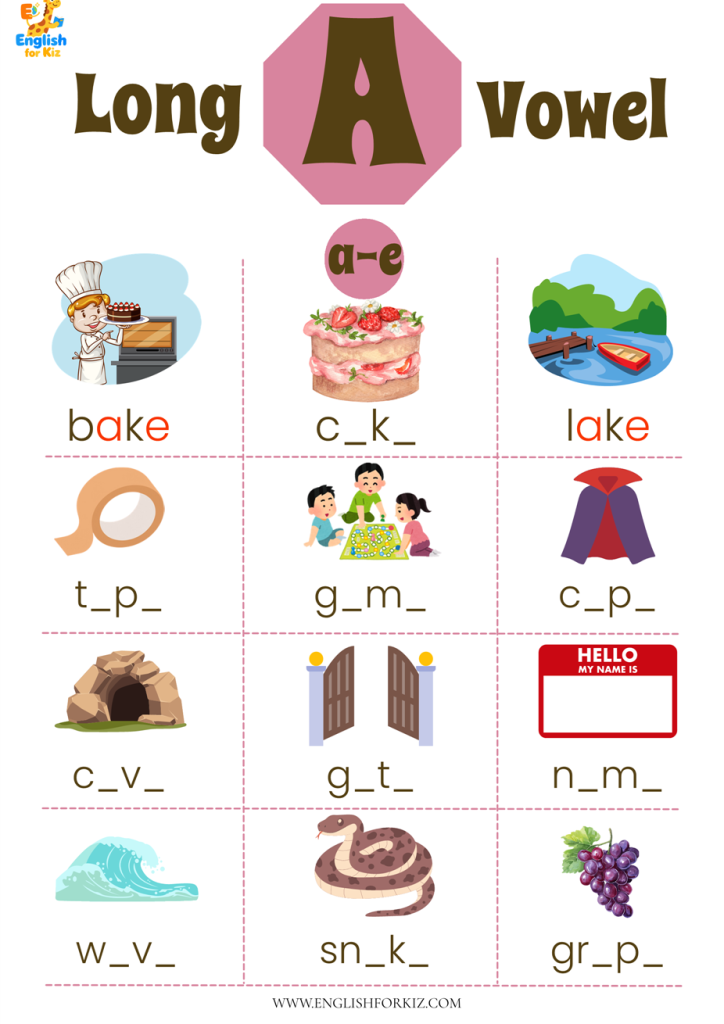
Use a Magic E Page When the Error Actually Points to CVCe
A page like this is useful after a child repeatedly writes a short-vowel form such as cap for cape or cub for cube while keeping the other sounds intact.
Ask the child to say the word, complete the missing letters, read the finished word, and then spell one new CVCe example without looking at the page. That final retrieval step tells you more than copying the corrected word several times.
Use ai / ay Practice Only After the Long-A Sound Is Clear
If the child hears the long-a vowel correctly but keeps choosing the wrong written pattern, a small ai/ay contrast can make the decision visible.
Do not turn the page into a rule recital. Let the child read each example, notice which spelling appears, sort a few words, and then try a new word from dictation.
This is more targeted than assigning a mixed long-vowel packet simply because the original answer was wrong.
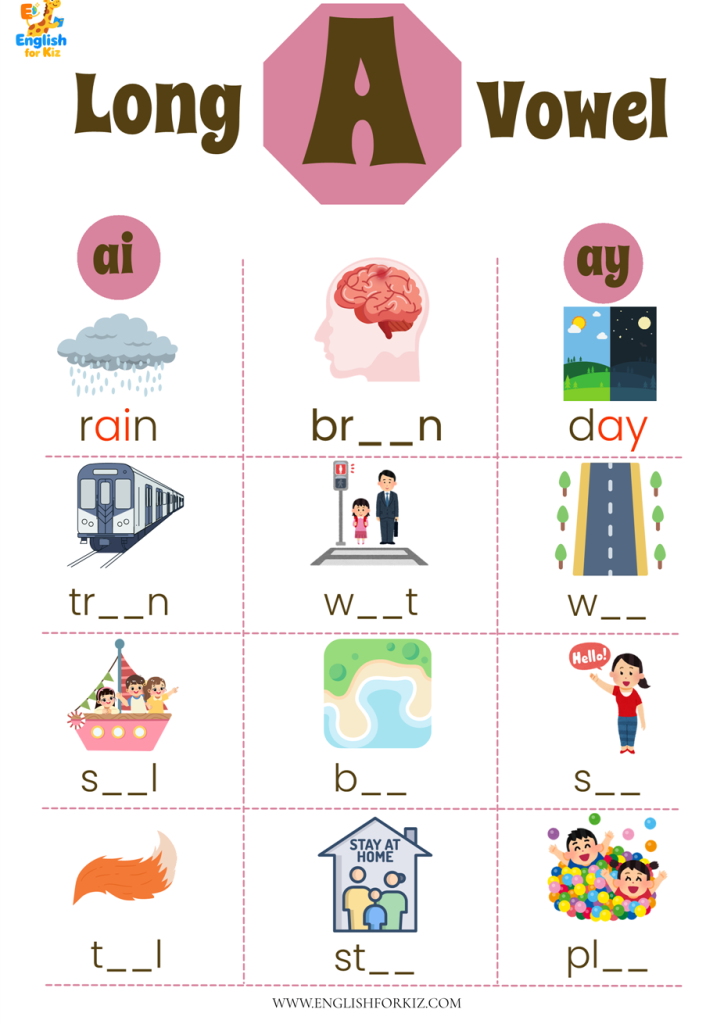
The key is not the number of practice pages. It is whether the page asks the child to make the same spelling decision that caused the error.
Why a New Word Gives Better Evidence
A child who rewrites the word correctly immediately after an explanation has shown that the corrected form can be reproduced with support. That is useful, but it is not the same as independent control of the pattern.
After correcting an omitted silent e, use another familiar CVCe word. After a vowel-team substitution, choose another word that requires the same type of pattern decision. Change the word while keeping the spelling demand similar.
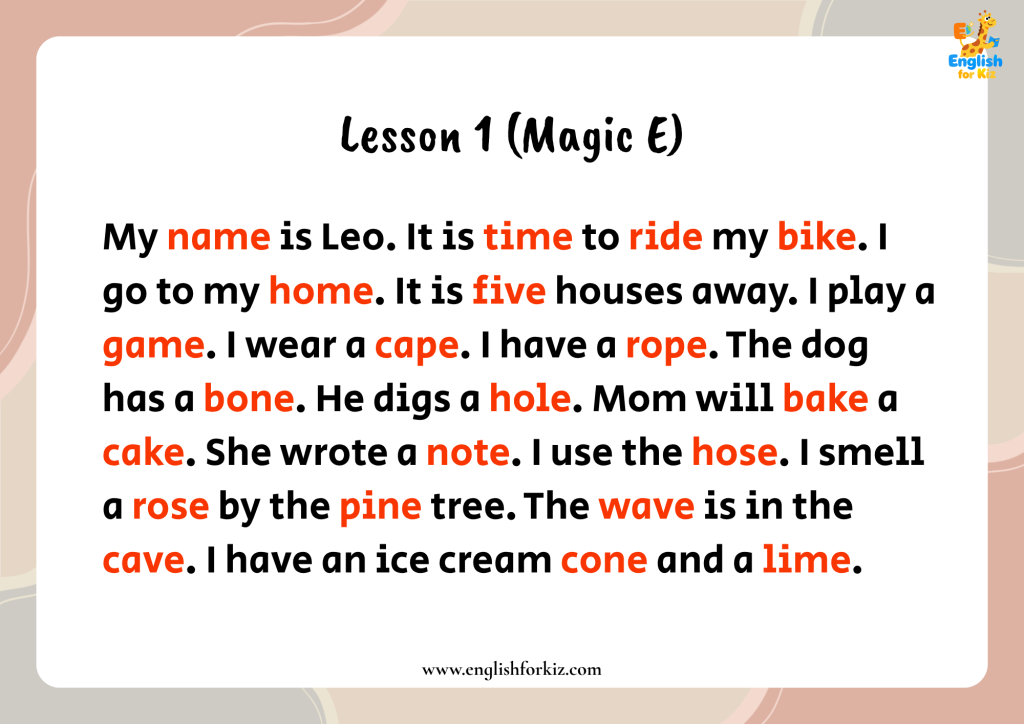
Move From Spelling Practice Into a Controlled Magic E Story
Once a child can spell and read the target pattern in isolated words, connected text becomes useful reading application. A story changes the context: the child must notice the same pattern while reading complete sentences instead of a tidy word list. This does not replace a spelling retest from dictation.
EnglishForKiz has a 1st Grade decodable story library that includes Magic E and long-vowel reading. Use it after the pattern is reasonably stable at word level, not as the first correction for a spelling error.
If you are unsure whether a reader matches the child’s current code, the decodable-reader level guide can help you compare the text with what has already been taught.
Two Common Misreadings Can Send Practice in the Wrong Direction
The purpose of error analysis is not to attach a label to every wrong word. It is to prevent unlike mistakes from receiving the same generic correction.
One child may identify the long-a sound accurately and retrieve the wrong spelling. Another may be guessing among several vowel patterns. A third may also omit a consonant.
Before assigning another vowel-team worksheet, check what stayed accurate: the spoken vowel, consonants, sound order, and the child’s response when two spelling choices are visible.
An omitted silent e may only require a short CVC/CVCe comparison and independent spelling check.
Adding every Magic E vowel, several vowel teams, exceptions, and unrelated spelling patterns can hide whether the original problem was actually corrected.
From the Error to the Next Learning Step
Error correction works best when each resource has a clear job. A lesson can clarify the pattern, a worksheet can make the child produce it, a game can review it, and a story can test whether the pattern survives inside connected reading.
Use a focused lesson when the sound or spelling pattern needs to be clarified.
View 1st Grade Videos →Use targeted paper practice for the exact pattern shown by the error.
Choose Worksheets →Use interactive review only after the child understands what is being practiced.
Practice with Phonics Games →Move into controlled text when word-level accuracy is becoming stable.
Read Long-Vowel Stories →Use the full grade-level pathway when a connected first-grade progression is needed.
Explore the 1st Grade Program →Continue Reading
These guides answer the questions that usually come before or after error analysis: whether the child is ready for Magic E, how short- and long-vowel practice should connect, and how to use worksheets without turning practice into busywork.
When Is a Child Ready for Magic E?
Check the CVC and short-vowel foundations that should be in place before intensive CVCe practice begins.
Short Vowels vs Long Vowels: Practice Sequence
See how short-vowel work connects to later Magic E and long-vowel practice without moving forward by worksheet count alone.
How to Use Phonics Worksheets Without Busywork
Connect listening, writing, word reading, games, and later review instead of treating a completed page as the final goal.
Turn the Error Into a More Precise Practice Decision
Repeated long vowel spelling errors become more useful when they are treated as evidence instead of a simple right-or-wrong score. Notice what the child preserved, code the visible error, verify the likely breakpoint, and correct only the decision that is uncertain.
Then use a new word and a delayed retest. If the pattern holds, continue. If the same error returns, repeat a small targeted correction rather than automatically adding more rules.
When the pattern is clear, choose a worksheet for the spelling pattern shown by the error so the next activity matches the evidence the child actually produced.
Frequently Asked Questions
What does omitting silent e usually show?
Repeated omission of silent e can show that the child is not yet producing the CVCe structure consistently during independent spelling. One missing e can also be an ordinary slip, so give another comparable word before deciding what to practice.
Why might a child use the wrong vowel team even when the word sounds right?
Hearing the vowel and selecting its written pattern are separate decisions. A child may identify the long vowel correctly but still be unsure which spelling belongs in that word. Check whether the consonants and sound sequence are intact before focusing only on the vowel team.
Should every misspelling be corrected immediately?
The error should be addressed, but preserve the original attempt long enough to examine it. If the adult supplies the rule immediately, it becomes harder to see what the child could retrieve independently. A quick verification word can make the correction more useful.
How can adults tell a sound error from a pattern-choice error?
Briefly remove the spelling demand. Say the target word and ask the child to identify or compare the vowel sound. If the spoken vowel is unstable, begin with oral vowel identification. If the sound is accurate but the written form is not, look more closely at spelling-pattern choice or sound-to-letter mapping.
What if the child recognizes the correct spelling but cannot write it from dictation?
Recognition may be stronger than independent retrieval. Use fewer matching or multiple-choice tasks and add short opportunities to hear, map, write, and reread a new word without the correct spelling already visible.
When should the skill be retested?
Check one different word after corrective practice, then return to the same spelling decision later with another unpracticed word. The delayed check gives better information because the original answer and adult prompt are no longer fresh.