
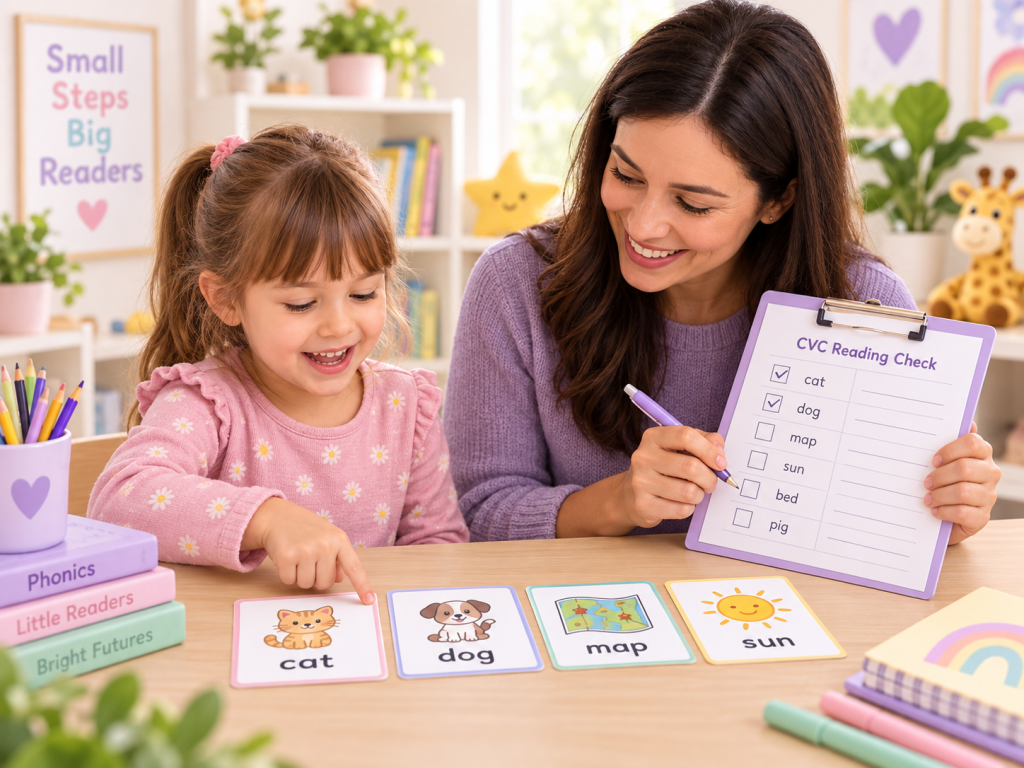
A useful CVC reading accuracy checklist records more than right and wrong answers. During each short reading check, note four things: the child’s first read, the sound position that caused difficulty, any prompt you gave, and any independent self-correction.
Those observations help a parent, teacher, or tutor decide what should happen next. The child may need a narrower short-vowel set, more attention to the final consonant, additional blending practice, a return to individual letter sounds, or a move from isolated CVC words into short sentences.
Prepare a Word Set That Shows Real CVC Decoding
A good kindergarten CVC reading assessment uses enough variety to show whether the child is reading the letters or simply recalling a heavily practiced word list.
Include more than one short vowel and vary the beginning and ending consonants. Familiar words are fine, but do not make every item a word the child has repeated many times. A few less-practiced or unfamiliar words can show whether the same decoding process transfers to new print.
fan
rag
hen
jet
fin
lip
rod
cot
sun
cup
This is an example set rather than a required test list. Change the consonants to match what the child has actually been taught. If several letter sounds are still unfamiliar, the check will measure too many skills at once.
Keep pictures out of the decoding check. A picture can support meaning during teaching, but it can also encourage a child to predict the answer. When the purpose is to assess CVC word reading, let the printed letters provide the main information.
Avoid using only one familiar word family such as cat, hat, mat, sat. That group can be useful during instruction, but a mixed check tells you more about flexible decoding. Once the check identifies the weak pattern, targeted kindergarten phonics worksheets can be chosen for the vowel or CVC family that actually needs practice.
Use the Same Short Instruction and Record Before You Teach
Show one word at a time and use a simple direction such as “Read this word.” Give the child enough time to attempt it independently before pointing to a letter, stretching a sound, or explaining what to do.
Present one plain printed CVC word without a picture clue.
Allow an independent attempt without filling every pause.
Write the first response before corrective teaching begins.
After the response is recorded, give the teaching support that is needed.
Separating the first attempt from the teaching response keeps the checklist useful. Suppose the word is pig and the child says “peg.” Record “peg” first. If you then ask, “What sound does i make?” and the child reads “pig,” note that the final answer was correct after a medial-vowel cue.
That result contains more information than a simple check mark. It shows that the child could complete the word once attention was directed to the vowel, but did not yet do so independently.
Keep prompts consistent enough to compare later
You do not need a complicated scoring system. A short prompt ladder helps you distinguish independent reading from increasingly specific support:
- Wait time: no extra information is supplied.
- General retry: “Look carefully and try that word again.”
- Position cue: “Check the middle sound.”
- Sound cue: ask for or supply information about a specific letter.
Record the least amount of help that made a difference. On the next check, you can see whether that support becomes less necessary.
Record Where the CVC Word Broke Down
A CVC word reading checklist becomes useful when it shows the location and type of the error. “Wrong” does not tell you whether the difficulty was the first consonant, the short vowel, the final consonant, or blending the three sounds together.
Onset error
map → tap. The first consonant changes while the vowel and final sound remain stable.
Vowel error
map → mop. The consonants remain accurate while the medial vowel changes.
Final error
map → mat. The child preserves the start of the word but changes the ending.
Blending
The child says /m/ /a/ /p/ correctly but cannot combine the sounds into map.
Guessing
The response appears after only part of the word has been processed, such as the first letter.
Record the behavior you can observe rather than immediately assigning a cause. One reading of bed as bad is a medial-vowel substitution. Several similar substitutions across different words provide stronger evidence that the vowel contrast deserves focused practice.
Self-correction has its own value. If the child says “pet,” looks back at pit, and changes the response without a clue, keep the first error in the log and mark the repair as an independent self-correction. If an adult first says “Check the middle,” record a prompted correction instead.
Use a Narrow Vowel Set When the Error Log Shows a Pattern
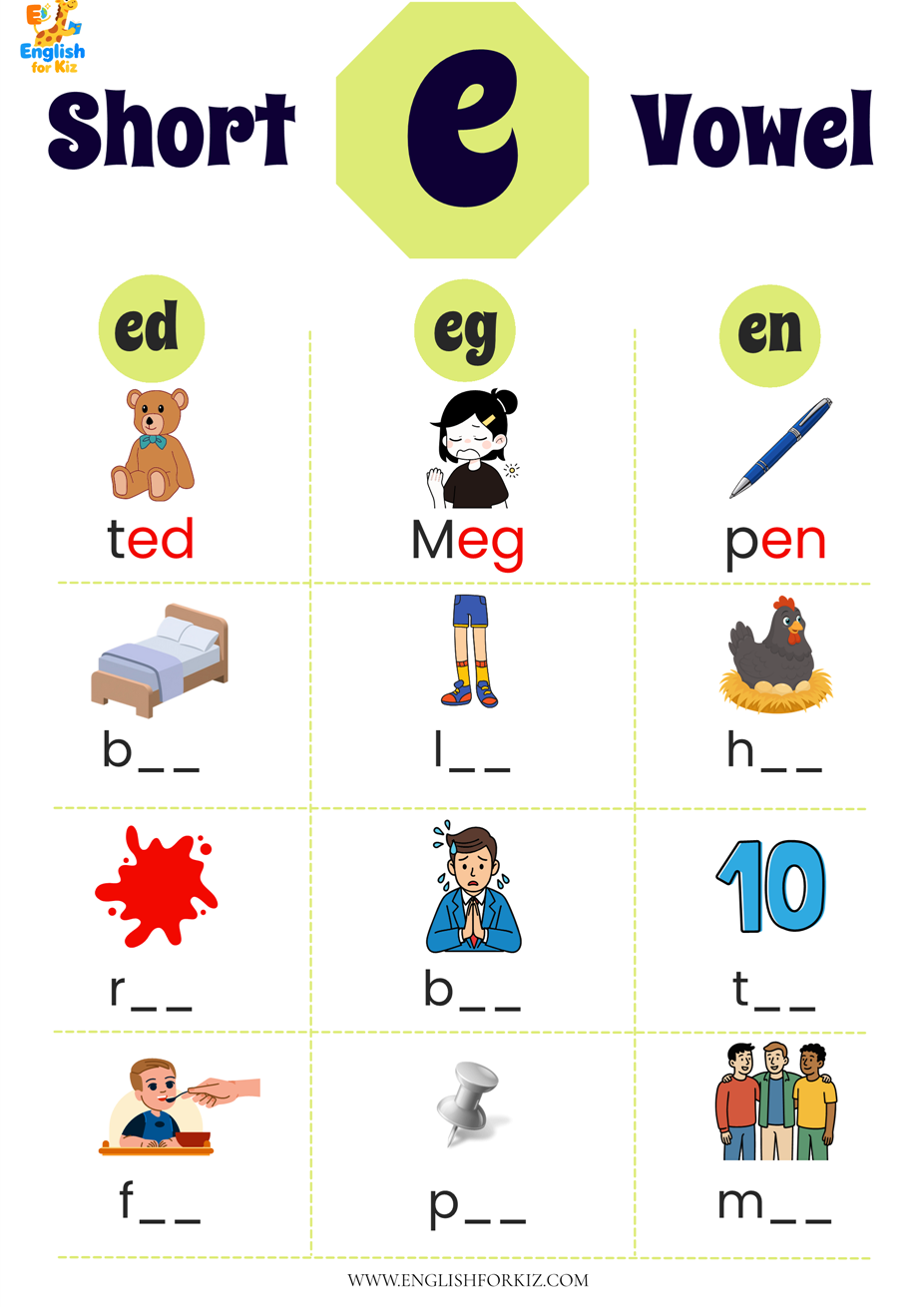
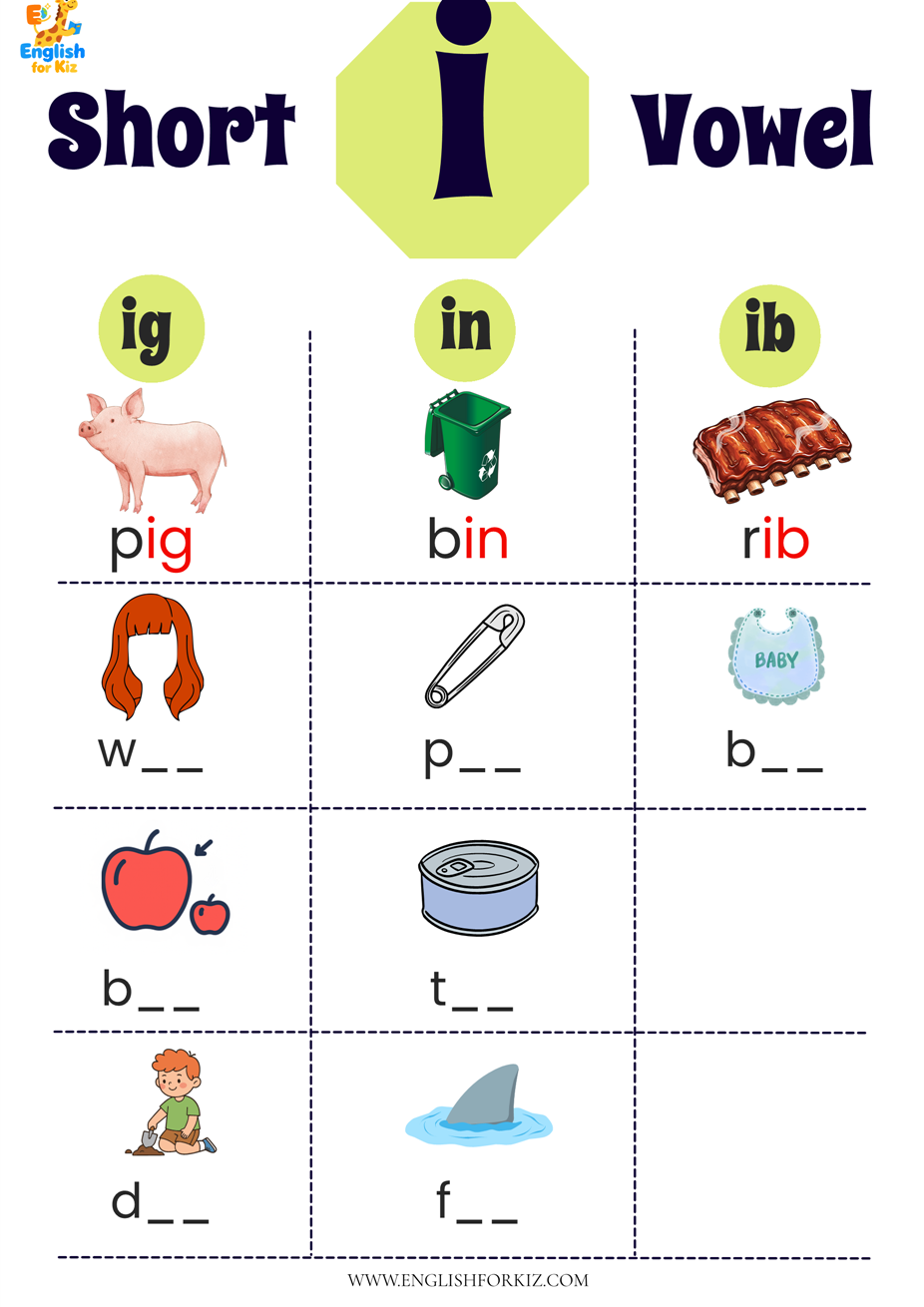
If short e and short i are repeatedly confused, another large mixed worksheet may hide the problem rather than solve it. Reduce the number of vowel choices and keep the consonants manageable.
These EnglishForKiz worksheet examples show focused word-family practice. Use them during instruction, not as the unaided assessment itself, because pictures and missing-letter tasks provide support that changes the reading demand.
Choose Practice by CVC Error PatternDistinguish Accurate Reading from Fast Guessing and Prompted Success
Correctness alone can hide important differences. Accuracy, automaticity, guessing, and prompt dependence should be considered separately when deciding what a child is ready to do next.
Accurate but slow
The child reads the letters in order and reaches the correct word but still needs noticeable time. The decoding process is working. The next need may be smoother blending and repeated practice rather than easier content.
Fast but guessing
A quick answer is not necessarily automatic reading. If map becomes mat or man after the child sees only the beginning of the word, accuracy should take priority over speed.
Correct after a cue
The child completes the word once attention is directed to a vowel or consonant. That shows useful knowledge, but the checklist should still distinguish the response from independent reading.
Independent self-correction
The first attempt is inaccurate, but the child notices the mismatch and repairs the word without a cue. Keep both parts of the response because the repair shows active monitoring.
This distinction is especially useful when deciding whether a child is ready for harder CVC practice. A learner who is consistently accurate but still deliberate may be ready to use known patterns in short phrases. A learner who answers quickly while dropping or changing sounds usually needs more controlled word-level work first.
Use Decision Ranges Based on the Error Pattern, Not a Universal Percentage
Instead of asking whether the child has “passed CVC words,” ask which type of support is still needed. The smallest useful instructional change is usually easier to evaluate at the next check.
Use this route when the reading is mostly accurate and independent but still slow. Keep the same short-vowel level while adding fresh words and brief rereading.
Use this route when errors repeatedly cluster around one medial vowel or one vowel contrast. Practice that smaller set before returning to a mixed-vowel check.
Use this route when several onset, vowel, or final-consonant sounds cannot be produced without help. Secure the relevant letter-sound knowledge before expecting independent blending.
Use this route when unfamiliar CVC words are read accurately with little or no prompting and the child attends to all three sounds rather than guessing.
Do not increase every difficulty at the same time
If word-level decoding is newly secure, the next task does not need new vowels, unfamiliar consonants, longer words, and a long passage all at once. Keep the phonics pattern familiar and change one demand—for example, place known CVC words inside a short phrase.
The same principle applies when a child struggles. If short e and short i are confused, reduce the vowel contrast instead of adding more mixed patterns. The later mixed check then shows whether the improvement transfers.
Use Picture Flashcards for Practice, Not for the First Read
A picture can be helpful after the assessment has identified the target. Word cards can support blending, sorting, oral review, and checking meaning during teaching.
During the actual accuracy check, keep the picture hidden so the child must use the print. During review, EnglishForKiz kindergarten phonics flashcards can provide another way to revisit familiar CVC words before a later transfer check.
Explore Phonics Practice Cards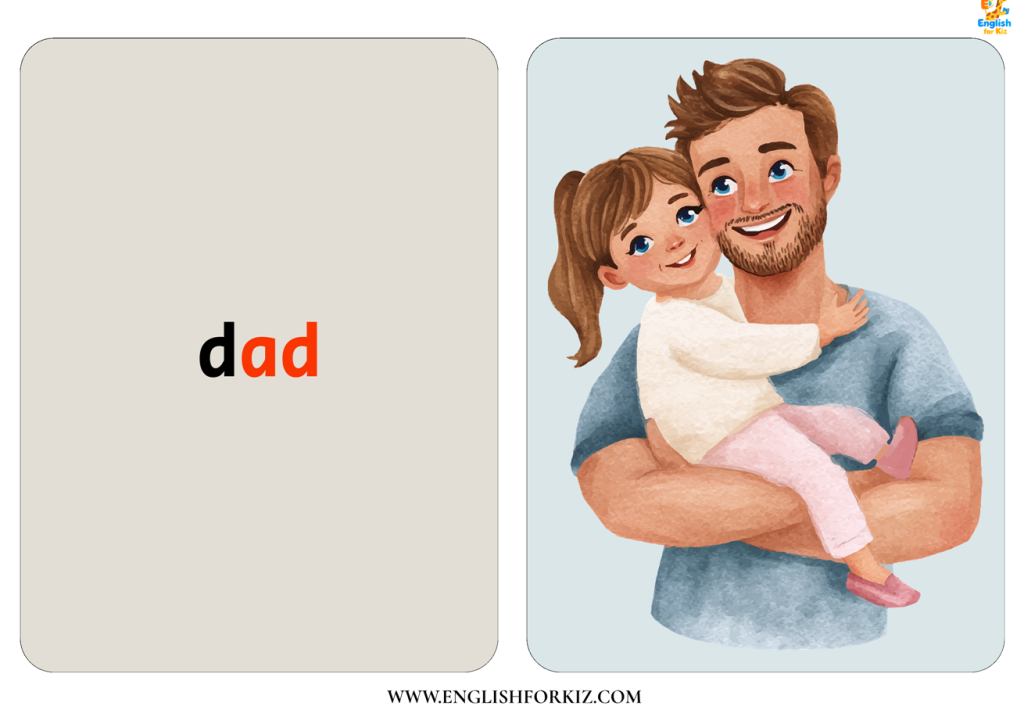
Retest the Skill and Compare the Type of Error
A retest should answer one practical question: did focused practice change the reading behavior? Use comparable words rather than relying only on the exact words the child practiced.
If short e was the main problem, include new short-e words with manageable consonants. If blending was the issue, check whether the child can now move from the three individual sounds to the complete word with less support.
- Several short-e substitutions
- Two specific vowel prompts
- Slow but accurate short-a blending
- No independent corrections
- Fewer short-e substitutions
- Words attempted before help
- Smoother blending
- One independent vowel correction
Compare more than the total number of correct responses. A higher total can still hide the original problem if every short-e word continues to require an adult cue.
Look instead for changes in error location, amount of prompting, willingness to attempt an unfamiliar word, self-correction, and the smoothness of correct blending. Those changes tell you whether the child is becoming more independent.
How often should you retest? Repeat the check after enough targeted practice has taken place to make a comparison meaningful. Avoid presenting the same small list so often that memorizing those exact words becomes the main reason the score improves.
Turn the Reading Check into the Right Kindergarten CVC Practice
The checklist has done its job when it changes what happens next. Match the activity to the observed error instead of assigning more CVC practice simply because the child missed several words.
Narrow the short-vowel set, then gradually reintroduce the vowel that was being confused with it.
Keep the onset and vowel manageable while asking the child to read all the way through the final consonant.
Keep the same letters and concentrate on joining the sounds smoothly before adding sentence complexity.
For worksheet follow-up, CVC short-vowel practice can help adults choose a more focused routine instead of turning the next session into unrelated busywork.
When the target is already known and the child simply needs another review format, phonics games can provide active practice with CVC blending and short-vowel skills. Use the game after teaching, then return to an unaided printed word later if you want to see whether the learning transfers away from the screen.
When Is a Child Ready to Move from CVC Words into Short Reading?
Move forward when the evidence comes from reading behavior, not simply from finishing a worksheet. The child should be able to approach fresh CVC words with reasonable independence and attend to the whole printed sequence.
That does not mean every word must be instant. Slow but accurate decoding can still support the move into a very short sentence when the phonics pattern remains familiar. The sentence then becomes a new place to apply the same skill rather than an entirely new phonics lesson.
Stay at word level a little longer when the child still guesses from the first consonant, regularly skips the medial vowel, needs specific cues on most new examples, or can pronounce all three sounds only when an adult guides each step.
Move a Secure CVC Pattern into Controlled Text
Once isolated words are reasonably stable, a short passage can show whether the same decoding holds up when the child also has to track a sentence and meaning.
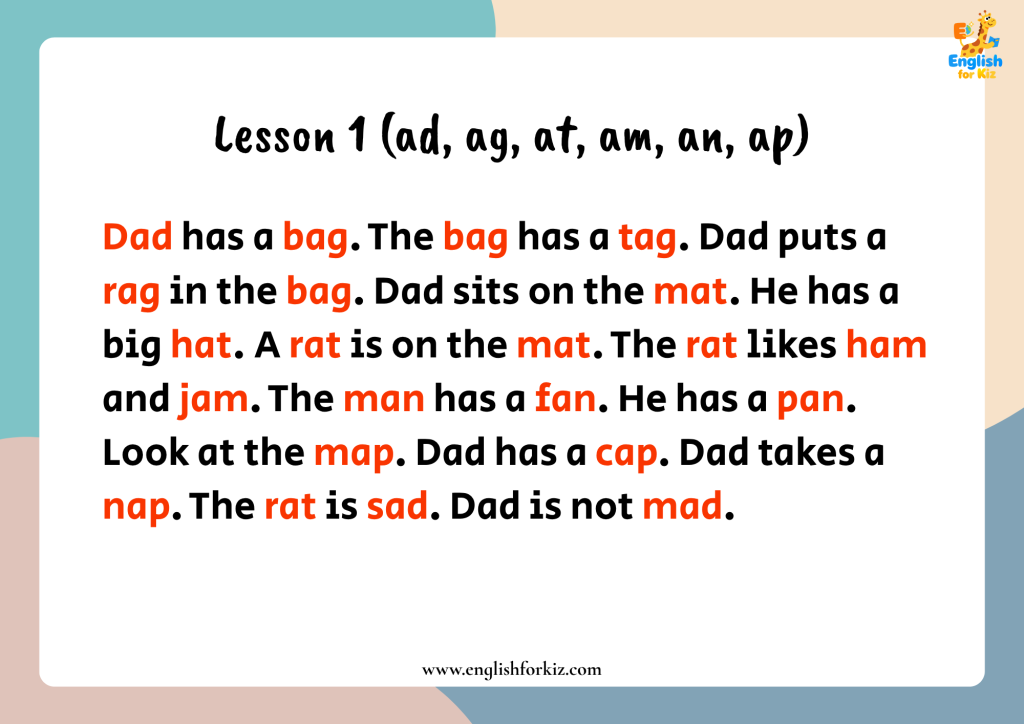
EnglishForKiz Kindergarten CVC decodable stories organize reading around short-vowel word families. Choose a story that uses a pattern the child has already practiced rather than introducing an unrelated spelling pattern during the transfer check.
Read Kindergarten CVC StoriesIf the checklist shows gaps across several areas rather than one isolated error pattern, a broader sequence may be more useful than selecting individual pages. The Kindergarten Phonics Program connects short vowels, CVC blending, printable practice, games, and early reading in one learning path.
What a Useful CVC Reading Record Should Tell You
By the end of a short check, the notes should make the next teaching decision clearer. If the record says only “7/10,” useful information is probably missing.
One child may have three errors that all involve short i, blend the other words independently, and self-correct one final consonant. That record points toward focused vowel work while showing that blending and self-monitoring are available.
Another child may also score seven correct words but show a completely different pattern: every individual sound is identified correctly, yet the sounds remain separated and a prompt is needed to produce the whole word. Repeating letter-recognition practice would not directly address the observed problem. Blending should become the next focus.
That is why a CVC reading accuracy checklist is more useful as an error-pattern record than as a pass/fail sheet. It lets you track accuracy, automaticity, guessing, prompt dependence, sound position, and self-correction separately.
Keep the scope clear. This checklist observes actual CVC word reading. It is not a replacement for a broader phonics inventory, spelling assessment, language evaluation, or professional diagnostic assessment.
Record the first attempt honestly. Note the amount of help. Look for repeated patterns rather than isolated mistakes. Choose the smallest next practice step, then use a later check to see whether the error type and prompt dependence have changed.
Frequently Asked Questions
How many CVC words should be checked at one time?
There is no universal required number. Use a short set that provides enough examples to see a pattern without turning the check into an endurance task. Consistency and variety across comparable checks matter more than reaching a fixed total.
Should children see pictures during the CVC reading check?
Usually not when the purpose is to observe decoding. A picture may help the child predict the word without fully reading the onset, medial vowel, and final consonant. Pictures can return during teaching after the unaided response has been recorded.
What counts as a self-correction?
Count a self-correction as independent when the child changes an incorrect response to the correct word before an adult supplies a sound, identifies the error position, or gives another useful decoding cue. Record both the original response and the correction.
How should vowel errors be recorded?
Write the printed word, the child’s first response, and the vowel substitution. If sit is read as set, note a medial-vowel error and i → e. Several similar substitutions provide more useful planning information than a generic wrong-answer mark.
When should the checklist be repeated?
Repeat it after enough targeted practice has occurred to make a comparison useful. Choose comparable words rather than only the exact items practiced, then compare accuracy, error location, prompt dependence, blending, and self-correction with the earlier record.