
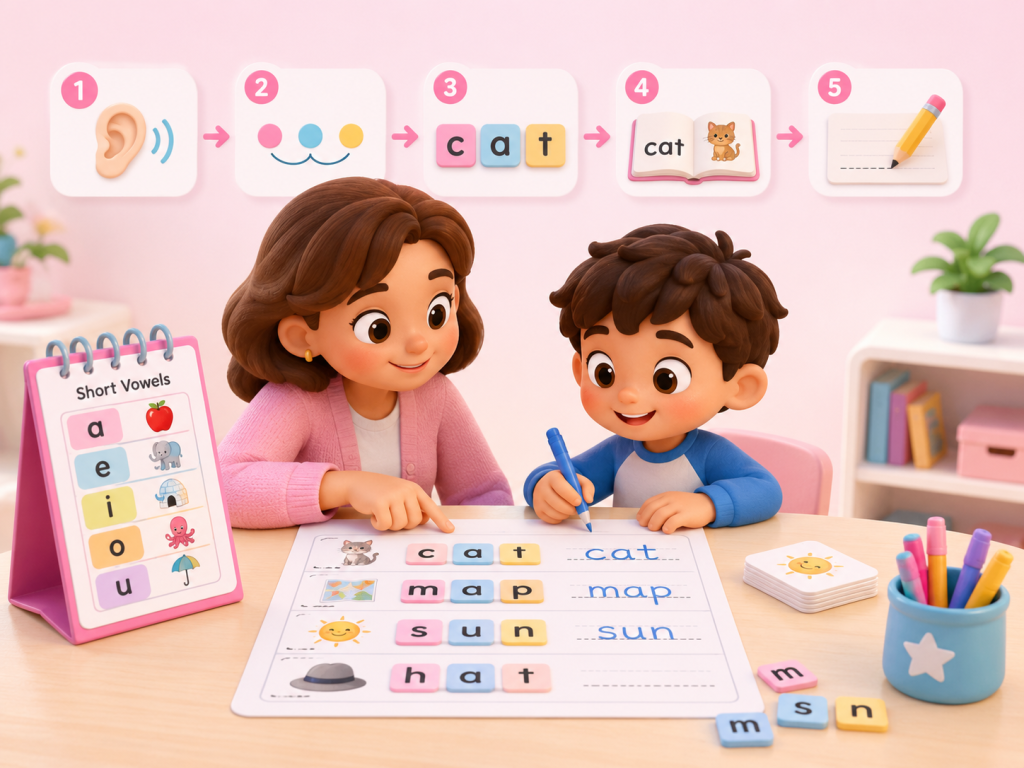
What Three-Sound Practice Teaches Before Children Read Sentences
A three-letter word looks simple, yet a beginner must coordinate several skills. The child needs to hear the sounds, remember their order, connect them with letters, blend them, and understand the completed word.
At first, attention should move across all three letter positions. Looking only at the first letter often leads to guessing. Therefore, early practice needs to make the beginning, middle, and ending sounds equally visible.
The middle vowel usually needs the most support. Consonants often sound clearer, while short vowels are brief and easy to confuse. A focused lesson helps the child hear the vowel before asking for fast word reading.
Blending and segmenting also need to remain distinct. Blending joins /m/, /a/, and /p/ into map. Segmenting begins with map and separates it into three sounds for spelling.
The target vowel is identified in spoken words before printed work begins.
Each sound connects with one letter position from left to right.
The completed word connects with a picture, object, action, or sentence.
Pictures can support meaning, but they should not provide the answer. One useful method is to cover the image while the child reads the word. The picture can then be revealed to confirm meaning.
In addition, early practice should value accuracy more than speed. A slow blend shows that the child is using the letters. A quick guess may sound fluent, but it does not build a process that transfers to unfamiliar words.
Sentence work becomes appropriate when the child can identify the vowel, blend several familiar words, read one unfamiliar word with the same pattern, and explain simple meanings.
Step 1: Review One Short Vowel and Its Sound
A beginner lesson should start with one clear sound target. Keeping the middle vowel stable lowers the memory demand and makes mistakes easier to understand.
Choose a Single Target Sound
Before opening a page, spend one or two minutes on listening. Say the vowel clearly and connect it with several familiar words. A visible mouth movement or simple hand signal can make the sound easier to remember.
Next, include both examples and nonexamples. For short a, an adult might say map, sun, bag, and top. The child can tap once whenever the target sound appears.
This oral check matters because a printed activity cannot repair an unclear sound by itself. If the child cannot hear the vowel, letter selection may become random. Listening should therefore come before circling, matching, or writing.
The middle sound stays stable while the surrounding consonants change. This balance supports real decoding instead of memorizing a single word family.
Clear consonant pronunciation also matters. The sound for m should stay close to /m/, not “muh.” Added vowel sounds make blending harder because /muh/ /a/ /puh/ does not join naturally into map.
Continuous consonants can make the first blends easier. Sounds such as /m/, /s/, /f/, and /n/ can be stretched briefly into the vowel. Stop sounds such as /b/, /t/, and /p/ should remain short and crisp.
Avoid Mixing Too Many Vowels at Once
Mixed-vowel pages become useful after focused practice. However, a first lesson containing cat, hen, pig, log, and sun may require too many sound decisions at once.
Instead, keep several sessions centered on one vowel. The beginnings and endings can change while the middle sound remains stable. Later, introduce a small contrast such as pan and pin.
Four or six comparison words are usually enough. A full page of mixed patterns can create fatigue and hide the exact source of an error. Short, controlled sets provide clearer information.
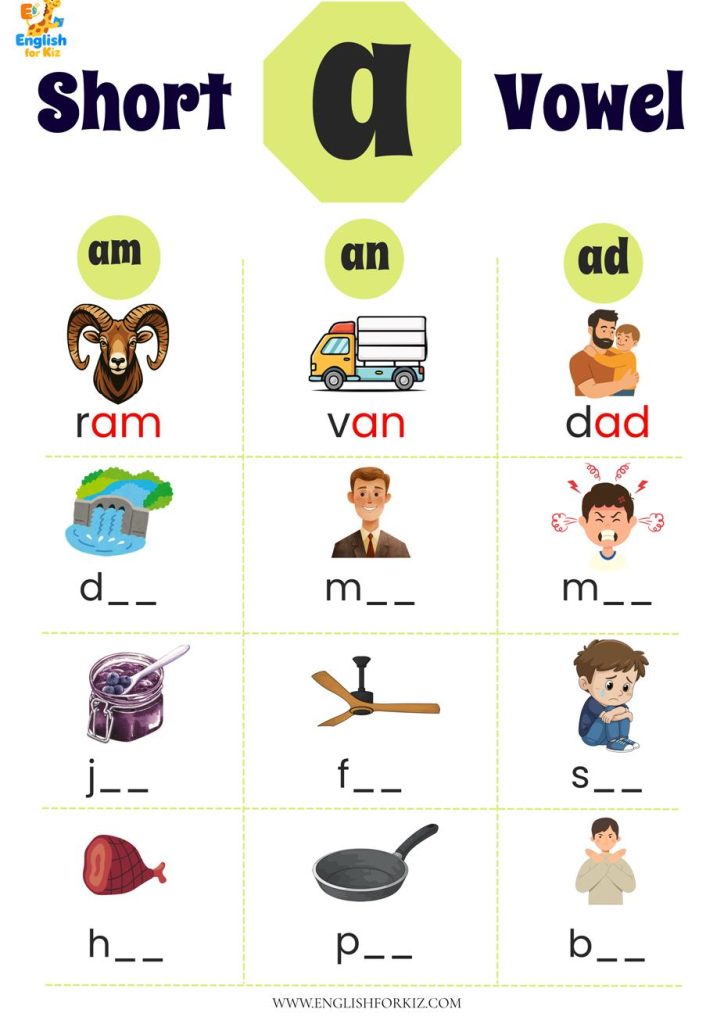
Choose a Page with One Visible Goal
A suitable beginner page uses familiar vocabulary, clear spacing, and a limited number of choices. The main task should be easy to name, such as hearing short a, building short-i words, or reading short-o words.
Tracing can support letter formation, but it should not replace blending. A stronger page asks the child to notice sounds, select letters, read the result, or apply the word in a short phrase.
Vocabulary should also remain familiar. Concrete words such as cat, hat, pig, log, and sun are easier to illustrate and discuss. Unfamiliar picture names can make a decoding task look harder than it is.
Still, familiar words should not become visual guesses. A quick letter-change activity can check attention. Build cat, change c to m, and read mat. Then change t to p and read map.
Step 2: Blend Sounds Before Asking Children to Write
Many beginners can name letters but cannot combine their sounds smoothly. Writing too early adds handwriting, spelling, and memory demands before the reading process feels secure.
A helpful model uses a finger beneath the letters. Move from left to right while producing each sound, then sweep beneath the complete word and say it naturally.
For example, point under m, a, and p while saying /m/ /a/ /p/. Next, slide a finger beneath the word and say map. The motion shows that the sounds belong together.
Some learners respond well to continuous blending. Instead of leaving long gaps, stretch the first sound into the vowel: “mmmaaap.” Gradually shorten the blend until it sounds like normal speech.
Point to the missed letter and ask for that sound. Then rebuild the complete word from the beginning.
Shorten the pauses and combine the first two sounds before adding the final consonant.
Cover the image until the word has been attempted. Reveal it only as a meaning check.
Reduce the set to three words and repeat them in different formats rather than adding more items.
Correction should stay specific. If mat becomes man, point to t and say, “Check the last sound.” This prompt keeps attention on print and gives the child a chance to repair the word.
Repeated reading works best with a small set. Reading five words several times often develops more fluency than reading a long list once. The same words can appear on cards, in sound boxes, and in a matching task.
When Writing Should Begin
Writing can begin after several words can be blended accurately. At first, movable letters reduce the handwriting load. The child hears a word, says it slowly, and places one letter for each sound.
Next, short spelling from dictation can begin. Three words are enough for an early check. After each word is written, the child should read it aloud so spelling reconnects with decoding.
This order helps distinguish reading knowledge from pencil control. A child may understand the sound sequence but write slowly. Another child may copy neatly without being able to read the word.
After practicing map, sat, and fan, present ram. Successful reading shows that the child is applying the vowel pattern rather than memorizing the page.
Step 3: Follow a Worksheet Sequence
A useful set of phonics worksheets moves from supported recognition toward independent application. The order below gives each task a clear purpose.
Picture Match: Confirm Meaning
The child should attempt the printed word before using the picture. Once the word has been blended, the image can confirm meaning. This order keeps the task focused on reading rather than visual guessing.
When an image is unclear, the adult can name the object without revealing the printed word. This separates vocabulary support from decoding support.
Word Build: Make the Sound Order Visible
Movable letters and three sound boxes make the sequence concrete. For map, provide m, a, p, and one distractor. The child stretches the word and places each letter in order.
Word chains provide an efficient extension. Build cat, change one letter to make can, and then change one letter to make man. Reading after every change keeps attention on the altered sound.
Read: Build Accuracy Before Speed
A controlled list should contain six to eight words with clear spacing. The child may point beneath each word while reading. After one accurate round, changing the order reduces position memory.
Timed reading is not necessary at this stage. Instead, notice whether pauses become shorter and whether fewer prompts are needed. Smoothness should grow from correct decoding.
Spell: Map Spoken Sounds to Letters
Say one word naturally, ask the child to repeat it, and then stretch it slowly. One counter or letter goes into each sound box. Afterward, the child writes and reads the word.
When a vowel is omitted, return to the spoken word. Stretch the middle sound and invite the child to repair the spelling. Correcting the word is more useful than simply replacing the answer.
Sentence Reading: Apply the Pattern
Begin with one short sentence containing known patterns, such as “Sam sat” or “The cat ran.” After reading, ask one simple meaning question. This step checks whether decoding leaves enough attention for comprehension.
Sentence strips can also support word order. Place one word on each card, arrange the sentence, and read it from left to right. Once one line feels comfortable, add a second sentence with a small change.
Move into Controlled Stories Gradually
After short sentences become manageable, decodable readers can extend the same sound pattern into connected text. The selected passage should match letters and vowel patterns that have already been taught.
Preview only the few words that may cause difficulty. Reading the entire passage aloud first can turn the activity into memorization instead of decoding.
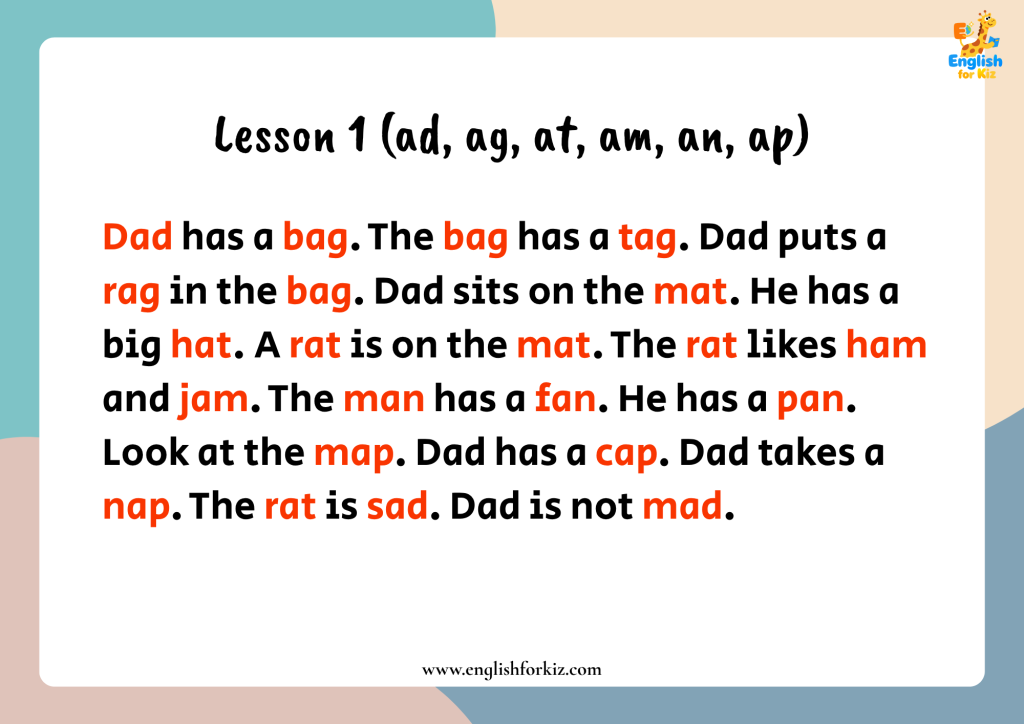
Choose Practice That Matches the Current Step
Picture matching and word building are suitable when sound order still needs support. Reading and spelling pages become more useful after blending is stable. Sentence practice should follow when word reading no longer uses all available attention.
A Simple 15-Minute Beginner Practice Routine
A short routine can provide steady practice without exhausting attention. Each part should reinforce the same vowel and the same small word set.
Review the sound orally and identify it in several spoken examples.
Use printed words or letter cards with a finger sweep or sound buttons.
Select picture matching, word building, reading, or brief spelling.
Use a word hunt, sound sort, card flip, or focused phonics game.
Finish with a successful application and one simple meaning question.
The opening sound review should remain brief. For short i, compare words such as pig, map, sit, and log. A tap or counter drop can mark each word containing the target vowel.
During blending, use three to five words with the same middle sound. If one word remains difficult, compare it with an easier word that shares the same ending. For example, pig can be compared with fig.
The printed task should require thinking. Building three words, choosing the missing vowel, or reading and matching four words gives clearer information than completing a large page of tracing.
Next, a short review activity can refresh attention. EnglishForKiz phonics games can support the same sound after direct teaching. Offline options include turning over word cards, sorting words by vowel, or finding a called word.
The lesson should close with success. A line such as “The pig can sit” applies the practiced vowel inside connected text. One question, such as “What can sit?” keeps meaning present.
The same five-part routine can use new cards, counters, printables, games, and sentences. Familiar structure lowers confusion, while varied materials prevent practice from becoming repetitive.
Common Mistakes and Signs the Child Is Ready to Progress
The type of error matters more than the number of completed answers. A missed word may reflect weak vowel recognition, lost sound order, picture guessing, or simple fatigue.
Return to one stable vowel, then compare only two familiar sounds in a short set.
Use oral blending and movable letters until the sound sequence becomes clear.
Reduce the list and reuse the same words for building, reading, and spelling.
Point to the missed sound and allow the child to repair the complete blend.
Handwriting can also hide reading knowledge. A child who builds a word correctly but writes slowly may need separate fine-motor support. A child who cannot build the word needs more sound work.
Fatigue should be considered before lowering the phonics level. When performance is accurate at the beginning but declines near the end, a shorter session may solve the problem.
More Focused Practice Is Needed When
- The middle vowel is often skipped or replaced.
- Pictures provide most of the answers.
- Long pauses separate every sound.
- The first sound is forgotten before the word ends.
- Copied words cannot be read afterward.
The Child Is Ready to Progress When
- Unfamiliar words with the taught vowel can be blended.
- The middle sound is identified reliably.
- Three sounds can be segmented in the correct order.
- Several familiar words can be built or spelled.
- A short sentence can be read and understood.
Progress does not require perfect speed. A child may still pause or need help with one consonant. The stronger sign is transfer: the taught sound pattern works in new words and short text.
A practical check can use five tasks. Ask for one vowel identification, two unfamiliar word blends, one dictated spelling, and one short sentence. This small sample gives more useful information than a long review page.
Continue with EnglishForKiz Worksheets and the Kindergarten Program
The next resource should match the next visible reading need. A colorful page is not automatically the right page.
Select listening, picture sorting, and one-vowel discrimination tasks.
Select sound buttons, letter cards, short lists, and word-building pages.
Select sound boxes, missing-vowel work, letter building, and short dictation.
Select controlled phrases, short sentences, and level-matched stories.
For home practice, one carefully chosen page can support a complete fifteen-minute lesson. Completing half a page accurately may be enough. A large packet does not need to be finished in one sitting.
For classroom use, one page can support several responses. One child may build words, another may read them, and another may match meanings. The target sound remains stable while participation changes.
For homeschool planning, the order should remain visible across the week. Sound review comes first, followed by blending, spelling, and reading. This sequence prevents practice from becoming a stack of unrelated printables.
When a connected learning path is more useful, the EnglishForKiz Kindergarten phonics program provides a clear next step from short vowels into word reading, games, printables, and controlled text.
Choose the Next Step without Adding More Busywork
Printable practice is suitable when one specific skill needs attention. The kindergarten learning path is a better fit when several lessons need to follow a continuous order from short vowels into early reading.
Related Reading
These guides provide additional support for short-vowel selection, kindergarten learning order, and manageable home phonics practice.
FAQ
What are three-sound practice pages used for?
They help beginners connect spoken sounds with printed letters. A clear sequence can support vowel recognition, blending, word building, spelling, and simple reading.
The page should have one main purpose. For example, a picture-matching activity can confirm meaning, while a sound-box task can support spelling.
Which short vowel should beginners practice first?
There is no required first vowel for every child. Short a is often practical because words such as cat, map, fan, and bag are familiar and easy to illustrate.
The best starting sound is one the child can hear clearly and combine with known consonants. The learning order matters more than the exact first vowel.
Should children blend words before writing them?
Yes. Oral blending helps the child understand how separate sounds form one word. Movable letters can then connect those sounds with print without adding handwriting pressure.
Independent spelling becomes more useful after several words can be blended and segmented accurately.
How do I know when a child is ready for decodable sentences?
The child should read familiar three-sound words accurately and blend a few unfamiliar examples with the same vowel pattern. Fast reading is not required, but frequent picture guessing should have decreased.
After reading one short sentence, the child should also answer a simple meaning question. If decoding uses all available attention, continue with words and phrases before adding longer text.
How many words should be practiced in one session?
Three to five target words are often enough for a short beginner lesson. The same words can be heard, built, read, spelled, and used in one sentence.
Later, one or two unfamiliar words can check whether the sound pattern transfers beyond the original set.
Used in the right order, CVC worksheets can support a steady move from hearing one short vowel to blending, spelling, and meaningful sentence reading. Progress should follow accuracy and understanding rather than the number of pages completed.
- Choose one vowel and a small group of familiar words.
- Blend orally and with movable letters before adding independent writing.
- Move into sentences only when word reading leaves enough attention for meaning.