
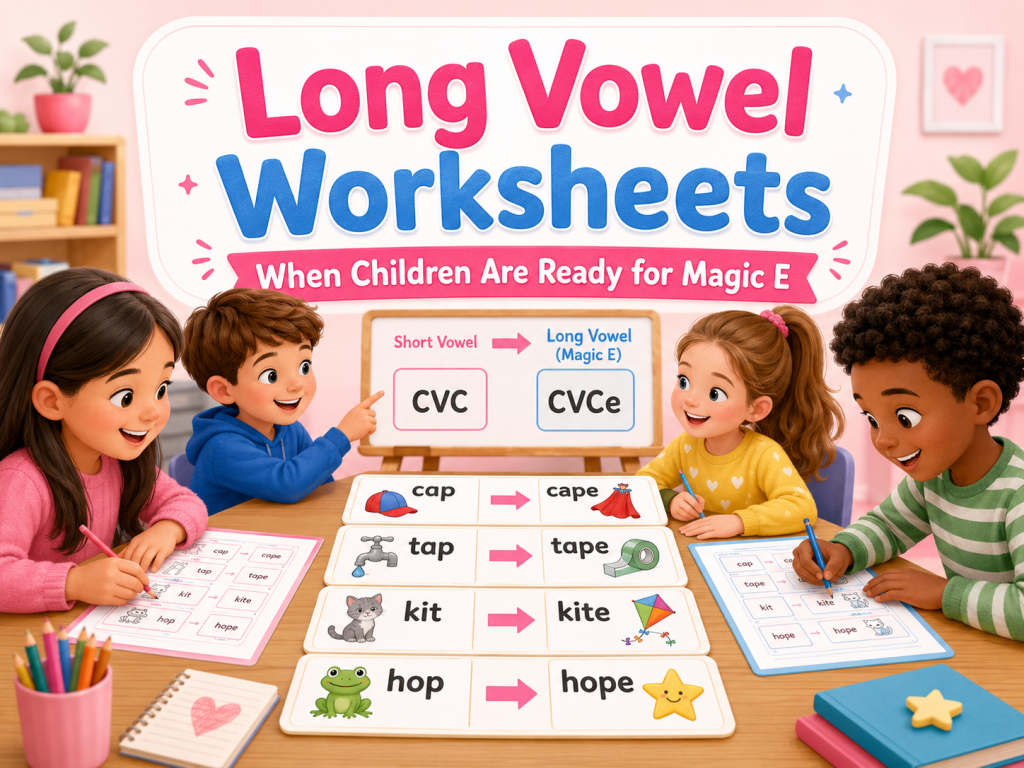
Magic E is easier to teach when it grows from skills a child already controls. Before using long vowel worksheets, the learner should read short-vowel CVC words with reasonable accuracy, notice every letter, and blend without relying on pictures. This guide shows how to check readiness, introduce CVC and CVCe contrasts, select useful practice pages, correct common errors, and move into sentence reading without rushing the transition.
Skills Children Need Before Magic E
A final e changes more than the appearance of a word. The child must hold the first vowel in mind, notice the final letter, adjust the vowel sound, and blend the word again. When short-vowel reading is still fragile, this extra decision can turn a useful pattern into a guessing rule.
Readiness does not mean perfect fluency. Slow but accurate CVC reading can support the next step. Repeatedly confusing the middle vowel, omitting sounds, or naming a word from its picture usually means the foundation needs more attention.
Short vowels stay accurate
A learner should read mixed words such as map, bed, sit, hop, and cub without turning several of them into different vowel words. Word-family success alone is not enough because a memorized list may hide weak vowel discrimination.
Three sounds blend into one word
The child should combine /m/ /a/ /d/ into mad and keep the sounds in order. This left-to-right routine later supports the change from mad to made.
One letter change is noticed
With tiles or cards, the learner should change tap to tip or pin to pan. Flexible word building shows that each letter position carries information.
CVC spelling represents each sound
Spelling does not need to look polished, but the beginning, middle, and ending sounds should appear. Writing mt for mat suggests that the vowel is not stable enough for CVCe spelling.
Signs a Child Is Ready for Long Vowel Worksheets
Age and grade level provide context, but reading behavior should make the final decision. A first grader may still need short-vowel practice, while a younger learner may be ready for a small CVCe contrast. The most useful check looks at reading, word manipulation, and transfer together.
A quick readiness checklist
- Mixed CVC words are mostly accurate, even outside familiar word families.
- The child blends from left to right instead of naming a picture.
- Short-vowel errors are sometimes self-corrected after checking the letters.
- Simple word building and dictation include the middle vowel.
- A four-to-six-word decodable sentence can be read with light support.
- The child can compare two similar words for several focused minutes.
A small trial gives better information than a long assessment. Show cap and cape, read both together, and ask what changed. If the learner notices the added e and hears a different first-vowel sound, instruction can continue with two or three more pairs.
Confusion during that trial does not mean failure. It simply shows that the next useful task is still short-vowel work. A week of focused blending, word building, and mixed CVC review may make the contrast much clearer.
Introduce CVC and CVCe Word Comparisons
Magic E makes the most sense when a child can see a familiar short-vowel word change. Pairs keep the consonants stable and place attention on the vowel pattern. That comparison is more useful than asking a learner to repeat “the vowel says its name” without reading real words.
Use a cover, reveal, compare routine
- Show and blend the CVC word, such as cap.
- Add or uncover the final e, then read cape.
- Remove the e and return to cap.
- Ask which letters stayed the same and which sound changed.
Moving in both directions keeps the lesson from becoming a memorized performance. The child sees that adding or removing one letter changes pronunciation and meaning. A short oral sentence, such as “The cape is red,” confirms vocabulary after the word has been decoded.
Begin with one CVCe pattern rather than mixing several long-vowel patterns at once. Three clear a_e pairs may be enough for the first lesson. When the child reads them in mixed order and spells at least one pair, a second pattern such as i_e can be introduced later.
A five-minute word-chain example
Build tap, add e to make tape, remove e, change the first letter to form cap, and add e again to make cape. After every change, the child reads the word before touching another letter. This routine links decoding, spelling, and visual attention in one compact activity.
A Worksheet Sequence for Magic E Practice
A useful worksheet sequence asks one main question at a time. Can the child notice the pattern? Can the child read it? Can the child spell it? Can the child keep it accurate inside a sentence? When every page mixes all four tasks, the source of an error becomes difficult to identify.
Notice
Circle final e, underline the earlier vowel, or match a CVC word with its CVCe partner. This page teaches where to look.
Read
Read paired and mixed words from one vowel pattern. The child should not know whether the short or long form comes next.
Sort
Place words into short-vowel and Magic E groups after reading each one. Sorting by sound prevents the activity from becoming a visual letter hunt.
Spell
Complete missing letters, build word chains, and write two or three dictated words. Encoding shows whether the pattern can be produced, not only recognized.
Read in a phrase
Use short contexts such as a red cape, ride the bike, or hope for rain. The meaning becomes clear without adding a long sentence.
Transfer to a sentence
Finish with one or two controlled sentences and a brief read-back after correction. The new pattern should remain the main challenge.
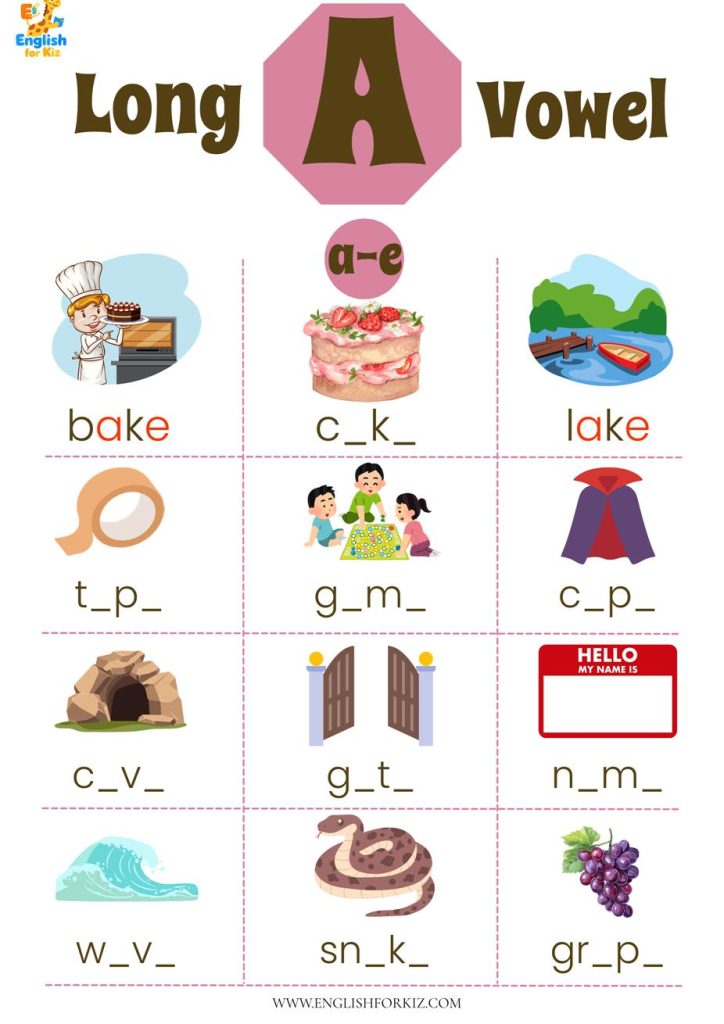
Choose a page that matches the error
A child who reads cape as cap needs paired comparison and final-e attention. A child who reads correctly but writes cap for cape needs word building and dictation. Sentence pages belong later, after the pattern is secure in isolated words.
The EnglishForKiz phonics worksheets page organizes printable practice by grade and skill. For this stage, the strongest choice is a clean Magic E page with familiar pictures, readable print, and one visible spelling goal.
Browse Magic E Worksheets| What happens during practice? | Choose this next | Move on when |
|---|---|---|
| Final e is skipped during reading | CVC/CVCe pairs and visual tracking | The child checks the word ending before blending |
| The word is read correctly but e is omitted in spelling | Letter tiles, word chains, and short dictation | Mixed short and long pairs are spelled accurately |
| One pattern is secure, but two patterns become mixed | Single-pattern review followed by a small contrast set | Both patterns stay accurate in random order |
| Lists are accurate, but sentences break down | Short phrases and controlled four-to-six-word sentences | The target words remain accurate inside the sentence |
Move from Words to Sentences and Controlled Reading
Word-list accuracy is an important checkpoint, but it is not the end of the lesson. Connected reading asks the child to manage spaces, punctuation, supporting words, meaning, and the new vowel pattern at the same time. The move should happen early, but the text must stay controlled.
Begin with short sentences such as “Jake can ride the bike” or “The mule came home.” Most supporting words should use patterns already taught. When a sentence contains several unfamiliar vowel teams and irregular words, it no longer gives a fair picture of Magic E transfer.
Use a read, repair, reread routine
- Let the child attempt the whole sentence without pre-reading every target word.
- At an error, direct attention to the vowel and word ending rather than supplying the answer.
- Blend the corrected word, then reread the full phrase.
- Ask one short meaning question after the sentence is accurate.
Phrase scooping can support smoother reading after decoding. Lightly group ride the bike or make a cake, then read the phrase again with natural pacing. Fluency grows from successful decoding; it should not replace the careful first attempt.
Use a reader as a transfer check
A controlled story reveals whether the child recognizes CVCe words when they are no longer arranged in a worksheet list. The text should include a manageable number of target words and familiar supporting code, so attention can remain on accurate reading and meaning.
EnglishForKiz decodable readers include a 1st Grade pathway for Magic E and long-vowel practice. A short reader fits after word and sentence accuracy, not before the child understands the pattern.
Explore Long Vowel Readers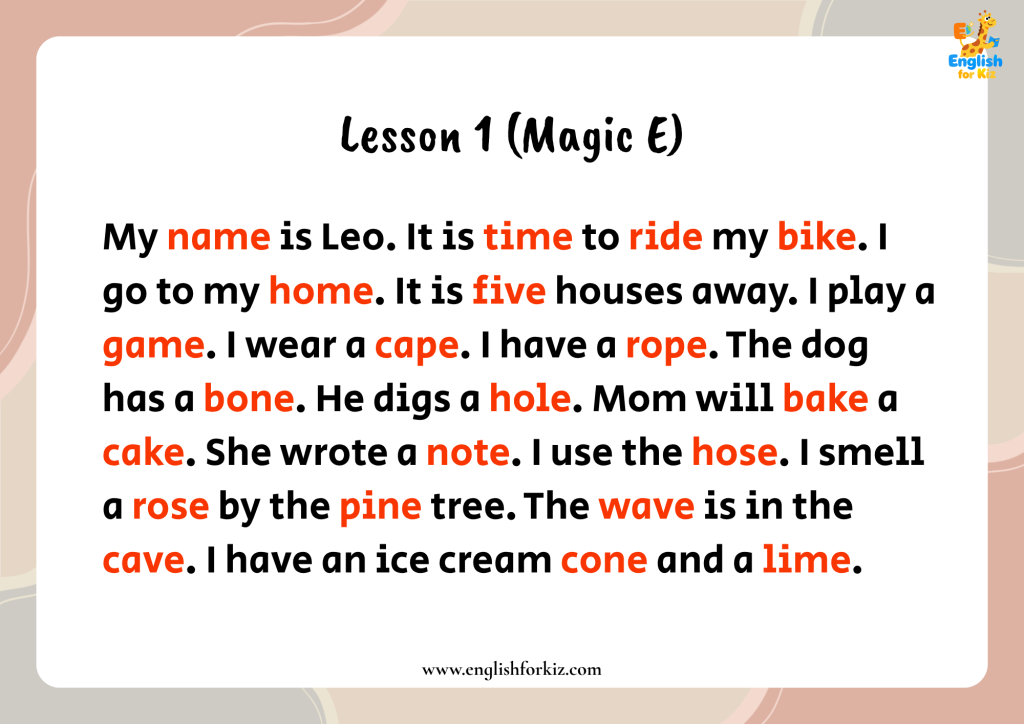
Common Confusions and How to Review Them
Magic E mistakes usually point to a specific missing action. Repeating a full worksheet packet may add practice without fixing that action. A short correction task is often more effective because it directs attention to the exact point of confusion.
CVCe is read as a short-vowel word
Place the short and long forms side by side. Ask the child to check the word ending before blending, then reread the full pair. Temporary underlining can help, but the cue should fade once final e is noticed independently.
The wrong long-vowel sound is used
Return to one spelling pattern and three clear examples. Keep a_e separate from i_e until each pattern stays accurate. Mixing several vowels is useful only after individual patterns are stable.
The child reads hope but writes hop
Build hop, add e to make hope, and dictate both forms in random order. Asking whether the vowel is short or long before spelling helps connect sound with the final letter.
Final e is added where it does not belong
Overgeneralization is a normal sign that the new pattern is active. Compare tap/tape and ask which vowel sound is heard before writing. The child needs a choice routine, not a longer rule explanation.
Common words such as have, give, and come do not follow the simple classroom pattern. These exceptions should be taught separately after the regular contrast is clear. Introducing a long exception list during the first lesson makes a useful pattern feel unreliable.
Fatigue can also imitate a skill problem. A child who reads accurately for six minutes and begins skipping letters after fifteen may need a shorter session rather than easier material. Stop while attention is still productive, then return to the pattern the next day.
Combine 1st Grade Worksheets, Games and Readers
Each resource should answer a different learning need. Worksheets slow the pattern down for observation and spelling. Games add active repetition, while readers show whether the pattern transfers into meaningful text. Using all three at once is unnecessary; using them in the right order is more valuable.
Worksheets
Choose these when the child needs to compare spellings, record answers, or show exactly where an error occurs.
Games
Use a short word ladder, matching task, or the EnglishForKiz phonics games after the pattern has been taught. Every game response should still involve reading.
Readers
Move here when target words are accurate in mixed lists and sentences. The reader checks fluency, meaning, and independent decoding together.
A practical 18-minute lesson
- 3 minutes: read five mixed CVC review words.
- 5 minutes: compare and build three CVC/CVCe pairs.
- 5 minutes: complete one focused worksheet task or game.
- 5 minutes: read two sentences or a short controlled passage.
The routine can be shortened when attention drops. One accurate comparison, three dictated words, and one sentence may be enough for a productive day. More pages do not automatically create stronger reading.
Continue with a connected 1st Grade pathway
When CVC foundations are secure and random practice no longer shows a clear next step, the 1st Grade phonics program provides the main progression into long vowels, spelling practice, games, and controlled reading. The best starting point remains the skill the child can demonstrate today.
Explore the 1st Grade Program