Kindergarten reading can feel confusing when children know a few letters but still cannot blend simple words. However, early reading becomes much easier when lessons follow a clear order. This guide explains what phonics for kindergarten should include first, how each skill connects to the next, and which EnglishForKiz resources can support a complete learning path.
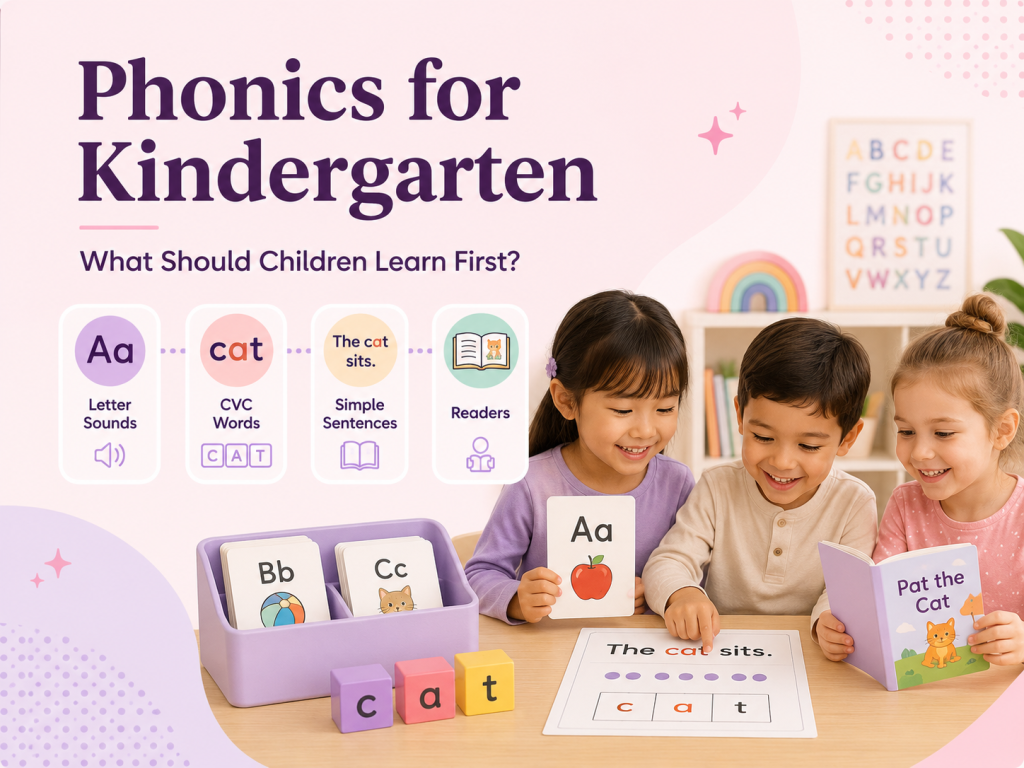
In short, children need to hear sounds, connect sounds to letters, blend CVC words, read simple sentences, and then move into decodable stories. Therefore, the goal is not to rush into long books. Instead, the goal is to build a calm, structured reading routine that parents, teachers, and homeschool families can actually use.
Article Navigation
Learning Path Letter Sounds CVC Blending Sentences & Stories What to Start With Resources FAQ

What Kindergarten Phonics Should Include
First, kindergarten phonics should include sound awareness, letter sounds, blending, simple spelling, sight words, sentence reading, and decodable stories. These skills should not appear as random activities. Instead, each skill should prepare children for the next step.
For example, a child who can hear the sounds in map can later connect those sounds to m, a, and p. Then, the child can blend the sounds into a real word. This is why listening, speaking, reading, and writing should work together.
This sequence also follows the general principle of systematic phonics instruction. The National Reading Panel findings explain that systematic phonics instruction can support children as they learn to read, including young learners in kindergarten.
- Phonemic awareness: hearing and working with sounds in spoken words.
- Letter sounds: connecting printed letters with spoken sounds.
- CVC blending: reading simple words like cat, bed, sit, hop, and cup.
- Sight words: recognizing common words that appear often in short texts.
- Decodable reading: reading short stories built from taught phonics patterns.
The simple order that works best
Start with sounds. Then, connect sounds to letters. Next, blend CVC words. After that, read simple sentences and short decodable stories. This order keeps practice clear and reduces guessing.
Start with Letter Sounds
Letter names matter, of course. However, letter sounds are more useful when children begin reading. A child may know the letter name “em,” but reading mat requires the sound /m/. Therefore, kindergarten lessons should connect each letter name with its sound.
At the beginning, a small group of useful consonants and short vowels is enough. For example, m, s, t, a, p, and c can support early blending. Then, children can read words such as sat, mat, tap, and cap.
How to make letter-sound practice stick
First, say each sound clearly and briefly. For example, /m/ should not become “muh.” Extra vowel sounds can make blending harder later. So, clear modeling matters.
Next, connect the sound to a familiar keyword. The letter m can connect to moon or map. Meanwhile, short daily review helps children remember sounds long enough to use them in real reading.
Move into CVC Blending
After children know several letter sounds, they can begin blending CVC words. CVC means consonant-vowel-consonant. These words include cat, bed, sit, hop, and fun. Because the pattern is simple, children can focus on putting sounds together.
At first, blending should be slow and supported. A child may say /c/ /a/ /t/ and still need help hearing cat. Therefore, adults can model the process many times. Gradual practice matters more than speed.
Blending should not become guessing
Sometimes, children look at the first letter and guess the whole word. For example, they may see m and say man when the word is mat. However, blending requires attention to every sound.
A helpful prompt is simple: “Touch each sound.” Then, the child points to m, a, and t while saying each sound. After that, the child blends the sounds together. This routine builds careful reading habits.
Continue with a structured kindergarten path
When children are ready to move from letter sounds into blending, the Kindergarten Program gives practice a clearer order. It connects short vowels, CVC words, sight words, simple sentences, games, and early stories in one learning path.
Add Simple Sentences and Decodable Stories
Once children can blend CVC words, simple sentences become the next step. At this point, reading begins to feel more meaningful. Children are no longer reading only word lists. Instead, they are reading small messages.
For example, a child who can read cat, can, sit, and mat can read “The cat can sit.” This sentence includes decodable words and a common sight word. Therefore, it connects phonics practice to real reading.
Next, children can move into short decodable readers. These stories use phonics patterns children have already learned. As a result, children can decode more words instead of guessing from pictures.
When stories are useful
Decodable stories work best after children can blend several simple words. At first, each page can include one short sentence, familiar CVC words, and a few practiced sight words. Then, as children learn more patterns, stories can become longer.
Moreover, stories help children feel like real readers. Word lists build skill, but stories give practice a purpose. When children read a short story successfully, they often become more willing to try the next one.
Which EnglishForKiz Resource Should Start First?
A strong learning article should not leave readers wondering what to do next. So, the best starting point depends on the child’s current skill. The guide below helps match each learning need with the right EnglishForKiz resource.
Simple resource selection guide
- Start with the Kindergarten Program when a full step-by-step phonics path is needed.
- Use worksheets when children need quiet practice, homework, small-group review, or printable support.
- Add phonics games when children need more repetition without another paper activity.
- Move into decodable stories when children can blend CVC words and are ready for short text.
- Choose full access when ongoing practice across worksheets, games, videos, flashcards, and stories is easier than collecting separate materials.
Related EnglishForKiz Resources
The best kindergarten routine uses more than one activity type. A full program gives the learning order. Worksheets support written practice. Games add active review. Stories help children move from word reading into real text. The resources below match different classroom, home, and homeschool needs.
Kindergarten Program
Best for parents, teachers, and homeschool families who want one clear learning path from letter sounds to early reading.
Start with Program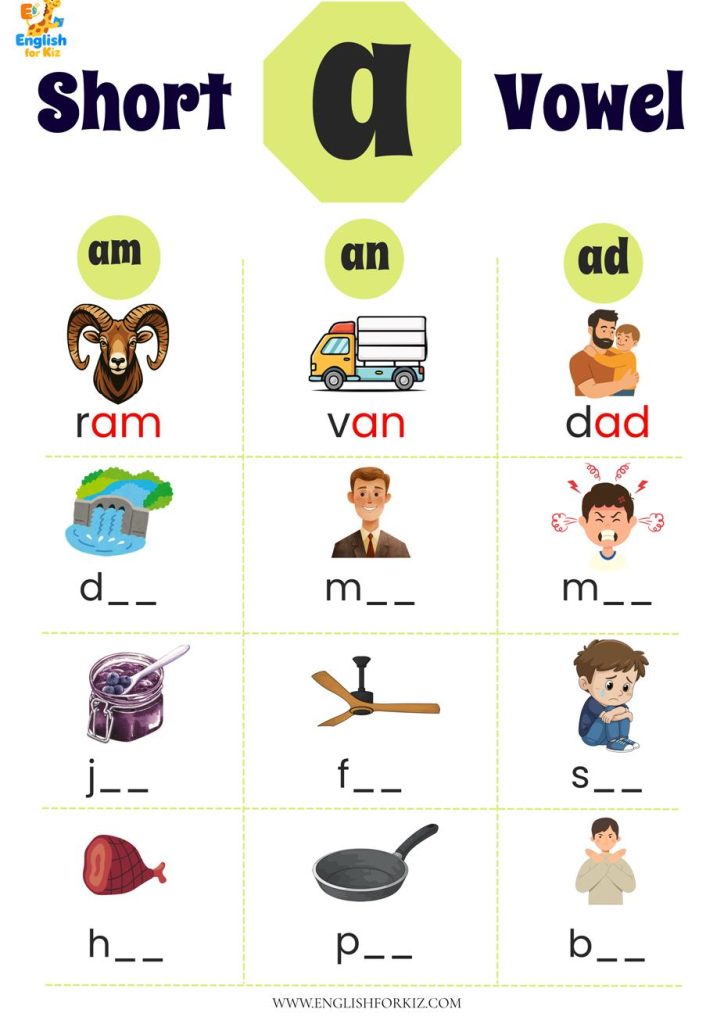
Kindergarten Worksheets
Best for quiet practice, small groups, homework, handwriting, short vowels, and printable review after each lesson.
Explore Worksheets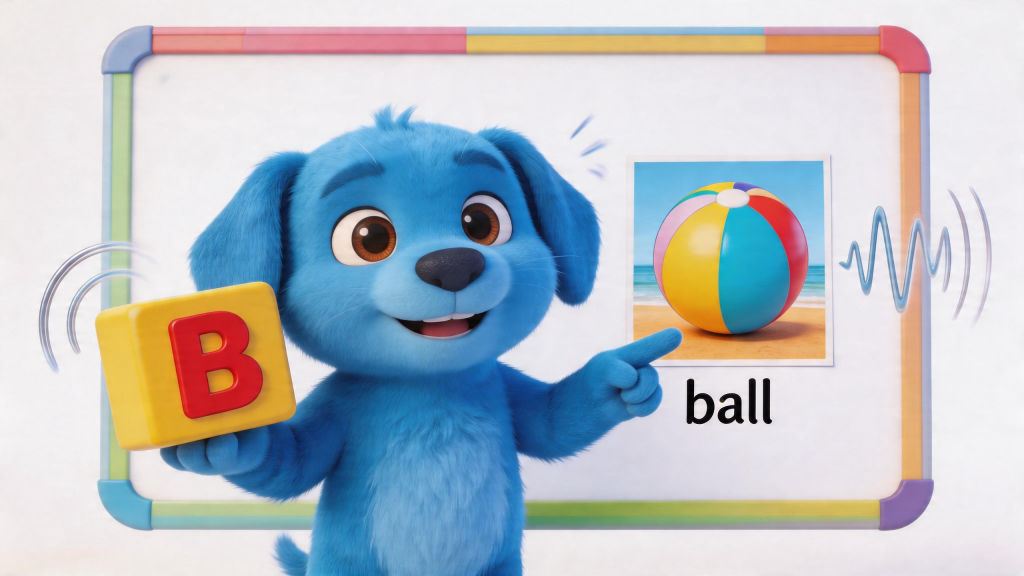
Phonics Games
Best for active review, classroom centers, short home practice, and children who need more repetition.
Play Games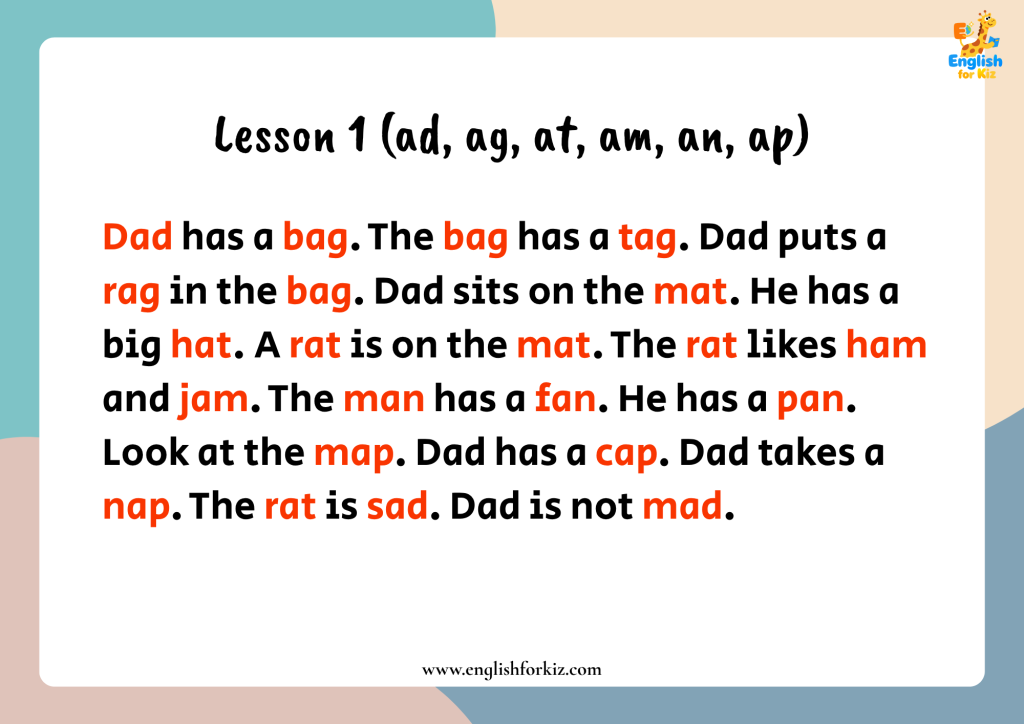
Decodable Stories
Best for children who can blend CVC words and are ready to read short sentences in meaningful text.
Read StoriesA Simple Weekly Kindergarten Phonics Routine
EnglishForKiz works best when resources support one clear weekly skill. For example, a week can focus on short a CVC words. Then, children can hear the sound, blend words, write words, play a review game, and read a short text.
This routine keeps practice connected. In addition, it helps adults avoid jumping between unrelated activities. Children meet the same skill in different formats, which makes review feel natural rather than repetitive.
- Monday: Introduce or review one sound pattern with picture cards or flashcards.
- Tuesday: Blend two or three CVC words using visible letter cards.
- Wednesday: Use one worksheet for handwriting, matching, or spelling practice.
- Thursday: Add a short game or word sort for active review.
- Friday: Read a simple sentence or a short decodable story.
How Long Should Kindergarten Phonics Lessons Be?
Kindergarten lessons work best when they are short and focused. Many children do well with 10 to 20 minutes of direct phonics practice. However, the exact timing depends on attention, confidence, and the learning setting.
In a classroom, phonics may appear in a whole-group lesson, a small-group rotation, and a literacy center. At home, one short daily routine may be enough. Either way, consistency matters more than long sessions.
A 15-minute structure
- 3 minutes: review known sounds.
- 7 minutes: teach or practice one target skill.
- 5 minutes: read or write a few words and one short sentence.
Common Kindergarten Phonics Mistakes to Avoid
One common mistake is moving into readers before children can blend simple words. As a result, children may memorize pages or guess from pictures. Another mistake is teaching too many patterns at once.
For example, short vowels, digraphs, blends, and silent e should not all appear in the same early lesson. Instead, children need a clean sequence. They also need time to review before adding harder patterns.
Also, phonics should not become only paper work. Worksheets have value, but children need to say sounds, move letters, read words, and hear feedback. Therefore, practice should include both print and speech.
Summary: A Clear First Path for Kindergarten Reading
In the end, early reading grows best through a steady sequence. Children first hear sounds, then learn letter sounds, blend CVC words, read simple sentences, and finally move into controlled stories. This path keeps lessons manageable and helps children understand how reading works.
For a strong start, focus on three practical actions:
- First, teach a small set of letter sounds well. Review them often before adding too many new patterns.
- Next, connect every sound lesson to blending. Children should use sounds to read real words as soon as they are ready.
- Finally, move from words into sentences and stories. This helps phonics become meaningful reading practice.
Start with the right EnglishForKiz path
For a complete early reading routine, start with the Kindergarten Program. Then, add worksheets, games, and stories as children become ready for more practice. For ongoing access across worksheets, videos, flashcards, games, and readers, EnglishForKiz membership gives one connected place to continue.
FAQ
What should kindergarten children learn in phonics?
Kindergarten children should learn sound awareness, letter sounds, CVC blending, simple spelling, common sight words, short sentences, and decodable stories. However, these skills should follow a clear order.
Should kindergarten start with letter sounds or CVC words?
Kindergarten should usually start with letter sounds and listening skills. Then, children can move into CVC words after they know enough sounds to blend simple patterns.
How long should phonics lessons be?
Most kindergarten phonics lessons should be short and focused. A 10- to 20-minute lesson often works well, especially when it includes review, one clear skill, and a small reading task.
Do kindergarten children need worksheets and games?
Yes, both can help when they match the skill being taught. Worksheets support written practice, while games add movement, repetition, and review.
When should children read decodable stories?
Children can begin decodable stories after they can blend simple words and recognize a few common words. At first, stories should be short and closely matched to taught phonics patterns.