
Understanding CVC Readers: A Comprehensive Guide
CVC readers are essential tools in early literacy education. They focus on simple, three-letter words that follow a consonant-vowel-consonant pattern. Words like “cat,” “dog,” and “hat” are typical examples.
These readers help children grasp the relationship between letters and sounds. This understanding is crucial for developing phonemic awareness. Phonemic awareness is a key skill for reading proficiency.
CVC readers are often used alongside CVC worksheets and games. These resources make learning interactive and engaging. They reinforce the concepts taught through CVC readers.
CVC worksheets provide practice in identifying and forming CVC words. Activities like matching and fill-in-the-blank exercises are common. These worksheets support the learning process.
CVC games add an element of fun to learning. They can be digital or physical, such as board games or card games. Games help engage children and reinforce their understanding of CVC words.
Phonics instruction, including CVC readers, is vital for teaching children to decode words. CVC readers often include repetitive text and illustrations. This supports comprehension and retention.
Incorporating CVC readers into daily routines can improve reading fluency. It also boosts a child’s confidence in their reading abilities. Early exposure to CVC readers sets a strong foundation for future reading skills.
Parents and educators play a crucial role in this process. They can support learning by reading CVC books with children. Discussing words and sounds enhances understanding.
CVC readers are typically used in kindergarten and first-grade classrooms. They are part of structured literacy programs. These programs align with educational standards for early literacy.
Understanding CVC readers is essential for anyone involved in early childhood education. This guide will explore their importance, usage, and benefits. Let’s dive into the world of CVC readers.
What Are CVC Readers?
CVC readers are educational tools designed specifically for young learners. They focus on three-letter words formed by a consonant, vowel, and consonant. These words are foundational for building phonics skills.
CVC words are easy for children to decode. They help beginners understand basic phonetic principles. This is crucial for developing reading fluency at an early age.
The simplicity of CVC words makes them ideal for starting readers. Words such as “bat,” “net,” and “jug” are typical examples used in CVC readers. These words are simple and phonetically consistent.
CVC readers often include repetitive phrases and illustrations. The visuals help children connect text with images. This supports comprehension and enhances retention.
A typical CVC reader may feature:
- Simple, repetitive text
- Bright, engaging illustrations
- Phonetically consistent CVC words
CVC readers are usually part of kindergarten and early primary curricula. Teachers introduce them to promote early literacy skills. They are often used in reading centers and small group activities.
Parents can also use CVC readers at home. Reading together reinforces lessons taught in school. It also creates a joyful and supportive learning environment.
Using CVC readers helps children become comfortable with basic reading skills. These skills are a stepping stone to more complex reading activities. By mastering CVC words, children gain confidence in their reading abilities.
Children who engage with CVC readers regularly tend to develop strong phonemic awareness. This foundational skill supports future reading and writing tasks. Understanding and utilizing CVC readers can significantly impact a child’s literacy journey.
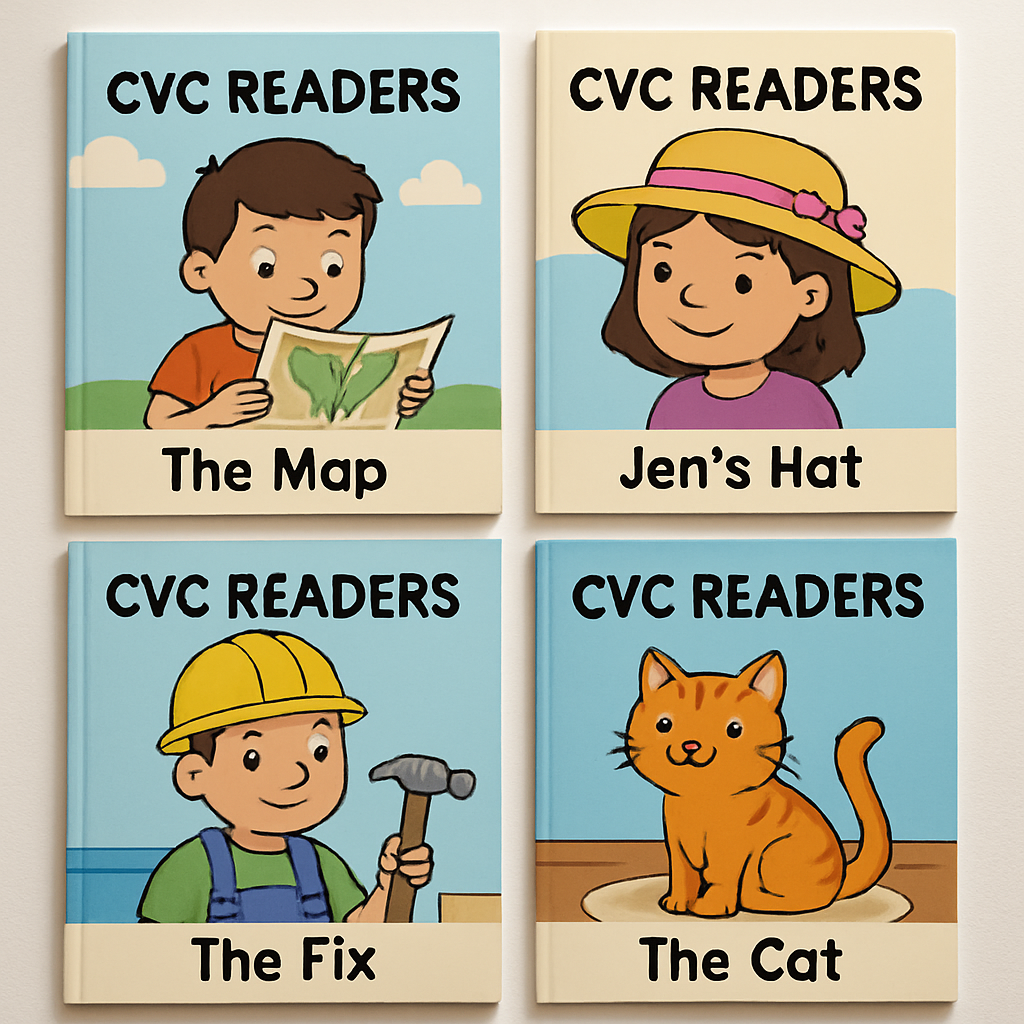
Through these simple, structured texts, children receive essential practice in decoding and comprehending words. This consistent exposure encourages a natural progression toward reading fluency. Incorporating CVC readers is a thoughtful approach in the broader literacy curriculum, helping young learners achieve early reading success.
The Importance of CVC Readers in Early Literacy
CVC readers play a pivotal role in early literacy development. They provide children with foundational skills for reading. Understanding the importance of these skills is key.
Phonemic awareness is the ability to hear and manipulate sounds in words. CVC readers help develop this crucial skill. By focusing on simple words, children learn to identify and blend sounds.
Reading proficiency is essential for academic success. CVC readers lay the groundwork for strong reading abilities. They introduce basic phonetic principles in a structured way.
Using CVC readers supports the development of decoding skills. Decoding allows children to sound out words independently. Mastering this skill is vital for building reading fluency.
CVC readers often introduce rhyming words. Words like “cat,” “hat,” and “bat” are common examples. Rhyming helps children recognize sound patterns and word families.
Educators and parents appreciate the simplicity of CVC readers. These materials are easy to integrate into various learning environments. They are versatile tools suitable for both home and classroom use.
The repetitive text and illustrations in CVC readers provide valuable context clues. These clues aid in comprehension and make reading less intimidating. Pictures give visual support to the text, enhancing meaning.
Consistency in using CVC readers fosters confidence in young readers. When children grasp the concept of CVC words, they feel a sense of accomplishment. This bolsters their motivation to read more complex texts.
The benefits of CVC readers extend beyond reading. They contribute to improved vocabulary and spelling abilities. Children begin to understand how letters and sounds create different words.
In early literacy, engaging materials like CVC readers are invaluable. They ignite a love for reading and learning in young learners. Incorporating CVC readers into a child’s routine is both practical and beneficial.
Key Benefits of CVC Readers in Early Literacy:
- Develop phonemic awareness
- Build decoding and comprehension skills
- Foster recognition of sound patterns and rhyming
- Boost reading fluency and confidence
- Enhance vocabulary and spelling skills
Overall, CVC readers are critical in shaping a child’s literacy journey. They provide a solid base for future reading success. By investing in early literacy through CVC readers, educators and parents pave the way for a child’s lifelong learning.
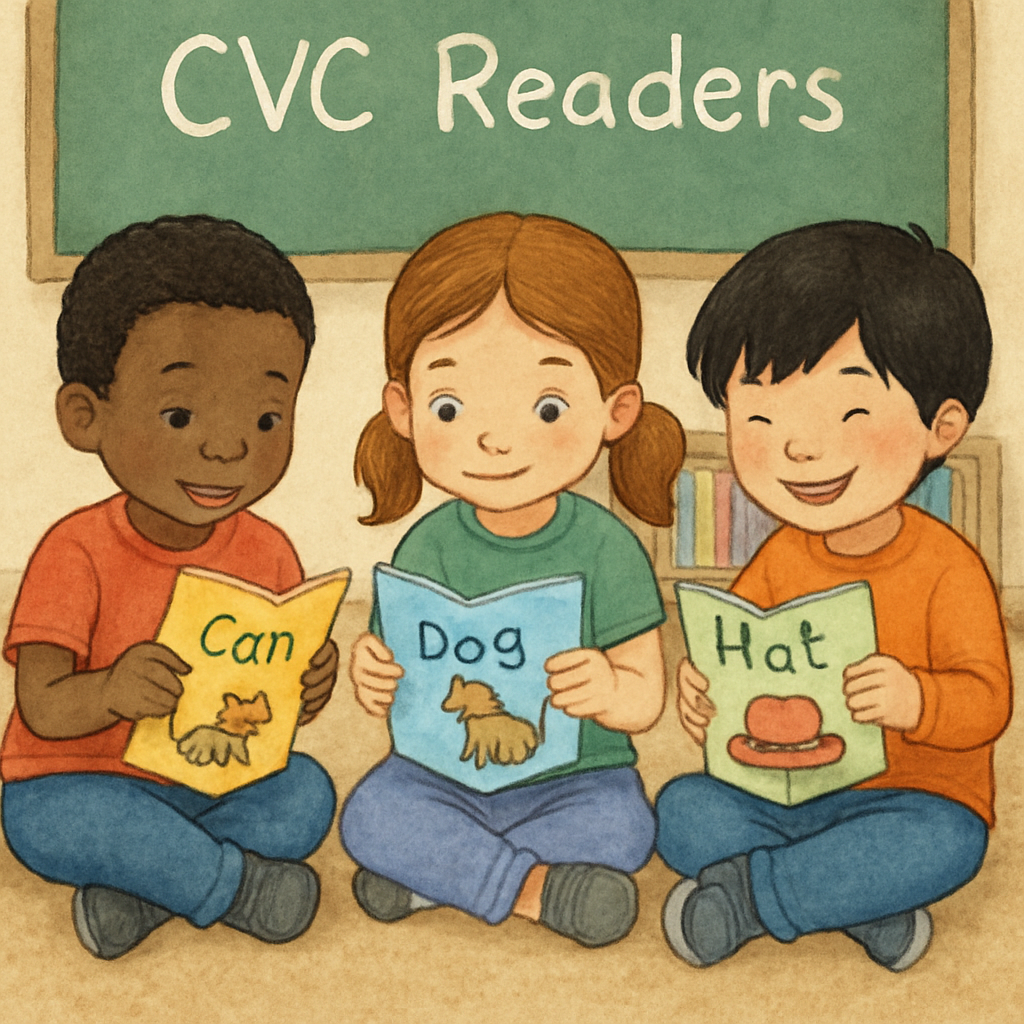
With repeated practice, children adapt to the patterns found in CVC readers. They begin to navigate words with ease, gaining independence. As these skills grow, children advance to more challenging reading tasks.
How CVC Readers Work: The Science Behind the Method
CVC readers are grounded in scientific principles of reading and language learning. Understanding how they work can enhance their effectiveness.
The concept revolves around phonics, which connects sounds to letters. Phonics instruction in CVC readers is systematic. It introduces letter-sound relationships in a sequenced manner.
CVC words consist of a consonant-vowel-consonant pattern. This simplicity helps children decode words easily. Each letter in the word corresponds to a specific sound.
Blending these sounds to form a word is the next step. Blending is crucial for developing reading fluency. CVC readers emphasize this process through repetition and practice.
Another critical aspect is segmentation. Segmentation involves breaking down words into individual sounds. CVC readers often guide children in this activity, enhancing phonemic awareness.
Effective CVC readers use patterned and predictable text. Such text supports children in anticipating what comes next. This predictability aids comprehension and reinforces reading confidence.
Illustrations play a supportive role. They provide visual context for the words on the page. This visual aid helps children decode unfamiliar words by connecting them to images.
Key Components of How CVC Readers Work:
- Systematic phonics instruction
- Emphasis on sound blending
- Use of predictable text and visuals
Research shows that early phonics instruction aids later reading success. CVC readers leverage this research to build foundational literacy skills. By focusing on simple word structures, these readers make learning accessible.

by Europeana (https://unsplash.com/@europeana)
Through consistent exposure to CVC words, children experience gradual text complexity. This helps in smooth progression from simple words to sentences. The scaffolded approach ensures that children build confidence as they develop.
In summary, CVC readers rely on proven educational techniques. They support key reading skills that form the backbone of literacy. The structured framework they provide is instrumental in nurturing capable and confident readers.
Key Features of Effective CVC Readers
Effective CVC readers possess specific qualities that enhance learning. Understanding these features can help in selecting the best resources.
First, simplicity is crucial. CVC readers should contain simple, three-letter words. This helps beginners focus on decoding each sound without distraction.
Repetition is another important feature. Repeated exposure to CVC words reinforces learning. It allows children to encounter words multiple times, boosting retention and understanding.
Next, engaging illustrations are vital. Pictures should directly relate to the words on the page. This visual context aids in comprehension and makes reading enjoyable.
Variety in word choice keeps children interested. While maintaining the CVC pattern, introducing different words prevents monotony. This variety ensures diverse language exposure.
Interactive elements can also enhance a reader’s appeal. Some CVC readers include questions or prompts that encourage interaction. This interaction keeps children engaged and thinking critically.
Predictable text patterns provide structure. Predictability helps children anticipate language, making reading smoother. It instills confidence as they learn to predict words.
Key Features to Look For:
- Simple, predictable text
- Repeated word exposure
- Engaging and relevant illustrations

by Pi Supply (https://unsplash.com/@pisupply)
Finally, CVC readers should match the child’s interests. Personalized content is more engaging. When children read about things they love, they develop a genuine interest in reading.
Incorporating these elements makes CVC readers more effective. By choosing resources with these features, parents and educators support children’s early literacy journey. Consistent interaction with well-designed CVC readers fosters an enriching reading experience.
Integrating CVC Readers into Daily Reading Routines
Integrating CVC readers into daily routines can enhance a child’s reading development. Consistency is key in improving skills and building confidence.
Start by setting a dedicated reading time each day. This routine instills a habit and shows children the importance of reading. Morning or bedtime are ideal moments for reading sessions.
Pair reading sessions with related activities. This could include word games or drawing related to the story. These activities make reading sessions more interactive and enjoyable.
Create a reading nook at home. A cozy, inviting space encourages children to spend time with their books. Make it easily accessible, so children naturally gravitate to it.
Involve children in choosing their CVC books. Giving them a choice makes them more excited about reading. Personal interest promotes a positive attitude towards learning.
Steps to Integrate CVC Readers:
- Designate specific reading times
- Include interactive activities post-reading
- Create an inviting reading space

by Clay Banks (https://unsplash.com/@claybanks)
Use technology to your advantage if children are inclined towards screens. E-books and interactive CVC reader apps can complement physical books. Balancing screen time with traditional books ensures a well-rounded approach.
Encourage family participation during reading times. Siblings, parents, or grandparents can all join in. Shared reading experiences reinforce a sense of community and support.
Lastly, celebrate progress to encourage ongoing engagement. Simple praise or rewards for milestones reached can motivate further reading. Recognizing their achievements builds confidence and fosters a love for reading.
Incorporating CVC readers into daily routines takes planning but offers long-lasting benefits. It not only strengthens reading skills but also nurtures a lifelong interest in literature. Engaging children with diverse methods makes reading a cherished, integral part of their lives.
Using CVC Worksheets to Reinforce Learning
CVC worksheets play a crucial role in reinforcing early reading skills. They provide hands-on practice for children, helping to solidify their understanding of phonics.
These worksheets come in various forms, each targeting different skills. For instance, matching exercises help children associate words with corresponding pictures.
Fill-in-the-blank activities encourage children to think about letter-sound relationships. This practice is essential for decoding new words.
Word sorting tasks support children in recognizing patterns within word families. Learning these patterns enhances their fluency and comprehension abilities.
While engaging with CVC worksheets, children develop crucial literacy skills. They learn to blend and segment sounds within simple words.
Types of CVC Worksheet Activities:
- Matching Games:
- Match words to pictures
- Find rhyming pairs
- Fill-in-the-Blank Exercises:
- Missing vowels or consonants
- Completing sentences with CVC words
Incorporate these worksheets into daily lessons for a comprehensive learning experience. They can be used individually, in pairs, or as group activities.
Utilize themes and seasonal motifs to maintain interest. Children are more engaged when learning feels relevant and exciting.
Teachers and parents can personalize worksheets to meet children’s specific learning needs. Customization allows for targeted skill development.
Including coloring elements or stickers can make worksheet activities more engaging. Aesthetically pleasing materials often boost a child’s motivation to participate.
Lastly, review and assess progress regularly through these worksheets. Observing improvements helps identify areas needing additional focus.
Benefits of Using CVC Worksheets:
- Promotes phonemic awareness
- Enhances word recognition skills
- Encourages independent practice
In summary, CVC worksheets are versatile tools that provide structured practice. They reinforce phonics concepts, aiding children in becoming proficient readers. By integrating these worksheets with other activities, educators can create a balanced literacy program that supports every child’s journey to reading fluency.
Making Learning Fun: CVC Games for the Classroom and Home
CVC games are a fantastic way to engage children in learning. They make reading an enjoyable and interactive experience.
Games help children practice reading without feeling pressured. They provide a relaxed environment conducive to learning.
Incorporating CVC games into lessons can boost enthusiasm. Fun activities often lead to better retention of information.
These games come in a variety of formats. Teachers can use them in classrooms, and parents can enjoy them at home.
Types of CVC Games:
- Board Games:
- Roll and read CVC words
- Word family board paths
- Card Games:
- Go Fish with CVC words
- Memory match CVC pairs
Physical games encourage social interaction. They teach cooperation, turn-taking, and communication skills.

by Courtney Kirkland (https://unsplash.com/@courtneykirkland)
Digital CVC games offer different advantages. They provide instant feedback and are often customizable to skill levels.
Online games keep children engaged with vivid animations. Interactive features maintain interest while reinforcing learning.
Benefits of CVC Games:
- Enhances phonics skills through play
- Boosts vocabulary in a lively setting
- Promotes cooperative learning
In the classroom, games can serve as a reward. Students feel motivated to participate in a dynamic learning experience.
At home, CVC games involve family members in the learning process. Playing games together strengthens family bonds while supporting literacy.
Designing your own games tailored to your child’s interests can personalize learning. Custom games increase enthusiasm and engagement.
Teachers can adapt games to suit different learners. This ensures that every child finds the challenge appropriate and rewarding.
In conclusion, CVC games are a valuable tool in early literacy development. They provide enjoyment while reinforcing key reading skills. By blending entertainment with education, games create a positive association with learning.
Step-by-Step Guide: Teaching with CVC Readers, Worksheets, and Games
Teaching with CVC readers involves a methodical approach. Start by introducing basic concepts to make learning effective.
Step 1: Set Clear Objectives
Begin by defining your goals. Determine what you want your child to achieve with CVC readers.
Objectives might include improving phonemic awareness or enhancing vocabulary. Clear goals keep lessons focused and measurable.
Step 2: Prepare Materials
Gather necessary materials in advance. This includes CVC readers, worksheets, and suitable games.
Ensure materials align with the learning objectives. Use resources that match the student’s skill level and interests.
Step 3: Introduce CVC Readers
Start with simple readers. Highlight the consonant-vowel-consonant structure of words.
Read together and sound out words to build familiarity. Encourage the child to repeat sounds to reinforce learning.
Step 4: Use CVC Worksheets for Practice
After reading, transition to worksheets. These offer hands-on practice to solidify skills.
Worksheets can include:
- Matching words with pictures
- Filling in missing letters
Step 5: Incorporate CVC Games
Introduce games to make practice enjoyable. Choose games that complement the reading materials.
Games to try include:
- Word bingo for quick recognition
- CVC puzzles for blending practice
Step 6: Monitor Progress
Observe how the child interacts with materials. Look for improvements in reading speed and confidence.
Note areas of difficulty. Use this feedback to adjust the next steps and tailor future lessons.
Step 7: Provide Feedback
Offer constructive feedback during activities. Positive reinforcement encourages persistence and builds confidence.
Celebrate successes, no matter how small. This creates a supportive learning environment.
Step 8: Adjust and Repeat
Reassess objectives based on progress. Modify materials and approach to meet evolving needs.
Continue the cycle with new and varied resources. Keeping lessons dynamic maintains interest and motivation.
This structured approach helps children thrive. By combining reading, writing, and play, learning becomes comprehensive.
With consistency and patience, students will develop strong literacy foundations. Enjoy the journey of discovery and growth with your young reader!
Differentiating Instruction with CVC Readers
Differentiated instruction recognizes that children learn in unique ways. CVC readers offer the flexibility needed for tailored lessons.
Adapting to Various Skill Levels
CVC readers can be adapted for different skill levels. This ensures that each child feels challenged yet capable.
For beginners, start with simple words such as “cat” or “dog.” As they improve, gradually introduce more complex word families.
Customizing Content for Interests
Individual interests can guide content selection. Choosing topics that captivate children increases engagement.
If a child loves animals, integrate words like “bat” and “pig.” Interest-driven learning boosts motivation and retention.
Utilizing Different Formats
CVC readers come in many formats. This supports varied learning preferences and needs.
Formats include:
- Print books for tactile learners
- Digital versions for tech-savvy children
- Audiobooks for auditory learners
Group Activities and Individual Focus
Teachers can use CVC readers in both group settings and one-on-one lessons. This approach encourages collaboration while meeting specific needs.
In groups, children can partner read. Individually, they can receive personalized guidance and feedback.
Incorporating Visual and Kinesthetic Elements
Integrate visual and kinesthetic activities to reinforce learning. These methods appeal to different learning styles.
For instance, children can create word cards or use clay to model word shapes. Such activities build deeper connections between words and meanings.
Monitoring and Adjusting Strategies
Differentiation requires ongoing assessment. Observe how each child responds to CVC activities.
Be ready to adjust strategies if necessary. Flexibility ensures that each child progresses at an optimal pace.
Encouraging Self-Paced Learning
Children should feel empowered to learn at their own speed. CVC readers’ structured approach supports self-pacing.
A supportive environment fosters independence and a sense of achievement. Differentiation with CVC readers strengthens personalized learning.
Assessing Progress: Monitoring and Supporting Young Readers
Tracking a child’s reading progress is crucial. It helps educators identify strengths and areas for growth.
Observing Reading Skills
Carefully watching a child read CVC readers can reveal much. Notice how they handle new words or sound out familiar ones.
Are they blending sounds smoothly? Do they hesitate with specific patterns? These observations can guide teaching strategies.

by Ronald Felton (https://unsplash.com/@ronfel)
Using Structured Assessments
Incorporate simple, structured assessments. These provide clear insights into each child’s progress.
Tools can include:
- Reading fluency checklists
- Word recognition tests
- Phonics activities
Setting Achievable Goals
Establishing reachable goals is essential. They should be specific, measurable, and tailored to each child’s needs.
For example, aim for mastering a new word family every week. Goals provide a focus and help track development.
Providing Constructive Feedback
Feedback should be supportive and encouraging. Positive reinforcement builds confidence and motivation.
When correcting errors, highlight what was done well first. Then, guide the child on how to improve specific reading techniques.
Encouraging Parental Involvement
Parents play a pivotal role in a child’s literacy journey. Keep them informed about their child’s progress.
Share simple assessment tools or CVC activities. This partnership enhances the child’s reading experience.
Adjusting Strategies as Needed
Be ready to alter teaching methods if progress stalls. Flexibility ensures that strategies remain effective.
Regular assessments make it easier to catch any early signs of difficulty. Quick action can support continuous progress.
Celebrating Milestones
Celebrate each achievement, no matter how small. Recognition of success motivates young readers.
Whether it’s mastering a new set of CVC words or improving fluency, celebrate with a small reward or praise. It fosters a love for reading.
CVC Readers for English Language Learners (ELLs)
CVC readers are effective tools for ELL students. They introduce fundamental reading skills in a simple format.
Simple word structure helps ELLs grasp English phonics. The predictable patterns aid in understanding new sounds.

by Daria Trofimova (https://unsplash.com/@da161)
Why CVC Readers Are Beneficial for ELLs
The structured approach of CVC readers supports language acquisition. They emphasize sound-letter correspondence without overwhelming learners.
These readers expose ELLs to basic vocabulary. This builds their confidence in using English words.
Key Components in CVC Readers for ELLs
When selecting CVC readers for ELLs, consider:
- Repetition of sounds and patterns
- Contextual illustrations
- Clear, simple sentences
These features make CVC readers accessible and effective for ELLs at various proficiency levels.
Integrating CVC Readers with Language Learning
Pair CVC readers with language activities. Encourage storytelling and dialogue to reinforce word usage.
Engage ELLs with multimedia aids. Visual and audio elements enhance comprehension and retention.
Building Cultural Connections
Customize CVC materials to reflect diverse cultures. This inclusivity makes learning relevant and engaging for ELLs.
By relating learning to students’ backgrounds, you create a welcoming environment.
Supporting Progress Through Patience
Progress may differ among ELLs. Regular reinforcement and encouragement are crucial.
Celebrate small victories to keep learners motivated. This fosters a positive attitude towards learning English.
Creating Your Own CVC Readers, Worksheets, and Games
Designing your own CVC readers can be rewarding. Tailored materials engage children by catering to their interests.
Start with familiar themes. Children connect with content relevant to their experiences.
Steps to Create CVC Readers
- Select Common CVC Words: Words like “bat,” “sun,” and “pet” are easy.
- Illustrate with Simple Pictures: Visuals support understanding.
- Use Repetitive Phrases: This enhances memorization.
Tailor these readers to the child’s learning level. Adjust complexity as needed.
Crafting CVC Worksheets
Worksheets reinforce CVC concepts. Incorporate diverse activities such as:
- Fill-in-the-Blanks: Helps in recognizing word patterns.
- Matching Exercises: Connect words with images.
- Word Sorts: Group words by sounds or letters.
Interactive worksheets keep children engaged and focused. Use various formats for variety.
Developing CVC Games
Games make learning enjoyable. They offer an informal setting for practice.
Create card games using CVC words. Memory and matching games work well for repetition.
Digital games can also be created using simple software. This enhances interactive learning experiences.
Personalizing to Enhance Engagement
Incorporate children’s interests in your materials. Use favorite animals or hobbies as themes.
Customization makes learning personal, fostering a deeper connection.
Collaborating with Others
Share your creations with other educators or parents. Collaboration can yield diverse ideas and improve resources.
By pooling resources, you develop a richer set of learning tools. This benefits a wider audience.
Common Challenges and Solutions When Using CVC Readers
Using CVC readers can sometimes present challenges. However, understanding these challenges helps address them effectively.
One common issue is varied learning speeds. Children grasp concepts at different rates.
To manage this, offer extra practice for those struggling. Use additional worksheets or one-on-one reading sessions.
Engaging Young Readers
Keeping children engaged is another hurdle. Distractions can shift their focus away.
Consider interactive elements within readers. Bright images and relatable stories capture attention.
Ensuring Progress
Monitoring progress is critical. Sometimes, it’s hard to track advancement with just reading activities.
Implement small assessments or quizzes. These gauge improvement and pinpoint areas needing reinforcement.
Solutions to Overcome Challenges
- Adapt Learning Pace: Customize lessons for individual needs.
- Use Varied Materials: Incorporate games and worksheets for diversity.
- Set Achievable Goals: Celebrate small victories to motivate.
Addressing Limited Resources
Limited access to materials can hinder learning. Not all parents or teachers have the resources needed.
Utilize free online resources. Many websites offer downloadable CVC materials.
Encouraging Parental Involvement
Engaging parents is crucial for reinforcing learning. Yet, not all parents feel confident in helping.
Provide guidance on how to use CVC materials at home. Share tips for creating a literacy-rich environment.
By addressing these challenges, educators can effectively use CVC readers to enhance learning experiences.
Frequently Asked Questions About CVC Readers
CVC readers play an essential role in early literacy education. Below are some frequently asked questions about their use and benefits.
What Are CVC Readers?
CVC readers are books or materials focusing on consonant-vowel-consonant words. These words are simple and three letters long.
Why Are CVC Readers Important?
CVC readers help children develop foundational reading skills. They build phonemic awareness and improve phonics understanding.
How Do CVC Readers Help in Learning?
These readers enable children to connect letters with sounds. CVC readers also simplify the process of forming and pronouncing words.
Are CVC Readers Suitable for All Ages?
Primarily, CVC readers target young learners in kindergarten and first grade. However, they also benefit English Language Learners (ELLs).
Where Can I Find CVC Readers?
CVC readers are widely available in print and online. Many educational websites offer free resources, including printable readers and interactive versions.
Key Points to Remember
- CVC readers focus on basic word structures.
- They are essential for early literacy skills.
- Accessible both in print and online formats.
By answering these common questions, educators and parents can make informed decisions about incorporating CVC readers into learning routines.
Resources and Recommendations for CVC Readers, Worksheets, and Games
Navigating the plethora of resources for CVC readers, worksheets, and games can be overwhelming. Fortunately, there are many quality options that fit various teaching needs.
Educational websites offer an abundance of materials. Platforms like Teachers Pay Teachers and Education.com provide both free and paid resources. These include printable CVC worksheets and interactive games.
Libraries and local bookstores are also treasure troves of CVC readers. They stock a variety of books tailored for young readers. Often, these books come with engaging illustrations that make learning fun.
For a more interactive approach, consider digital applications and online games. Apps like Starfall and ABCmouse offer engaging CVC games that captivate children’s attention while promoting learning.
Here’s a list of top resources to consider:
- Teachers Pay Teachers: Printable worksheets and games.
- Education.com: Interactive and printable materials.
- Starfall App: Engaging CVC games.
- ABCmouse: Online educational activities.

by Compagnons (https://unsplash.com/@sigmund)
When selecting resources, ensure they align with a child’s current skill level. This maximizes learning and keeps children both motivated and engaged. By utilizing these recommendations, both educators and parents can effectively support early literacy development in children.
Conclusion: Building a Strong Foundation with CVC Readers
CVC readers play a pivotal role in early literacy. They provide children with the tools they need to succeed in reading and beyond.
By focusing on simple consonant-vowel-consonant words, these readers help children understand the fundamental relationship between letters and sounds. This foundational skill is critical for developing proficiency in reading.
Incorporating CVC worksheets and games enhances this learning process. Worksheets allow for repetitive practice, cementing the concepts taught through reading.
Games, on the other hand, make learning interactive and enjoyable. They engage children’s attention, making it easier to retain new information.
Ultimately, using CVC readers, along with supporting activities, builds a strong literacy foundation. This approach prepares young readers for more complex literacy challenges. As such, CVC readers form an integral part of a holistic early education strategy that leads to lifelong reading and learning success.