Creative Blend Words for Kindergarten Fun
You’ve proudly watched your child master individual letters, pointing out that “F” makes an /f/ sound. But then they hit a word like “frog,” and suddenly those starting letters feel like a frustrating brick wall. Does your child skip the second letter entirely, incorrectly shouting “fog”? Early literacy educators note this hurdle is a normal developmental milestone, not a sign of failure.
Moving past that robotic reading requires more than mental memorization. In practice, mastering letter sounds and blends is actually a physical “muscle memory” challenge for a young child’s mouth. They aren’t learning entirely new concepts; they are learning phoneme blending. This simply means taking the individual sounds they already know and stretching them so they hold hands.
Think of the difference between traditional “sounding out” and this new skill as a playground slide. When a reader approaches “stop,” saying “S,” pausing, and then saying “T” feels like hitting a bump on the chute. Effective decoding strategies for emergent readers rely on teaching the “Reading Slide,” where the first sound smoothly glides into the second without breaking breath.
Once that physical connection clicks, reading suddenly transforms from a choppy list of sounds into fluid, recognizable language. Practicing this smooth transition doesn’t have to trigger frustration at home. By exploring creative blend words for kindergarten fun, you can easily help your child build that essential bridge between letters right at the kitchen table.
The ‘Salad vs. Smoothie’ Rule: Telling Blends and Digraphs Apart
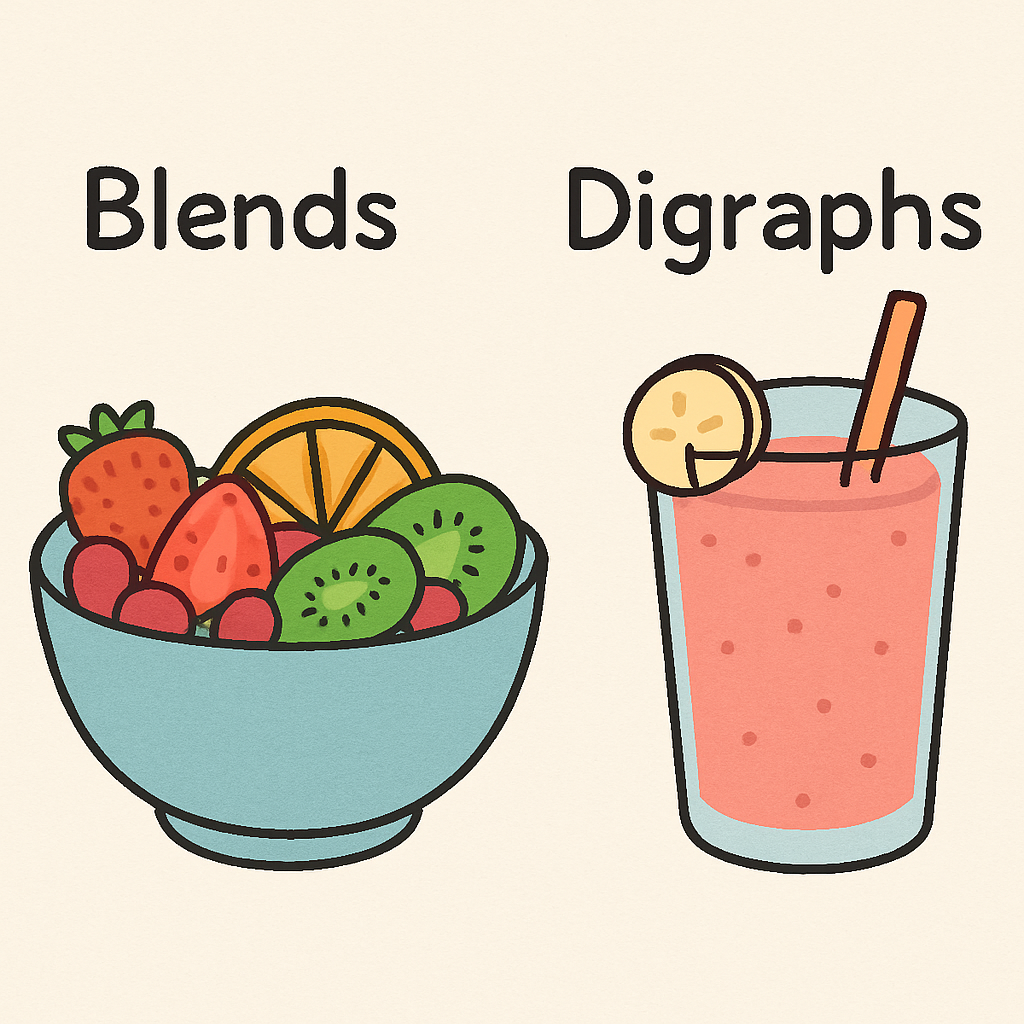
You might wonder why kids freeze when two consonants sit together on a page. The secret is knowing the difference between a blend and a digraph. To keep consonant clusters versus digraphs examples straight in your mind, think about your kitchen: a blend is a fruit salad, while a digraph is a fruit smoothie.
In a fruit salad, you still taste the individual strawberries and bananas, just like you still hear the separate “s” and “l” sounds in a word like slip. When teaching consonant clusters to young learners, remind them to just slide those separate salad pieces together. Conversely, a smoothie changes the ingredients into an entirely new flavor. When “s” and “h” combine for the word ship, the original sounds vanish to create a single new sound.
Treating a smoothie like a salad will quickly frustrate a new reader. If your child tries to sound out “s-h-i-p” by making the “s” and “h” noises separately, they won’t recognize the word at all. Spotting which letters just slide together prevents major roadblocks later.
From ‘B-L’ to ‘Blue’: Using the ‘Sliding Finger’ Technique for Initial Blends
When a child pauses so long between the letters in ‘stop’ that they forget the word entirely, they need a new approach. When tackling initial and final consonant patterns, it helps to know what are the most common starting blends to practice first. Teachers group these into three main families: consonants pairing with S, L, or R. Using a simple list of common s-blend words, like ‘slip’ or ‘stop’, gives your young reader the absolute easiest entry point.
To conquer these starters, we use a physical trick called “continuous voicing,” which simply means keeping the motor running. Have your child place their pointer finger beneath the first letter and slowly slide it across the page without stopping their breath. Instead of a choppy “S… T…”, they will stretch the sounds out like a sigh: Sssssss-ttttt. This physical slide forces the individual sounds to hold hands, drastically reducing the mental effort needed to recall broken pieces of a word.
Practicing this smooth, gliding motion builds muscle memory that transforms frustrating roadblocks into confident reading. Once they can slide through the beginning of a word without catching their breath, everything clicks. Try this tonight with four-letter words like ‘frog’ or ‘blue’.

Why ‘Ending Blends’ are the ‘Anchor Sounds’ Your Child Might Skip
Many parents notice their child look at the word “hand” and confidently read “han”. You are not alone in hearing this mistake. While we just mastered starters, moving between initial and final consonant patterns introduces a new hurdle. By the time young readers reach the end of a word, their focus is fading and they are literally running out of breath. Teachers call this the “swallowed sound” error, where that vital last letter simply drops off.
Think of ending blends as “anchors” that stop the word from floating away. Just like the slide we used for starting letters, your child needs to stretch their breath all the way to the end. When trying phoneme segmentation exercises for early readers, the goal is helping these final sounds hold hands firmly. Encourage your child to slightly “punch” that last sound so the word finishes completely.
To build strong reading habits, try practicing these five common word ending anchors tonight using familiar four-letter words:
- -nd (hand)
- -sk (mask)
- -st (fast)
- -mp (jump)
- -nt (tent)
But some children might know these anchors and still struggle to connect them.
Step-by-Step Oral Blending: Helping Kids Who Get Stuck on Individual Sounds
You might wonder why your child recognizes every letter but still struggles to string them together smoothly. The secret isn’t more flashcards; it is training their ears before their eyes. Teachers build auditory discrimination—hearing tiny differences between sounds—through oral blending. These phonemic awareness activities for preschoolers happen entirely out loud, preparing the brain for reading through listening.
Taking away the visual pressure of a page lets frustrated readers focus purely on how sounds slide together. This means practicing entirely by ear. Removing the book helps them rely on natural listening abilities rather than struggling to decode symbols. A reliable step-by-step guide to oral blending gives you a tool to build confidence without making practice feel like formal homework.
Try a simple “I Say, You Say” routine anywhere, from the car to the dinner table. Start by stretching out a word like a slow-motion robot, saying “m-i-l-k.” Your child’s job is guessing the secret word at normal speed: “milk!” This two-minute game shows exactly how to teach phoneme blending effectively, turning what could be a frustrating reading lesson into low-pressure fun.
Once their ears master this “robot to human” translation, physical reading roadblocks start melting away. Yet, even with great listening skills, kids sometimes drop letters when encountering tricky consonant pairs.
Solving the ‘Frog-to-Fog’ Gap: Targeted Exercises for Missing Consonant Clusters
It is a common hurdle for a child to look at the word “frog” and accidentally read “fog”. When kids practice blends, they often hear the strong starting letter and the ending, but that sneaky second sound vanishes. Their brain simply rushes to finish the word. Breaking a word apart into its individual sounds through phoneme segmentation exercises for early readers helps them slow down and notice every hidden piece.
To fix this missing letter gap, we use a visual tool called “Sound Boxes” (sometimes called Elkonin boxes). Draw three or four connected squares on a piece of paper, creating one box for each sound in a word like “s-t-o-p.” Next, grab a few pennies or buttons. By having your child push one coin into a box for every sound they say, you turn invisible noises into physical objects they can actually touch.
Giving that second letter its own space works wonders for helping children struggling with sound manipulation. They visually see that “frog” requires four pennies, forcing them to pause and find that missing “r” sound before blending. Practice this until they can smoothly slide the coins together without dropping letters. Once they master keeping every sound in the mix, they are ready to build reading speed.
Building Reading Speed Instantly Using Onset and Rime Patterns
Sounding out every single letter eventually exhausts young readers. Once they master sliding those initial sounds together, we can accelerate their progress using decoding strategies for emergent readers. Teachers simplify reading by breaking words into two distinct chunks: the “onset” and the “rime.” You can think of the onset as the starting blend (like “fl”) and the rime as the familiar anchor at the end of the word (like “-at”).
Grasping this simple concept can multiply a child’s reading vocabulary almost overnight. Instead of seeing four separate letters in the word “flat,” they see a starting slide attached to a known ending. Focusing on these endings creates “word families.” If your child knows the basic word “cat,” they can quickly conquer “flat,” “spat,” or “brat” just by swapping the starter. This approach can boost reading speed by 2x because the brain processes a familiar chunk rather than wrestling with isolated letters.
Finding these predictable patterns makes building reading fluency through onset and rime feel like a fun puzzle rather than homework. Practice identifying the onset and rime in any simple 4-letter word, like spotting the “-op” in “stop.” When they can confidently swap starting sounds to read new words, multisensory tools can provide interactive phonics practice.
Multisensory Tools: Three Simple Games for Interactive Phonics Practice
Sitting still to sound out letters often frustrates energetic kids. Instead of fighting their natural wiggle, harness kinesthetic learning—a teacher’s term for learning through physical movement. By engaging hands, eyes, and ears simultaneously, you provide powerful multisensory tools for early literacy that help those sliding sounds finally click.
You don’t need expensive materials to make practice fun. While educators include these interactive phonics games for classroom use in a synthetic phonics curriculum for early childhood, they work perfectly at your kitchen table:
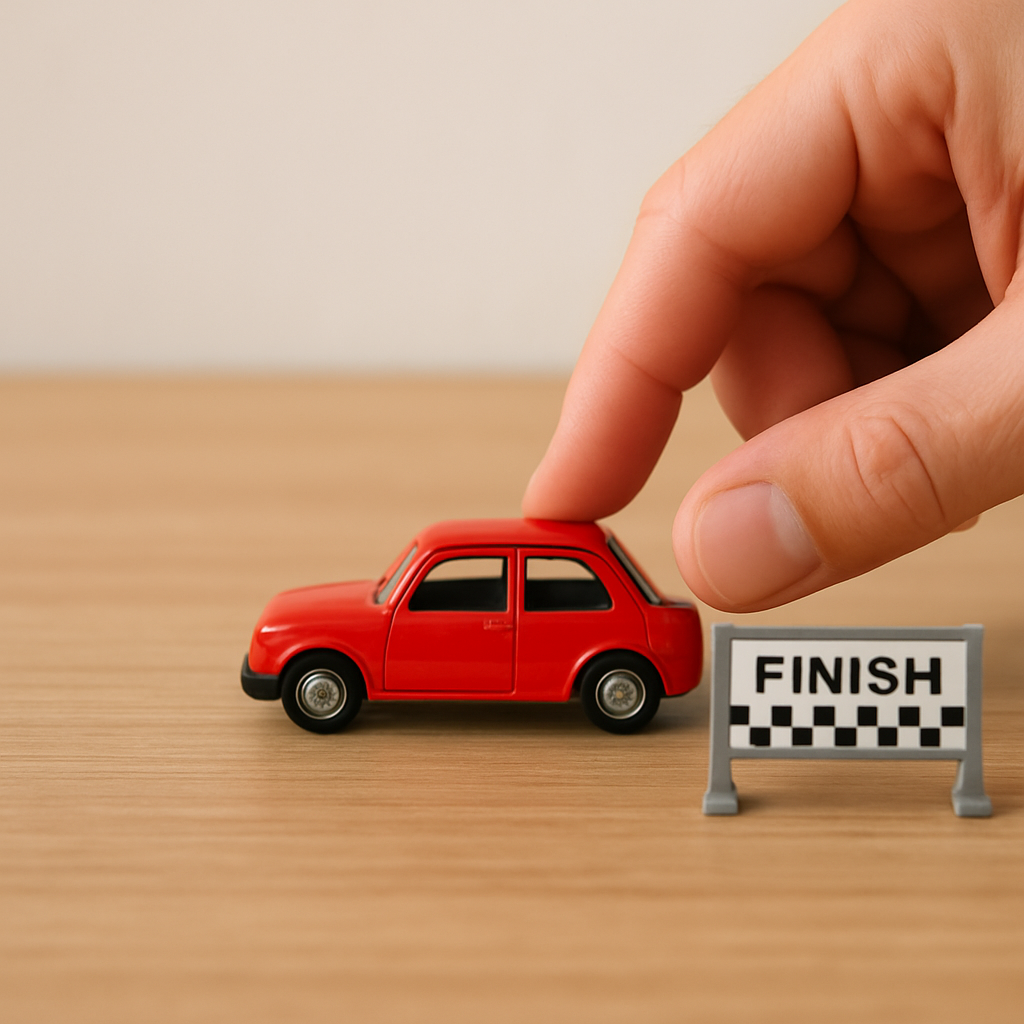
- The Sound Car: “Drive” a toy slowly under letters, speeding up as you slide sounds together. Turn a boring drill into a 5-minute race!
- Play-Doh Smash: Have your child smash a small dough ball for each sound, using tactile feedback to anchor sounds in memory.
- Sound Scavenger Hunt: Find blends in the real world, like spotting the “ST” on a Stop sign.
Turning reading into hands-on play quickly melts away the pressure. Once your child realizes blending is just a game, their confidence will soar. A simple, stress-free routine can help solidify these skills.
Your 7-Day Roadmap to Masterful Kindergarten Phonics
You’ve transitioned from watching your child hit a wall with combined consonants to knowing exactly how to help them “slide” sounds together. By mastering the mechanics of blend words for kindergarten, you can now turn frustrating pauses into smooth connections, bringing effective decoding strategies for emergent readers right to your kitchen table.
To build their muscle memory without the overwhelm, start with this 7-day, 5-minute action plan:
- Day 1-2: Practice the “slide” by slowly stretching sounds (Sssss-ttttt) with a finger moving across the table.
- Day 3-4: Go on a beginning blend hunt, spotting “bl” or “st” on cereal boxes and household items.
- Day 5: Play “Robot to Human”—you speak in robotic, disconnected sounds, and they blend them.
- Day 6-7: Introduce ending “anchor” blends (like “nd” in hand) and read a favorite book together to spot them.
As you practice, measure their progress by reading fluency—the fluidity of their slides—rather than just getting the word right after a long pause. Keep these short sessions low-stress and highly playful. Learning to blend is a process, not a race, and you now have everything you need to make reading a shared, joyful victory.
Love this phonics activity? Click here to explore our entire library of premium, zero-fluff printable resources at EnglishForKiz!