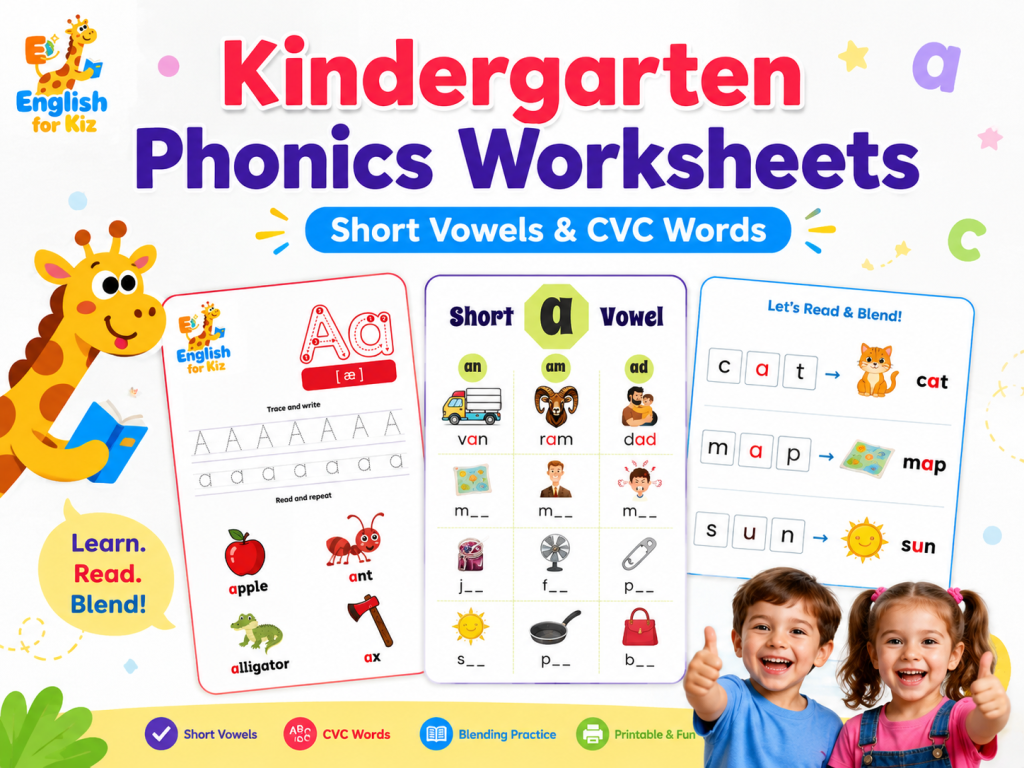
Kindergarten reading practice works best when it feels clear, calm, and repeatable. At this stage, children are learning how sounds connect to letters, how short words can be blended, and how spelling follows a pattern. Therefore, the right printable page should not feel like busywork. It should guide a child from sound practice to real word reading.
For parents, teachers, and homeschool families, kindergarten phonics worksheets are most useful when they focus on short vowels, CVC words, word families, blending, spelling, and handwriting in a simple order. In addition, they work even better when connected with videos, games, readers, and flashcards from a complete phonics for kids learning path.
Quick Reading Path
What Kindergarten Phonics Worksheets Should Include
First, a strong worksheet should teach one clear skill at a time. For example, one page may focus only on short a words such as cat, map, fan, and bag. Another page may focus on short i words such as pin, sit, lip, and dig. This narrow focus helps children notice sound patterns instead of guessing from pictures.
Next, each page should connect listening, reading, and writing. A child may say the sound, blend the word, trace the word, and then read it again. As a result, the worksheet supports phonemic awareness, decoding, spelling, and handwriting without turning the activity into a long workbook task.
Also, the layout matters. Early readers need large print, simple directions, familiar routines, and enough white space. Therefore, useful pages often include tasks such as match, circle, trace, write, sort, and read. These formats are easy to repeat in class, at home, or during homeschool review.
- Short vowel recognition: practice with a, e, i, o, and u in decodable words.
- CVC decoding: simple words such as sun, bed, hop, cat, and pin.
- Word family practice: patterns such as -at, -an, -ig, -op, and -ug.
- Blending practice: saying each sound, then reading the whole word.
- Spelling and handwriting: writing the letters that match the sounds heard.
Short Vowel Practice: Keep the Pattern Small
Short vowels are often the hardest part of early CVC reading. Many children can remember the first and last consonant but mix up the middle vowel. For that reason, short vowel worksheets should give focused practice before asking children to compare several vowels at once.
To begin, one vowel should appear in a small group of words. A short a page may use cat, bat, mat, map, and jam. After that, a short e page may use bed, red, pen, hen, and leg. This order keeps the task fair because the child is learning one sound pattern at a time.
Later, mixed vowel review becomes useful. However, mixed pages should come after children have practiced each vowel separately. Otherwise, the page may test memory rather than build reading skill.
A Simple Short Vowel Order
- Step 1: Review letter sounds with oral practice and flashcards.
- Step 2: Practice one short vowel with CVC words.
- Step 3: Read and write word family groups.
- Step 4: Add simple decodable sentences.
- Step 5: Review the same pattern with a game or reader.
CVC Word Family Worksheets Build Real Blending Skill
CVC words are useful because the sound structure is simple. A word such as map has three sounds, and each sound connects to one letter. Therefore, children can practice left-to-right decoding without facing long vowel teams, silent letters, or advanced spelling rules.
Word families make this practice even clearer. For example, once children read cat, they can use the same ending pattern to read bat, hat, mat, sat, and rat. However, the goal is not just memorizing a list. Children still need to point to each sound and blend the word.
In addition, spelling should sit beside reading. A child may read sun, then stretch the sounds /s/ /u/ /n/, and then write the word. This simple routine helps children understand that reading and spelling use the same sound-letter knowledge.
Word Families That Work Well for Kindergarten
- Short a: -at, -an, -am, -ap, -ag
- Short e: -et, -en, -eg, -ed
- Short i: -it, -in, -ig, -ip
- Short o: -ot, -op, -og
- Short u: -ug, -un, -ut, -ub
Which EnglishForKiz Resource Should Start First?
A good article should not leave readers wondering where to go next. Therefore, the resource path below starts with the most direct kindergarten printable page, then moves into CVC practice, letter-sound review, and the broader worksheet library.
This setup is especially useful because children do not all begin at the same point. Some already know letter sounds and need blending. Meanwhile, others still need more sound-letter review before CVC words feel comfortable.
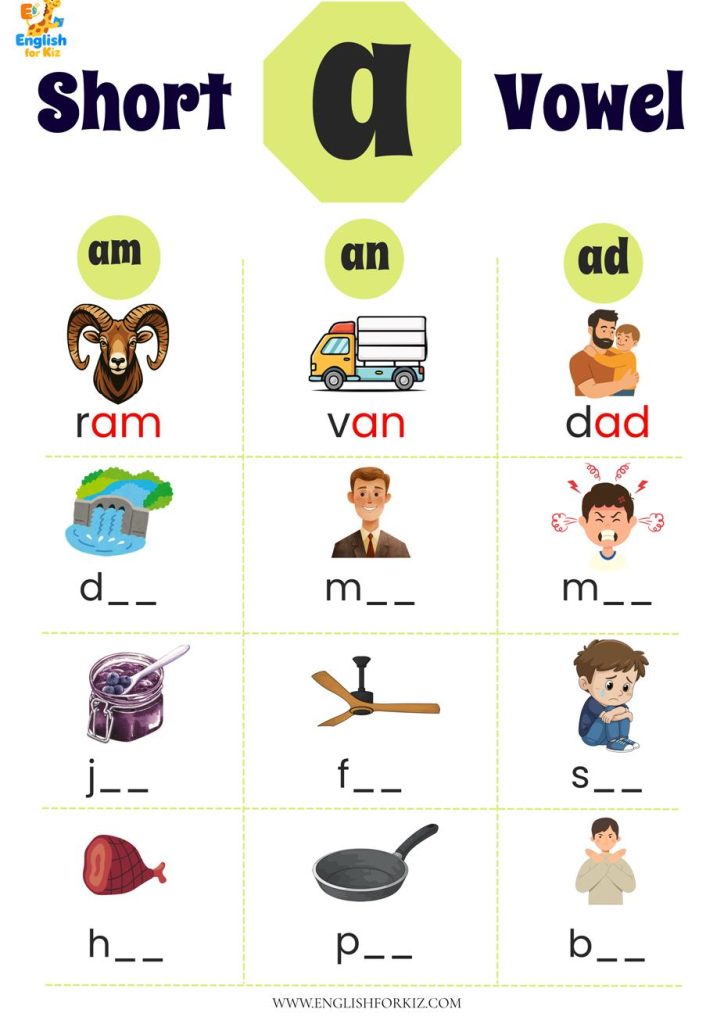
Kindergarten Phonics Worksheets
Best for KG learners starting short vowels, CVC spelling, word families, and simple blending practice.
Start Kindergarten Practice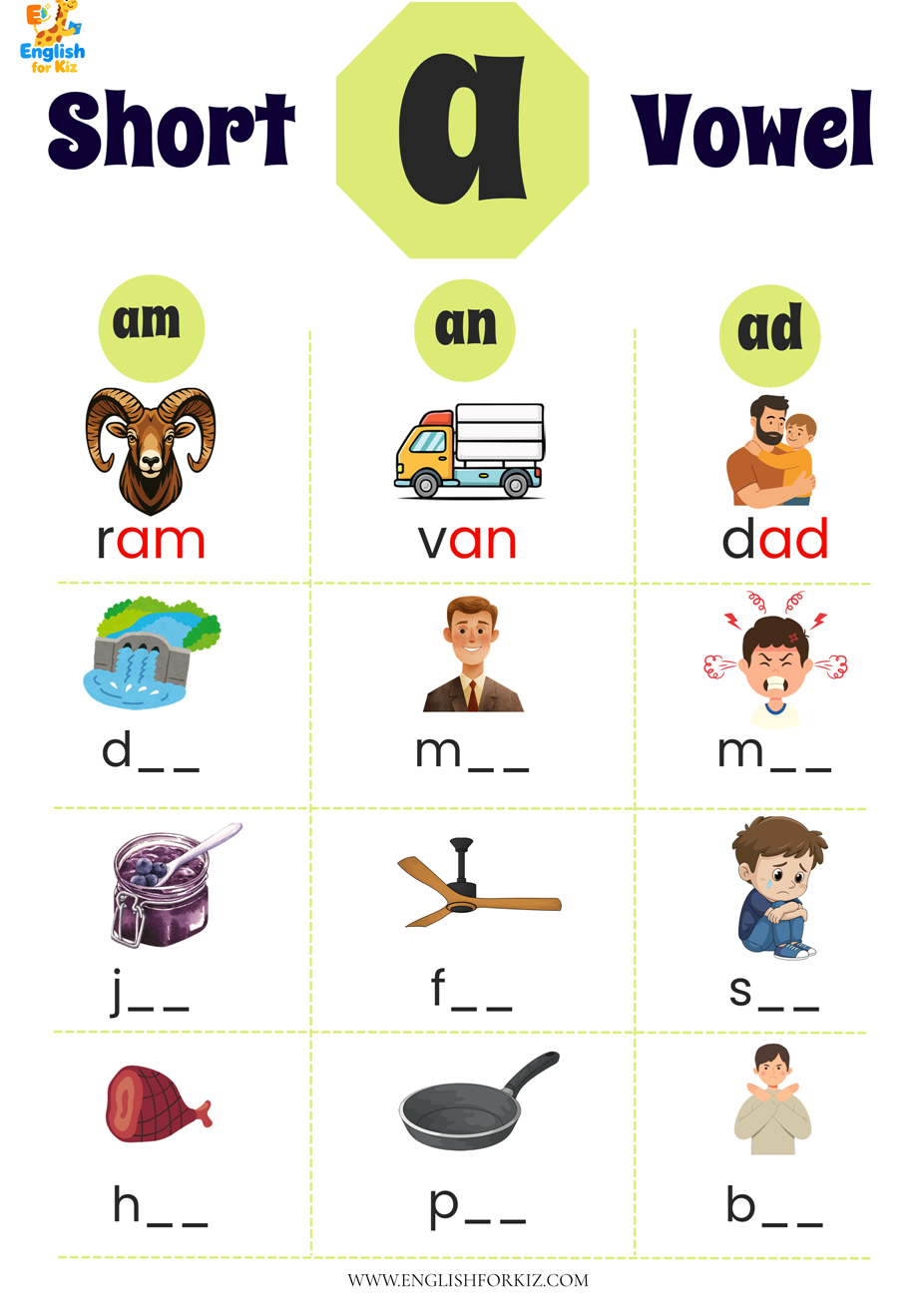
CVC Words Worksheets
Best for children who know many letter sounds but need more practice blending and spelling short words.
Practice CVC Words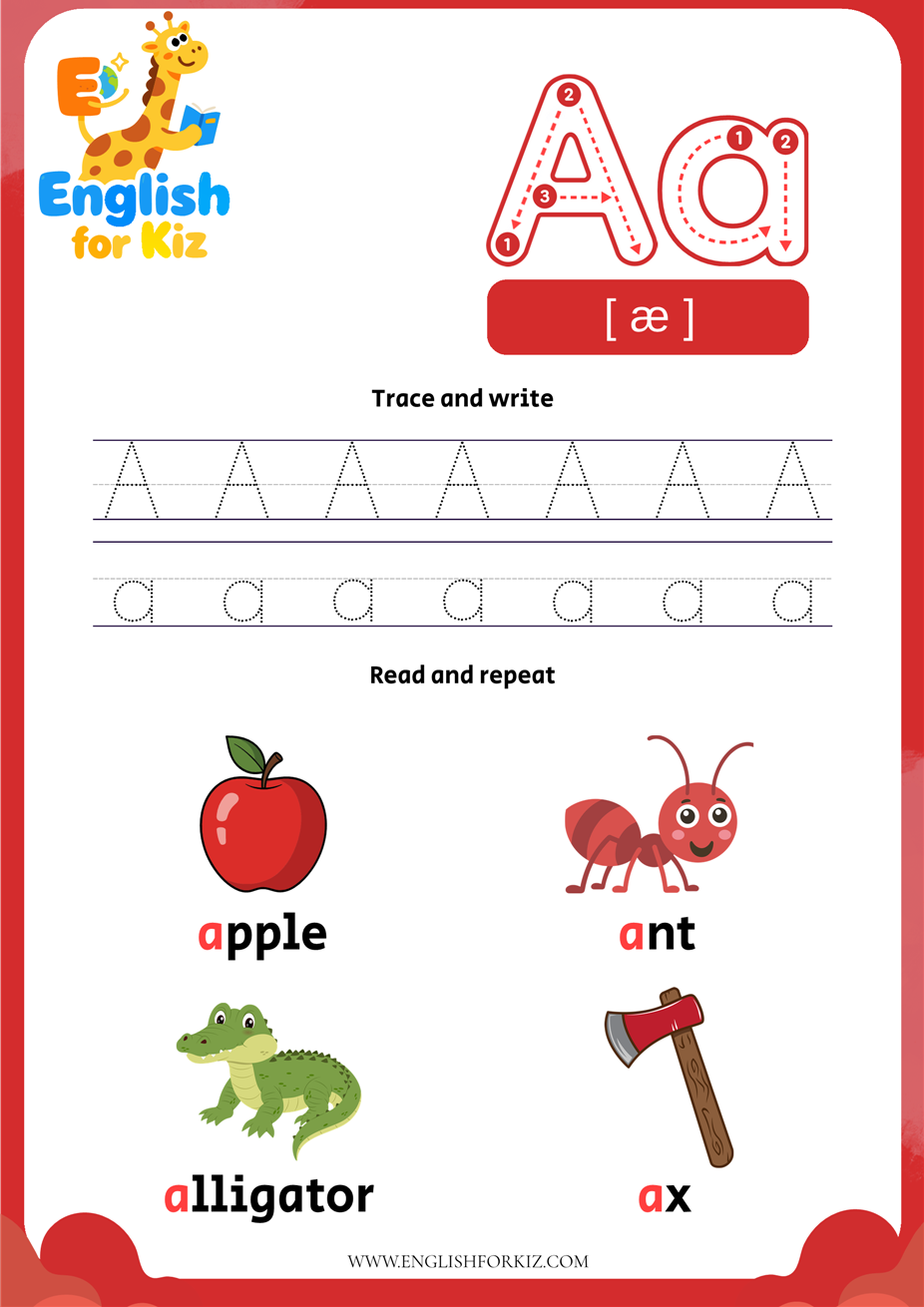
Letter Sounds Worksheets
Best for learners who still need letter-sound review before they move into full CVC blending.
Review Letter Sounds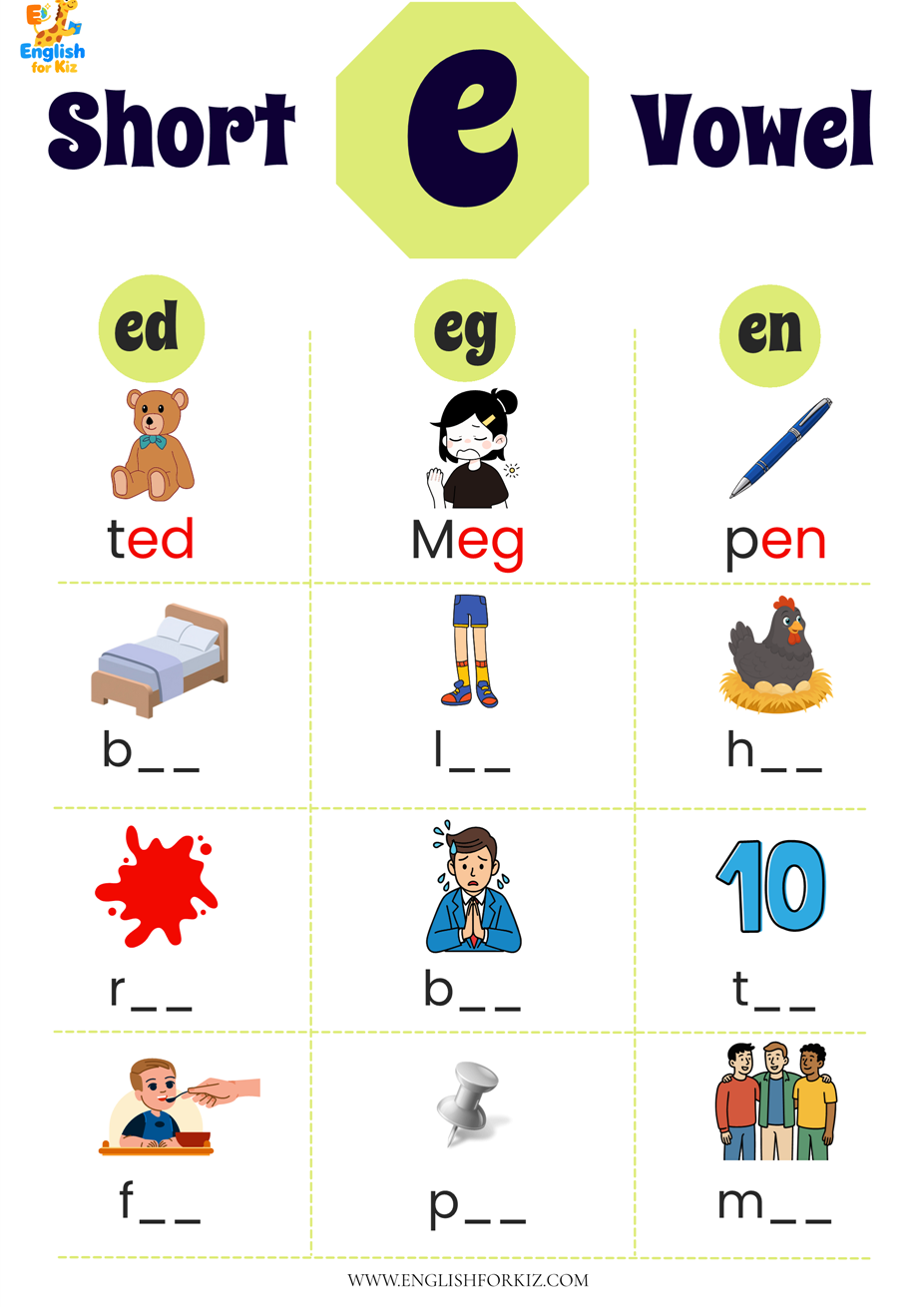
Phonics Worksheets Library
Best for parents, teachers, and homeschool families who need printable practice across levels.
Explore WorksheetsHow to Use Worksheets Without Overload
Worksheets work best as part of a short routine. First, an adult can review the target sound aloud. Next, the child can blend two or three example words. Then, the printable page becomes practice rather than a confusing first lesson.
In a classroom, one page can support small-group instruction, a literacy center, or morning review. For example, the teacher may model the first row, then let children finish a matching or tracing task independently. Afterward, the group can read the words aloud together.
At home, shorter practice often works better than long sessions. A child may read five words, trace two words, and spell one word with support. Meanwhile, the same page can be reviewed the next day before a new vowel pattern begins.
A Five-Minute Practice Routine
- Say the sound: Review the target vowel or word family.
- Blend two words: Read one slowly and one smoothly.
- Complete one task: Match, trace, circle, write, or sort.
- Read again: Return to the word list before stopping.
- Connect to text: Add one decodable sentence when possible.
Why Worksheets Should Connect with Games, Readers, and Flashcards
Printable practice is useful, but it should not carry the whole reading lesson alone. Instead, children benefit from meeting the same pattern in several formats. A short vowel may appear in a video lesson, a worksheet, a flashcard review, a game, and a decodable story.
This approach also matches the wider principle behind systematic phonics instruction. Reading Rockets explains phonics instruction as teaching letter-sound relationships and using them in reading and spelling. Therefore, worksheet practice should lead back to actual decoding, not just page completion.
For example, after a child completes a short a worksheet, a game can review cat, map, fan, and jam. Then, a short decodable reader can place those words inside simple sentences. As a result, the worksheet becomes one step in a full reading path.
Best Fit by Learning Setting
For classroom use, printable pages should be easy to explain and quick to check. Teachers often need activities that work for small groups, centers, review folders, or early finisher practice. Therefore, clear instructions and repeated formats are important.
For homeschool use, the page can become part of a complete lesson. A child may begin with a sound warm-up, complete a CVC page, play a short matching game, and finish with a decodable story. This path keeps reading, spelling, and fluency connected.
For extra home review, one worksheet can be split across two sessions. For instance, reading and matching can happen on day one, while spelling and rereading can happen on day two. This slower pace can help children who need more confidence with blending.
Next Step: Build a Complete Practice Path
Printable pages are a strong starting point. However, many families and classrooms need a more complete routine with worksheets, games, flashcards, video lessons, and decodable stories in one place. In that case, EnglishForKiz membership gives access to the full resource library for organized phonics practice.
Conclusion: Keep Kindergarten Phonics Practice Simple
In summary, early phonics worksheets should not try to teach every skill at once. Children need short, focused pages that connect one sound, one word pattern, and one reading task. That is why kindergarten phonics worksheets should stay simple, decodable, and easy to repeat.
Finally, the strongest routine connects printables with oral blending, handwriting, games, and decodable reading. When children see the same sound pattern in more than one format, reading begins to feel less like guessing and more like a skill they can control.
- Start with one sound or word family. This keeps the task clear and helps children build confidence.
- Connect reading and spelling. A child should blend the word aloud, then write the sounds heard.
- Review through another format. Add a flashcard, game, or decodable sentence after the printable page.
FAQ
What should kindergarten phonics worksheets include?
They should include one clear phonics target, such as a short vowel, CVC word family, or blending pattern. In addition, they should support reading, spelling, handwriting, and quick oral review.
Are CVC worksheets good for kindergarten?
Yes. CVC worksheets are useful when children know many letter sounds and are ready to blend them into short words. For example, cat, bed, sun, and hop are simple enough for early decoding practice.
How many worksheets should KG students do?
Usually, one short page is enough for a focused session. However, the page should include reading aloud before and after writing, so the practice stays connected to real decoding.
Should worksheets include handwriting?
Yes, handwriting can support phonics when it connects directly to the sound pattern. For instance, tracing and writing CVC words helps children link letters, sounds, and spelling.
Can parents print these at home?
Yes. Printable phonics pages can work well at home when the practice stays short. A good routine includes reading the words aloud, completing one written task, and reviewing the same pattern later.