
phonics a words affix meaning short a words affixes
Learning to read is a magical milestone, but behind that magic lies a structured, scientific process. For early readers, grasping the relationship between letters and sounds is the key to unlocking the written word. Improving reading fluency with phonics starts with mastering foundational sounds, then progressively adding complex word structures to a student’s toolkit.
In this comprehensive guide, we will explore the journey from basic vowel sounds to advanced word parts. We will cover everything from mastering basic a words to understanding affix meaning, giving educators and parents the tools they need to build confident readers.
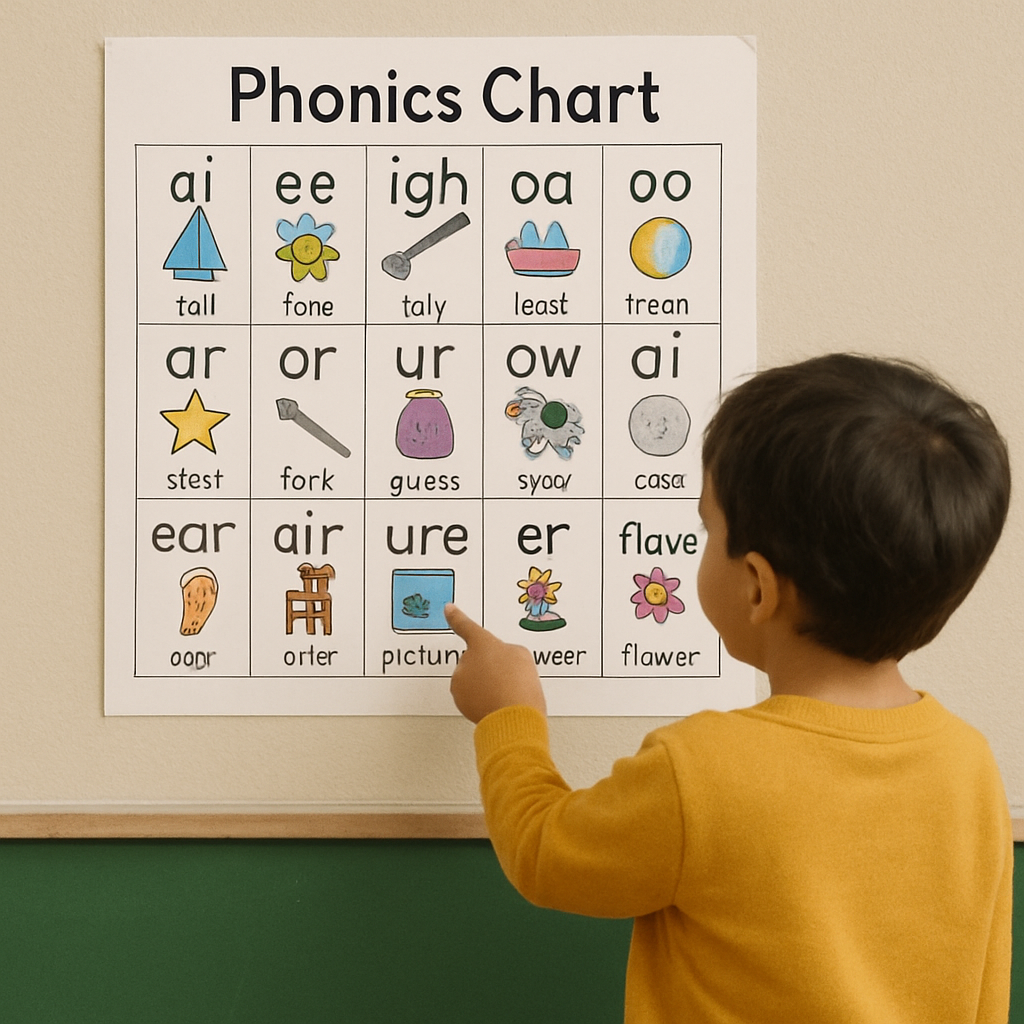
The Foundation of Reading: Phonics and “A Words”
When building reading skills, educators almost always start at the beginning of the alphabet. Introducing a words phonics concepts provides a reliable, consistent starting point for young learners.
Mastering Short A Words
Teaching short a vowel sounds is typically the first step in a child’s reading journey. The “short a” sound (as heard in apple or cat) is crisp, distinct, and easy for young mouths to articulate. Once children can isolate this sound, they can begin reading simple CVC (Consonant-Vowel-Consonant) words.
To support this stage, providing structured short a vowel word lists for students is incredibly helpful. A foundational list might include:
- -at words: cat, bat, hat, mat
- -an words: pan, fan, man, can
- -ap words: map, tap, cap, nap
By focusing on these specific short a words, children learn to blend individual sounds together to form complete words.
Short A vs. Long A
As students progress, they must understand the difference between short a and long a. While the short “a” says its sound (like in mat), the long “a” says its name (like in mate). Teaching this distinction early on prevents confusion when students encounter silent “e” rules or vowel teams like “ai” and “ay”.
Phonics Decoding Strategies for Beginners
To turn early learners into fluent readers, relying on memorization isn’t enough. Systematic phonics instruction for beginners provides a logical sequence for teaching letter-sound relationships.
One of the most powerful phonics decoding strategies for beginners is called orthographic mapping for short vowels. Orthographic mapping is the mental process we use to permanently store words for immediate retrieval. It involves physically mapping the phonemes (sounds) to the graphemes (letters). For example, when a child hears the word “sad,” they map the sounds /s/ /a/ /d/ to the corresponding letters, cementing the word into their long-term memory.

Beyond the Basics: Understanding Affixes
Once basic phonics skills are established, reading instruction shifts from simply sounding out letters to understanding word parts. This brings us to the concept of affixes.
Affix Meaning and Importance
So, what exactly is the affix meaning? An affix is a structural element added to the beginning or end of a root word to change its meaning or grammatical function.
You might ask: why are affixes important in reading? As students encounter longer, more complex texts, sounding out every single letter becomes inefficient. Recognizing chunks of meaning—like prefixes and suffixes—drastically increases reading speed and comprehension.
Morphemes vs. Phonemes
To truly understand how words work, it is helpful to look at morpheme vs phoneme examples.
- Phoneme: The smallest unit of sound. (e.g., The word “cat” has three phonemes: /c/ /a/ /t/).
- Morpheme: The smallest unit of meaning. (e.g., The word “cats” has two morphemes: the root word “cat” meaning a feline, and the suffix “s” meaning more than one).
Prefixes, Suffixes, and Word Roots
Knowing how to identify prefixes and suffixes is a vital skill for older elementary students.
- Prefixes are added to the beginning of a word (e.g., un-, re-).
- Suffixes are added to the end of a word (e.g., -ing, -ed, -ful).
If you are wondering, what are the most common english affixes, they include prefixes like un- (not), re- (again), and dis- (opposite of), as well as suffixes like -s/es (plural), -ed (past tense), and -ing (present participle).
Providing clear affix examples helps solidify this concept. Here are some examples of words with prefixes and suffixes:
- Rebuild (Prefix re- + root build)
- Joyful (Root joy + suffix -ful)
- Unbelievable (Prefix un- + root believe + suffix -able)
This structural approach is the secret to building vocabulary through word roots. If a student knows that the root “spect” means “to look,” and understands common affixes, they can easily figure out the meaning of words like inspector, spectator, or inspecting.
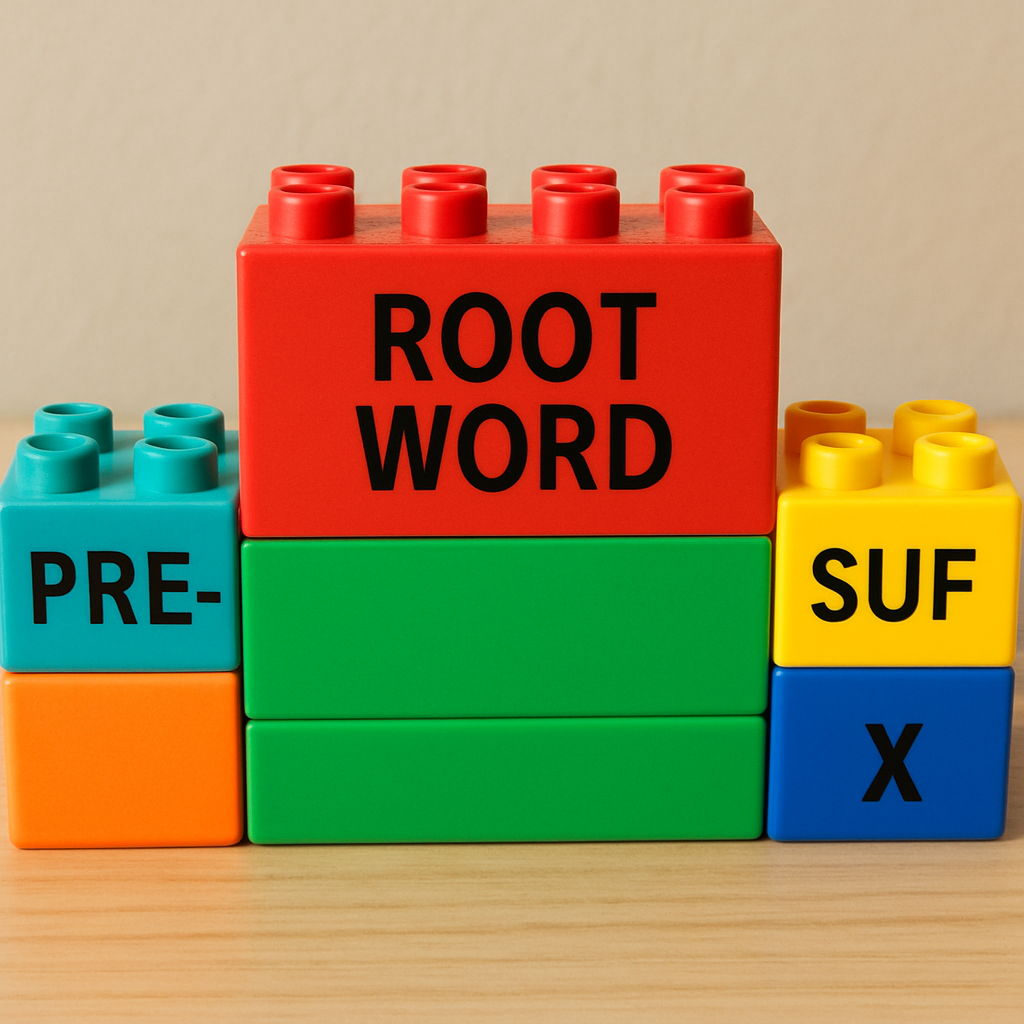
Combining Phonics and Affixes for Reading Success
The transition from early reading to advanced reading requires bridging the gap between sound and structure. When lessons successfully integrate phonics, a words, and affixes, students develop a robust reading toolkit.
For instance, a student might start by learning the short a word act. Later, they apply their knowledge of affixes to read acting, actor, or reenact. Mastering these phonics a words affixes connections ensures a smooth transition from basic decoding to advanced reading comprehension.
Furthermore, decoding multisyllabic words using affixes is one of the most effective strategies for tackling big words. Instead of panicking at a long word like “unhappiness,” a trained reader will isolate the prefix (un-), identify the suffix (-ness), and easily read the familiar root word (happy).
Effective Word Building Activities for Learners
To put these concepts into practice, hands-on learning is essential. Here are some effective word building activities for learners that target both foundational phonics and advanced morphology:
- Sound Boxes (Elkonin Boxes): Great for short a words. Have students push a physical token into a box for each sound they hear in words like c-a-p or m-a-d.
- Affix Word Sorts: Give students a list of words and have them sort them into categories based on their prefix or suffix. This trains the brain to recognize patterns quickly.
- The “Add an Affix” Game: Start with a simple base word (like play) and challenge students to create as many new words as possible by adding prefixes and suffixes (plays, playing, played, replay, playful).
- Highlighter Hunts: Print out a short reading passage. Have students use a yellow highlighter to find short a CVC words, and a pink highlighter to find words with suffixes like -ing or -ed.
Conclusion
Reading is a layered skill. It begins with the simple elegance of phonics, where students master the sounds of foundational letters, building confidence through short a words. However, to truly achieve fluency and robust comprehension, learners must graduate to understanding affix meaning and structural morphology.
By utilizing systematic instruction, orthographic mapping, and clear examples of prefixes and suffixes, you can empower your learners to conquer everything from simple three-letter words to complex multisyllabic vocabulary. Armed with both phonics and a deep understanding of affixes, your students will be well on their way to a lifetime of confident, joyful reading.