Fun 3 Syllable Words for Kids
Your child has mastered simple words like “cat” and “bug”—now they are ready for the big leagues. Tackling 3 syllable words for kids feels like unlocking an exciting new level in a video game. According to early education specialists, this shift ranks among the most vital literacy milestones because it moves young readers from basic sound decoding to true reading fluency. Conquering this “big kid” language brings a massive, emotional confidence boost.
Does your young reader ever get stuck right in the middle of a longer word? Reading science shows that “middle-word stumbling” is a natural hurdle as children build the cognitive stamina required for second and third-grade reading levels. When confronted with three syllables at once, kids often guess the ending rather than reading completely through it.
Picture these longer words as a three-car train to help kids overcome this bump. If a child tries jumping on the entire train at once, they might trip. Instead, by identifying the Engine (first part), the Middle (second), and the Caboose (third), a giant word transforms into three tiny, manageable pieces.
The ‘Clap and Drop’ Secret: Two Ways to Hear the Rhythm in Every Word
When children race through long words and stumble, slowing them down is crucial for teaching syllable division. Think of a vowel as the “heart” of every beat. While the clapping out syllables method for beginners is great, fast talkers often clap too quickly and lose the rhythm. Try a “Robot Voice” instead. Have your reader speak like a clunky machine—”di-no-saur”—to highlight those distinct vowel beats.
For a physical approach, the Chin Drop Method works wonders to build this connection.
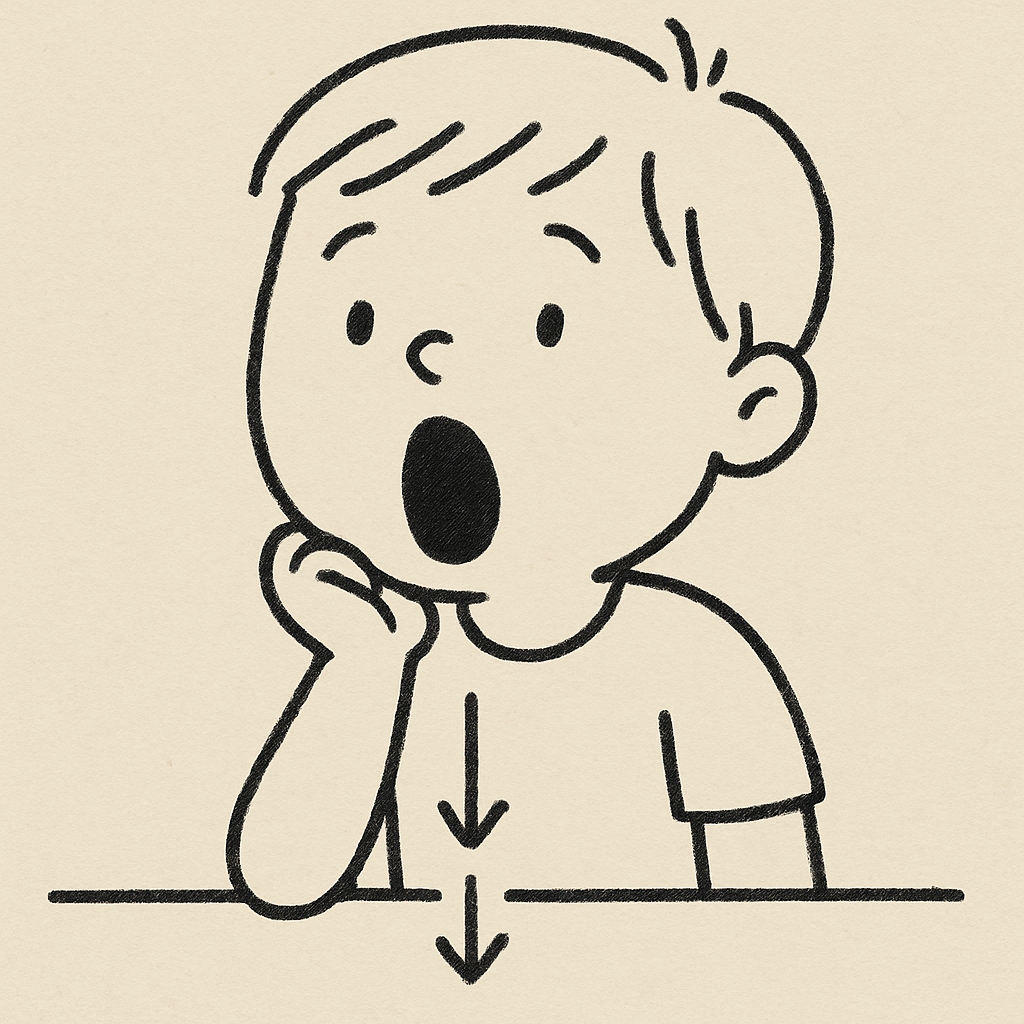
Since mouths must open to make a vowel sound, kids can literally feel a word’s building blocks. Try these simple steps:
- Put a flat hand directly under your chin.
- Say “ham-bur-ger” normally.
- Count the chin drops (three drops equals three beats!).
These phonological awareness activities for literacy turn frustrating reading practice into a fun, interactive game. Once your child can hear and feel those three beats, they are ready to conquer the written word using visual strategies.
The Finger Cover Rule: Making 3-Syllable Words Less Intimidating
When young readers transition from simple words to longer text, they often panic and guess the whole word based on its first letter. Instead of letting them guess, we want to help them see that a “scary” long word is just three small Legos snapped together. By isolating these visual pieces, you stop the guessing habit and give your child immediate confidence.
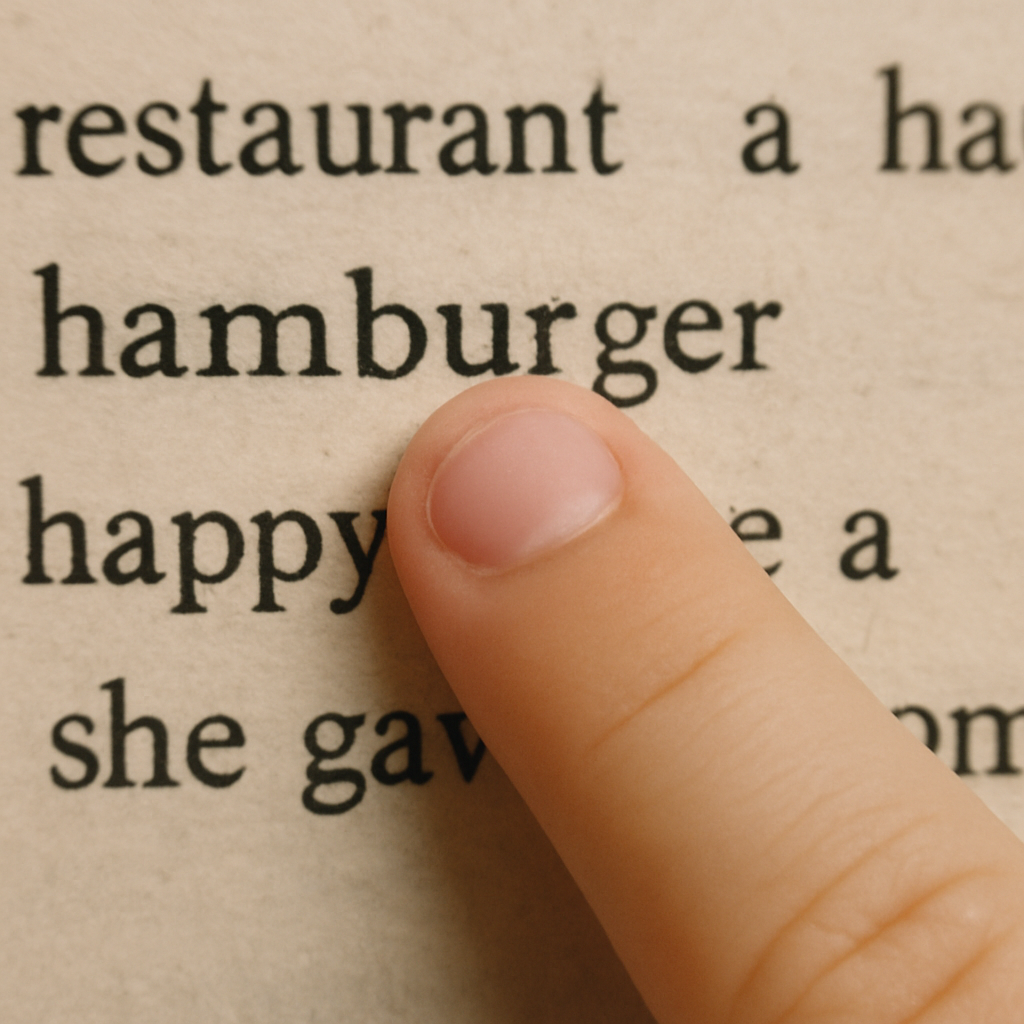
To make this visual isolation happen, try the Finger Cover Rule. Simply place your finger over the end of a word, revealing only the first part—like showing just the “ham” and hiding the “burger.” Once they read that first block, slide your finger to reveal the next piece. Recognizing these smaller word chunks is one of the most effective syllable patterns for reading fluency, because it forces the brain to process one bite at a time.
Over time, this straightforward sliding motion builds the visual scanning stamina needed for longer sentences. Your child will eventually start breaking down prefixes and suffixes automatically, viewing them as familiar blocks. Practicing with familiar topics like wildlife helps cement these skills.
Building a Wildlife Vocabulary: 3-Syllable Animals from the Jungle to the Backyard
Kids naturally love animals, making them the perfect stepping stones for early reading practice. Since your reader already knows what these creatures look and sound like, they can focus entirely on breaking the names into manageable pieces. This simple shift helps them transition from viewing words as intimidating solid shapes to seeing them as friendly, snap-together segments.
To build confidence quickly, start by creating a 10-word “animal bank” filled with approachable 3 syllable words for kids. Using this list of common nouns with three syllables gives you a ready-made toolkit for the Finger Cover Rule:
- Kan-ga-roo
- Oc-to-pus
- But-ter-fly
- La-dy-bug
- El-e-phant
- Di-no-saur
- Pel-i-can
- Wood-peck-er
- Go-ril-la
- Buf-fa-lo
While clapping out the beats of this three syllable nouns list, encourage your child to listen closely to the middle chunks. Practicing these familiar words helps them recognize consistent vowel pronunciation—like the clear “e” sound right in the middle of “el-e-phant.” Because the animals are highly recognizable, your child won’t get bogged down trying to understand an abstract vocabulary concept while simultaneously learning a new decoding skill.
Once your young reader feels successful spotting wildlife word-chunks, they can apply their new detective skills indoors.
Everyday Multisyllabic Nouns: Mastering 3-Syllable Words in the Kitchen and Beyond
Moving away from the jungle, your child’s next reading adventure sits right on the kitchen counter. When kids physically touch an object while saying its name, they build a much stronger brain connection between the tangible item and its written word chunks. This tactile approach turns everyday routines into powerful, pressure-free reading moments.
Educators call this incidental learning—the natural practice that happens outside of formal homework time. By casually pointing out three syllable nouns during a grocery run or while putting away dishes, you build environmental literacy. You are showing your reader that words that have 3 syllables aren’t just stuck in textbooks; they live all around the house.
To make this simple, try placing sticky notes on everyday items for a quick scavenger hunt. Here is a handy 3 syllable word list to get your household labeling started:
- Com-pu-ter
- Vi-ta-min
- Ce-re-al
- Mi-cro-wave
- Um-brel-la
- Tel-e-phone
- Cal-en-dar
- Spa-ghet-ti
- Pa-ja-mas
- Fur-ni-ture
As you practice clapping out these items together, you might notice that some middle beats sound slightly muffled, like the soft “uh” tucked inside “cal-en-dar.” Don’t worry if your child struggles to spell these middle chunks perfectly at first; these common phonetic bumps have a simple explanation.
Taming the ‘Lazy Sound’: Explaining the Schwa in Three-Syllable Words
Frustration often strikes when a vowel forgets its own sound. In many words that have three syllables, one word chunk gets a strong, heavy beat, while the others are rushed. Because we emphasize just one part, the vowels in the unstressed chunks lose their energy and cannot make their normal, crisp sounds.
Linguists call this the “schwa,” but you can introduce it as the “Lazy Sound.” When exploring how to teach syllable division, explain that these tired vowels make a soft “uh” noise instead of matching their spelling. Take “ba-NAN-a.” We emphasize the middle section, leaving the first and last ‘a’ so relaxed they just grunt out a quick “uh.”
Remind your reader that these lazy letters are perfectly normal when phonetic rules seem to break. The most effective phonetic decoding strategies for young readers focus on recognizing these “uh” sounds during reading before worrying about perfect spelling. Once they can spot these relaxed vowels without getting frustrated, you can solidify their new skills through physical movement.
Playful Practice: 3 Literacy Games That Don’t Feel Like Homework
Sitting at a desk isn’t the only way to master reading. Now that your child recognizes word chunks, it’s time to introduce kinesthetic literacy—a teaching strategy that simply means learning through physical movement. By tying brain work to body work, you transform everyday phonological awareness activities from frustrating chores into joyful bonding moments.
Ditch the flashcards and try these educational games for identifying word segments around the house:
- Syllable Jump: Lay three pillows on the floor. For a word like di-no-saur, have your child hop to a new pillow for every sound chunk.
- Drum the Word: Turn kitchen pots into instruments. Grab a wooden spoon and enthusiastically bang out the three beats of ham-bur-ger.
- The Secret Password: Require a three-beat word like ad-ven-ture to enter a room, making them clap the pieces together before opening the door.
Traditional learning tools certainly have their place, but adding physical play to standard printable phonics worksheets for syllable counting makes new concepts stick faster. Once your child is confidently hopping and drumming through longer words, they are ready to build lasting fluency.
Your 3-Syllable Action Plan: Moving from Sounding Out to Fluent Reading
Your child’s transition from reading single building blocks to navigating a three-car train is a massive literacy milestone. Using simple chunking strategies and a customized multiple syllable words list, you have transformed intimidating language into manageable, bite-sized pieces. You’ll spot a key fluency marker when your child can clap and say a word like “hamburger” without pausing between the beats, proving their reading confidence is truly taking root.
Keep this daily practice light and low-pressure, celebrating every small victory along the way. As teaching multisyllabic words to elementary students becomes second nature in your home, this solid foundation perfectly prepares them for the next big leap. Soon, they will be ready to tackle massive 3 and 4 syllable words—those exciting “Mega-words” like “wa-ter-mel-on”—with the exact same playful curiosity they used to master their very first letters.