
Mastering Jumbled Words: Tips and Tricks
Have you ever stared at a chaotic mix of letters, knowing a perfectly good word is hiding right in front of you? Whether you are a casual puzzle fan or a dedicated cruciverbalist, finding answers for jumbled words can sometimes feel like searching for a needle in a haystack.
Beyond the sheer fun and satisfaction of the “aha!” moment, engaging with a daily letter jumble offers incredible mental stimulation. Research highlights numerous cognitive benefits of word games, including enhanced short-term memory, better problem-solving skills, and sharper daily focus.
If you want to stop staring at scrambled text and start solving, you are in the right place. Let’s dive into the best strategies, techniques, and tools to help you conquer any word puzzle.

Why We Love Word Scrambles (And Why They Stump Us)
Word scrambles tap into our brain’s natural desire to recognize patterns. Finding jumbled words with answers for adults has become a popular morning ritual for millions. It’s not just about passing the time during a commute; it is a highly active mental workout.
Interestingly, these puzzles are also fantastic educational tools. Many people find themselves naturally improving spelling through jumbled letters because the activity forces the brain to analyze phonetic structures and vowel placements rather than just reading a whole word at a glance. But when the letters are heavily scrambled, our usual reading pathways are disrupted, which is exactly why we sometimes get stuck.
Proven Strategies: How to Solve Word Scrambles Quickly
If you are wondering how to solve word scrambles quickly, the secret is to rely on a methodical approach rather than just hoping the word jumps out at you. Here are some of the most effective anagram solving techniques used by puzzle masters.
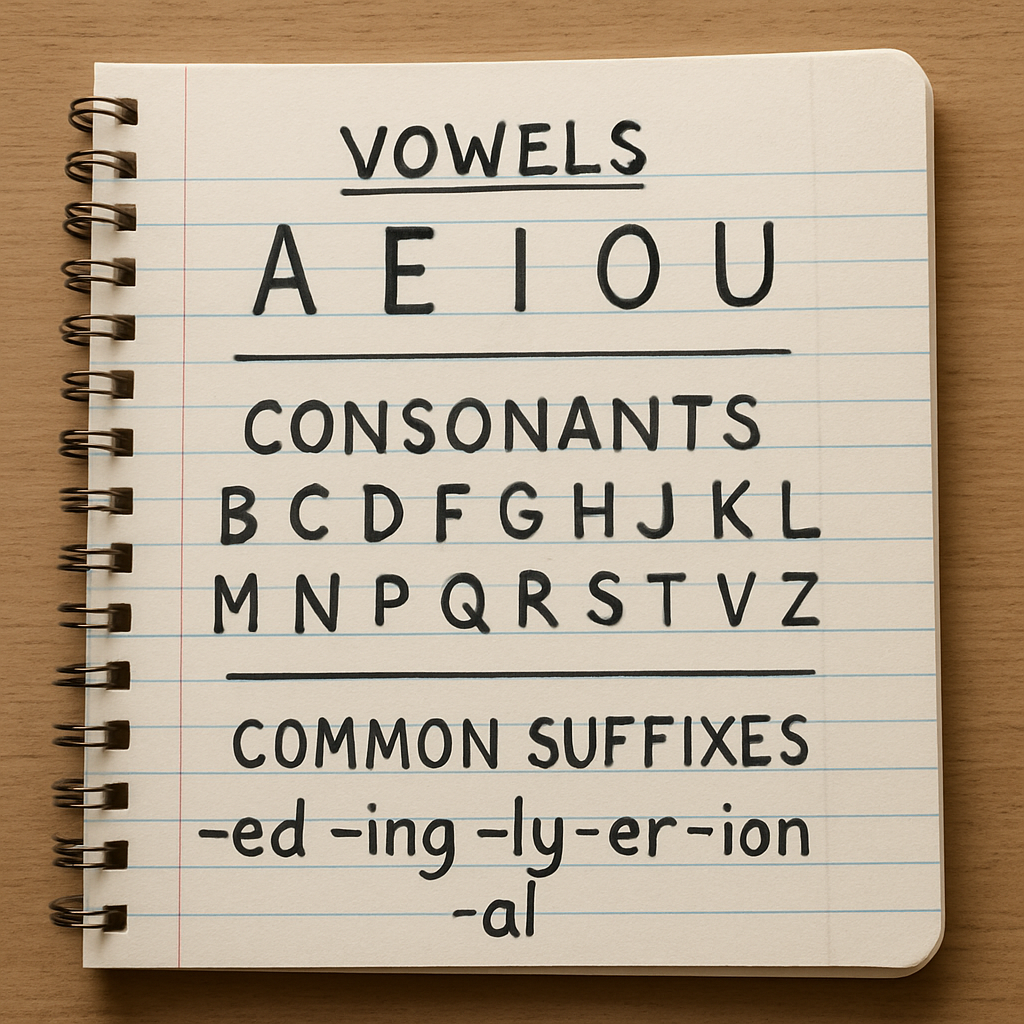
1. Separate Vowels and Consonants
The English language relies heavily on specific vowel-consonant ratios. By writing the vowels on one side of your scratchpad and the consonants on the other, you instantly reduce the visual chaos. This makes it much easier to unscramble letters into words.
2. Look for Common Pairings
One of the most reliable strategies for identifying letter patterns is to look for consonant clusters and common digraphs.
- Consonant pairs: CH, SH, TH, PH, WH
- Blends: BR, CR, FL, GL, PR, TR
- Vowel teams: EA, EE, OA, OU
If your scrambled letters include an ‘S’ and an ‘H’, write them down together. This immediately narrows down the remaining letters you have to work with.
3. Identify Prefixes and Suffixes
Figuring out how to rearrange letters to form words becomes much easier when you look at the ends of the words first. Do you have the letters for “-ING”, “-ED”, “-TION”, or “-MENT”? What about prefixes like “UN-“, “RE-“, or “DIS-“? Isolate those letters. Rearranging letters for vocabulary building this way trains your brain to recognize root words faster.
Advanced Techniques for Tough Puzzles
When you move beyond simple five-letter words, jumbled words solving requires a bit more finesse.
The Circle Technique
To solve difficult word puzzles, you sometimes need to break your brain’s linear thinking. Write the scrambled letters in a circle rather than a straight line. Because you are no longer reading from left to right, your brain can form new visual connections, making the hidden word much more obvious.
Unscrambling Multi Word Phrases
Unscrambling multi word phrases (often found at the end of daily newspaper puzzles) adds an extra layer of difficulty. Here is how to tackle them:
- Look at word lengths: If the final phrase includes a one-letter word, it’s almost certainly ‘A’ or ‘I’.
- Two-letter words: Keep an eye out for ‘TO’, ‘OF’, ‘IN’, ‘IS’, or ‘ON’.
- Context clues: Use the cartoon or the theme of the puzzle to guess the punchline before you even look at the letters.
The Digital Advantage: Using Tools to Unscramble Jumble
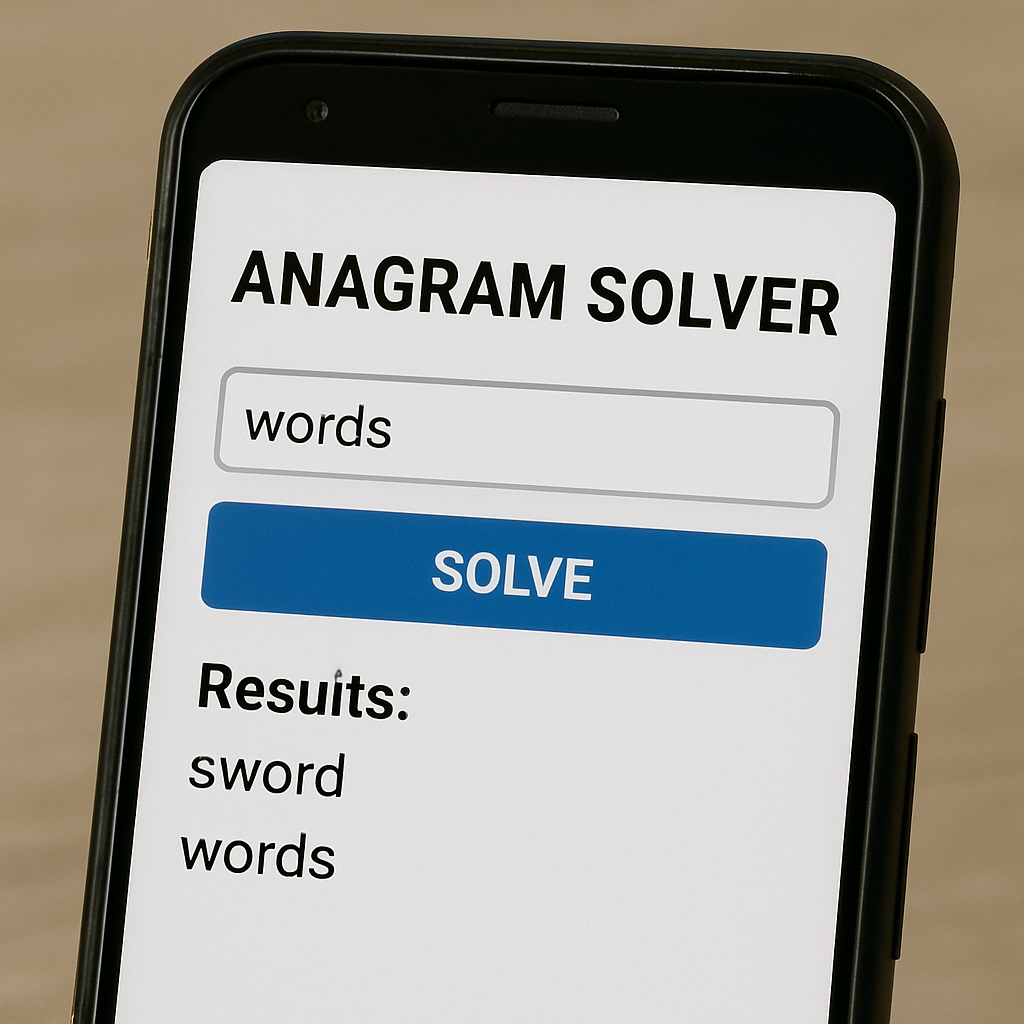
Sometimes, no matter how good your strategies are, you just hit a wall. When you are struggling to unscramble jumble puzzles and your brain needs a break, technology can step in.
You might wonder, what is an anagram solver? Simply put, it is an algorithm designed to rearrange a set of letters into every possible valid word. Using a reliable jumble word finder isn’t cheating; it is an excellent way to learn new words and understand patterns you might have missed.
Word Unscrambler vs Dictionary
When stuck, people often debate the usefulness of a word unscrambler vs dictionary.
- A dictionary is great if you know the first two or three letters of the word. You can flip through and scan for the remaining letters.
- An anagram solver does the heavy lifting when you have absolutely no idea what the starting letter is.
Some of the best online anagram tools allow you to input blank tiles (wildcards) or filter results by word length. They act as a digital word scramble cheat sheet, providing instant clarity when you are completely stumped.
Finding Daily Newspaper Jumble Solutions
For many puzzle enthusiasts, the daily newspaper jumble is a non-negotiable part of the morning routine. However, there are days when the final pun or phrase is deeply obscure.
Fortunately, numerous websites and online communities are dedicated to posting daily newspaper jumble solutions. If you find yourself holding onto a newspaper for three days just because you can’t solve Thursday’s puzzle, bookmarking a site that provides daily answers for jumbled words can save you from simmering frustration. It allows you to check your work, learn from the solution, and move on with your day feeling accomplished.
Conclusion
Mastering word puzzles is a journey of pattern recognition, vocabulary expansion, and patience. By applying these techniques—separating vowels, identifying prefixes, and using the circle method—you will drastically improve your solving speed. And remember, when you are truly stuck, there is no shame in utilizing a digital tool to find the answers you need. Keep practicing, stay curious, and enjoy the mental workout that comes with every scrambled word!