
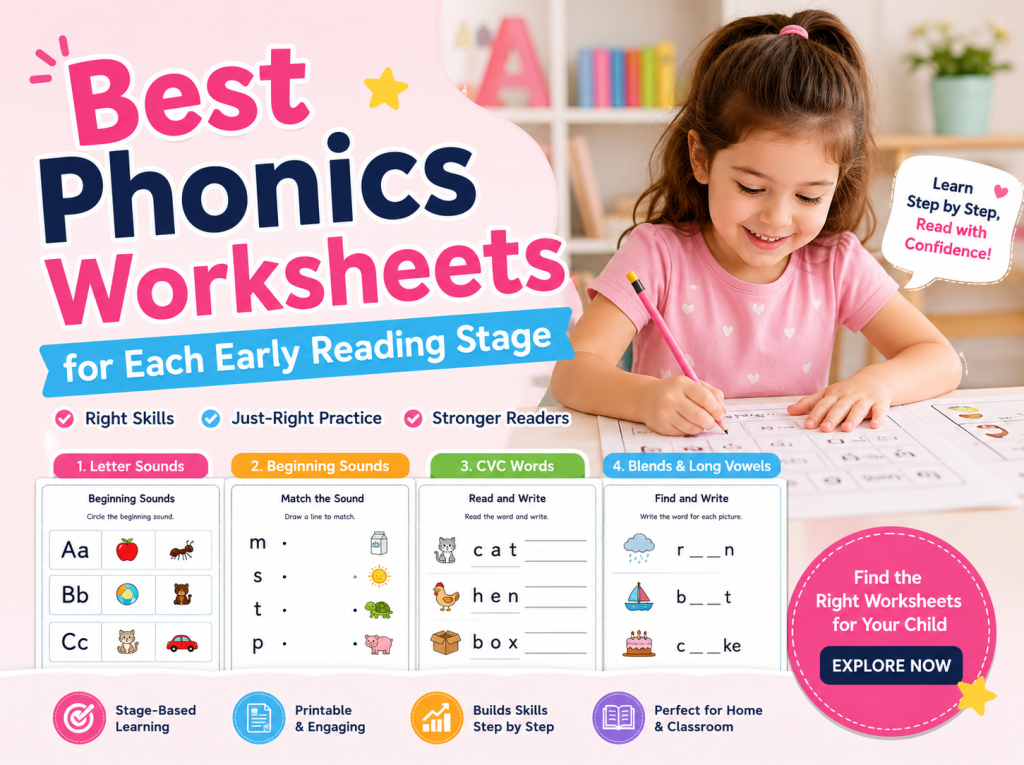
The best phonics worksheets are not the pages with the brightest pictures or the highest grade label. They are the pages that ask a learner to use a skill that has already been taught, while adding only one manageable challenge.
This guide helps families and educators identify the current reading stage, choose the right type of practice, recognize when a page is too easy or too difficult, and decide which EnglishForKiz learning path should come next.
Letters become sounds
Recognize a printed letter and produce its common sound.
Sounds become categories
Compare spoken words and sort them by opening sound.
Sounds become words
Blend CVC words and hear the short vowel in the middle.
Patterns expand reading
Read blends, digraphs, Magic E, and long-vowel patterns.
Stage 1: Letter Recognition and Letter Sounds
Stage 1 begins when a learner can look at a printed letter and connect it with a spoken sound. Singing the alphabet may show familiarity, but it does not confirm that the learner can see m and respond with /m/.
At this point, simple letter sounds worksheets are more useful than large mixed packets. A strong page presents one clear target, familiar picture vocabulary, and enough white space for the learner to focus on the letter.
Single-letter practice, uppercase and lowercase matching, sound-picture matching, and short tracing tasks.
Dense alphabet reviews, several visually similar letters, and pages that combine tracing, spelling, and reading.
Several taught sounds can be recalled without picture clues and across more than one letter style.
What makes a beginner page useful?
The page should reveal sound knowledge rather than pencil ability. Circling, pointing, or using a counter often gives a clearer answer than asking a beginner to copy several words. Handwriting can remain a separate part of the lesson.
Picture labels also need a quick oral preview. A learner may call an illustration a “sea lion” while the worksheet expects “seal.” Saying each word once before the activity prevents vocabulary differences from looking like sound errors.
Recognition task
Find one target letter among two or three choices. Keep the visual field small during early practice.
Sound task
Show a letter and ask for its sound. Remove picture support once the sound has been introduced.
Application task
Match the letter with words such as moon, map, and mouse.
A five-minute letter-sound check
- Place three taught letter cards on a table.
- Say one sound and ask the learner to touch the matching card.
- Show each card and ask for the sound without a picture.
- Sort six familiar pictures beneath the correct letters.
- Use one short worksheet with the same targets.
If the oral task works but the page does not, the difficulty may come from layout, instructions, or handwriting. If both tasks are difficult, more direct sound teaching is needed before a larger worksheet set.
Stage 2: Beginning Sounds and Sound Matching
Stage 2 asks the learner to compare sounds across spoken words. The child may hear that moon and map begin alike, then connect that shared opening sound with the printed letter m.
This stage is not simply harder letter recognition. It combines phonemic awareness, which is the ability to notice sounds in speech, with letter-sound knowledge. One skill may appear stronger than the other.
Two-column picture sorts, odd-one-out activities, beginning-sound matching, and simple ending-sound review.
Middle-vowel pages, large mixed-sound grids, and tasks that depend on unfamiliar picture vocabulary.
Opening sounds can be sorted accurately and two spoken parts can begin to blend into one word.
Check listening before checking print
Start with pictures or objects and leave printed letters out of the first round. Ask whether fish and fan begin alike. Then add the letter f after the shared sound has been heard.
This order identifies the source of an error. Accurate oral sorting with weak print matching suggests that letter recognition needs support. Difficulty in both versions points back to listening and sound isolation.
Example: a two-sound sorting lesson
- Select two familiar sounds, such as /f/ and /m/.
- Review the names of six picture cards.
- Say each word slowly and identify the opening sound.
- Sort the pictures beneath f or m.
- Complete a fresh paper version with new examples.
Ending sounds can enter practice once opening sounds feel reliable. Begin with words that have clear final sounds, such as sun, leaf, and bus. Middle sounds should usually wait until CVC blending begins.
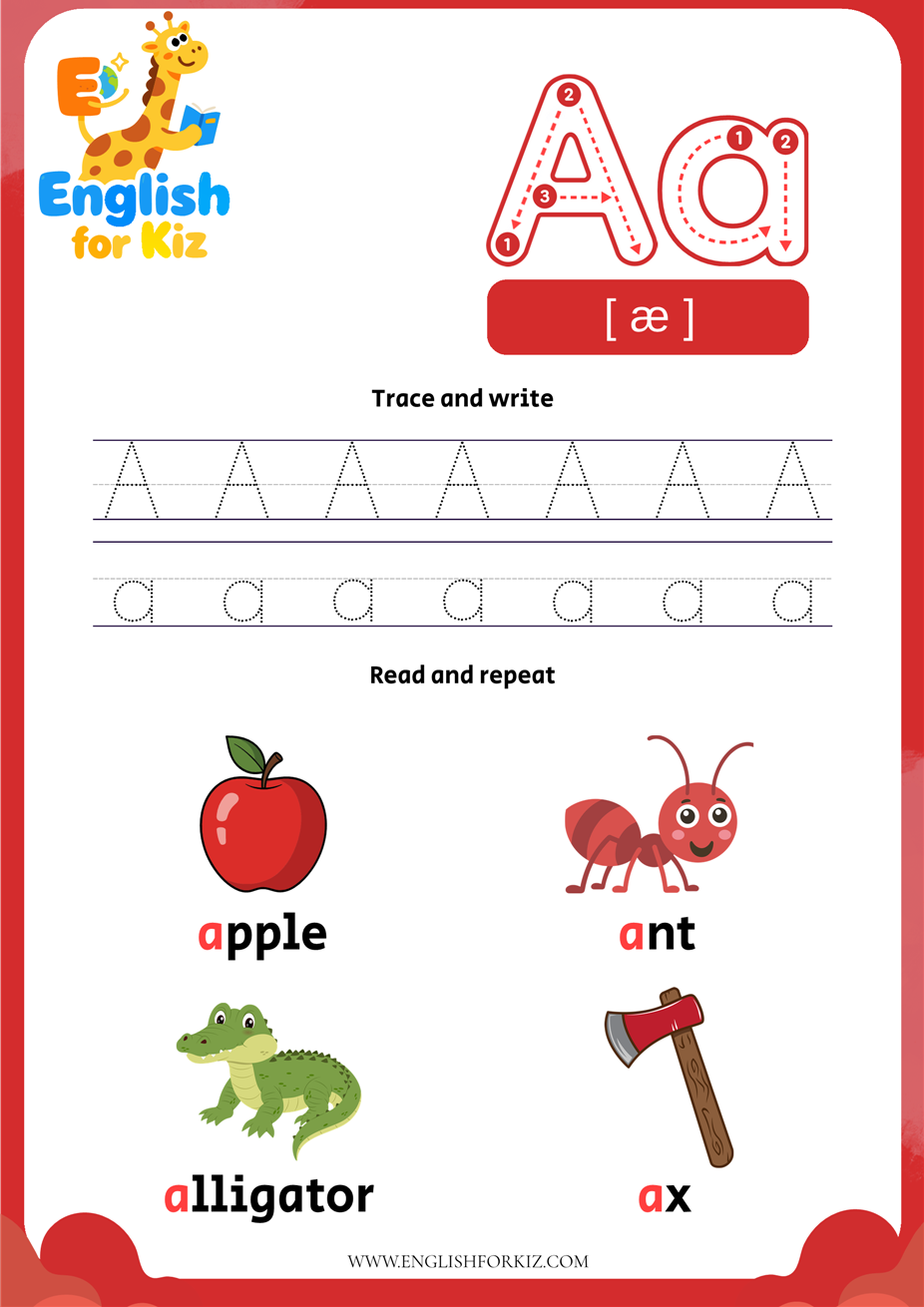
Choose Preschool resources for letter and beginning-sound work
This level fits learners who still need to connect uppercase and lowercase letters with common sounds. It also supports early listening work before full word decoding begins.
- Letter recognition and formation
- Letter-sound practice
- Beginning-sound identification
- Short oral and printable review
Stage 3: CVC Blending and Short Vowels
CVC means consonant-vowel-consonant, as in map, sit, and log. This stage requires the learner to recall three sounds, keep them in order, and blend them into a recognizable word.
The middle vowel deserves special attention because a small change creates a different word. Compare cat, cot, cut, and kit. A page that hides this listening demand behind too much writing can make progress difficult to judge.
Short-vowel word families, CVC blending, word chains, missing-vowel tasks, and controlled sentence practice.
Several vowel patterns on one new page, picture-led guessing, and long spelling lists before oral segmentation is secure.
New CVC words can be read across mixed short vowels without relying on a repeated word-family order.
Build blending in smaller steps
Continuous blending is often easier than separating every sound with a long pause. A model such as /mmmăăăp/ keeps the sounds connected. Once that feels comfortable, the learner can blend /m/ /ă/ /p/ with clearer separation.
Onset and rime provide another bridge. The onset is the opening consonant, while the rime is the remaining part of the word. Joining /m/ with /ap/ creates map.
Use blocked practice to teach
A page with cat, hat, mat, and sat helps the learner notice the stable -at pattern.
Use mixed practice to check
A page with cat, map, fan, and bag shows whether the whole word is being read.
Let pictures confirm rather than reveal
Pictures can support vocabulary and meaning, but they can also supply an answer before decoding begins. Cover the illustration during the first attempt. Reveal it after the word has been blended to check whether the answer makes sense.
For spelling activities, say every picture name aloud before work starts. This simple step prevents an unclear illustration from producing a false spelling error.
Move from reading into spelling
Once a small group of words can be read accurately, introduce sound boxes. Place one counter into each box while saying /m/ /ă/ /p/, then replace each counter with a letter.
A spelling such as mp shows that the outer consonants are audible while the vowel is not yet isolated. Slow oral segmentation will help more than copying the correct word several times.
Example: a CVC word-change routine
- Build map with movable letters.
- Blend the word from left to right.
- Change one letter to make mat.
- Change the opening letter to make sat.
- Ask which sound changed after every move.
- Finish with a short page and one controlled sentence.
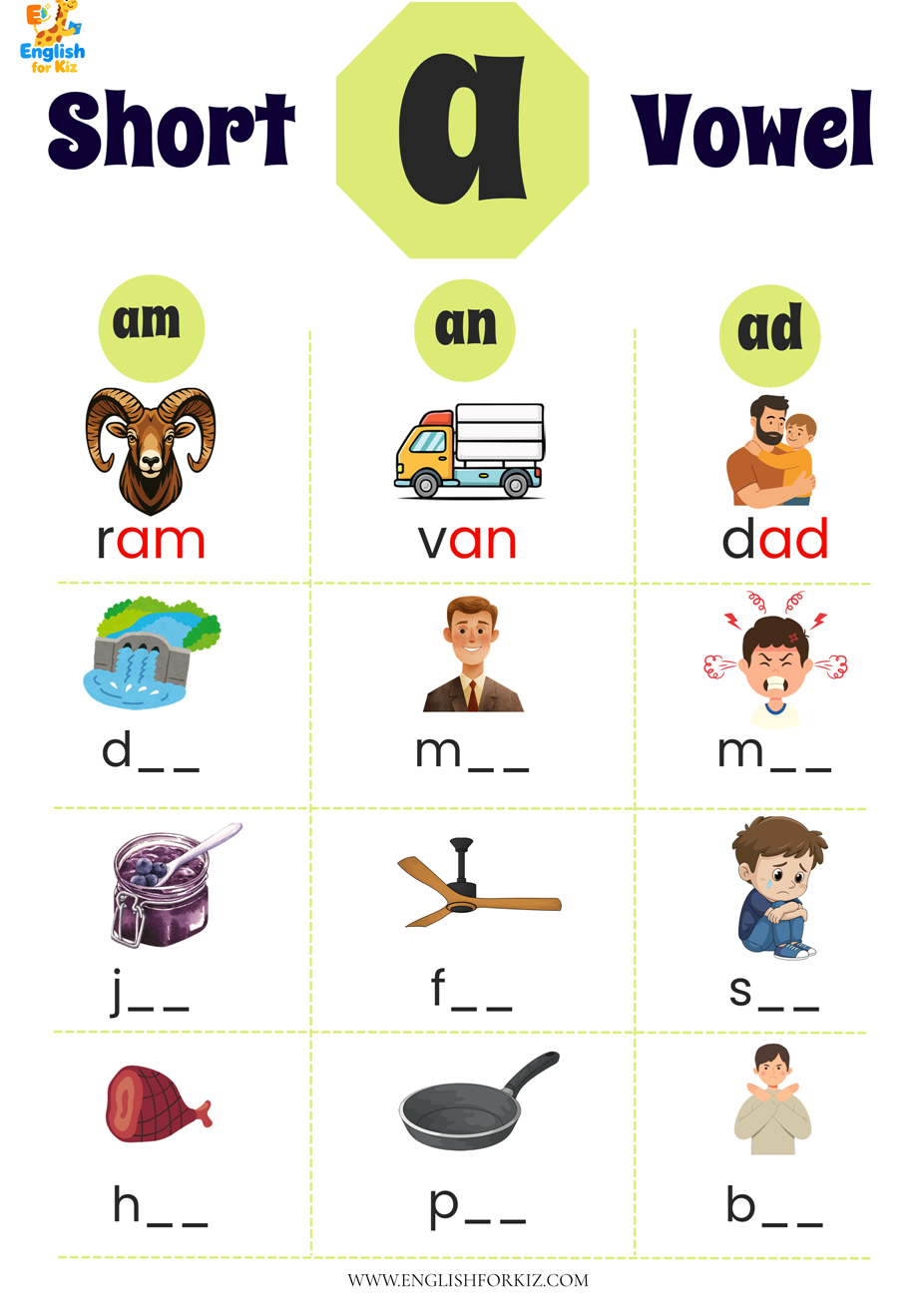
Choose Kindergarten resources for short vowels and early word reading
This level fits learners who know several letter sounds and are ready to blend CVC words. The strongest match includes word families, mixed short-vowel practice, simple spelling, and early decodable sentences.
- Short a, e, i, o, and u
- CVC word building and blending
- Beginning and ending sounds
- Simple phrases and decodable sentences
Stage 4: Blends, Digraphs and Long Vowels
Stage 4 begins when basic CVC reading remains accurate across mixed word lists and short sentences. The learner is now ready for words that contain more sounds or less direct sound-spelling relationships.
Consonant blends keep each sound, as in stop or clap. Digraphs use two letters to represent one sound, as in ship, chat, and thin. Long-vowel patterns introduce spelling signals such as final e, ai, and ee.
One-pattern blend pages, digraph contrasts, short-and-long vowel pairs, Magic E, and gradual vowel-team review.
Pages that introduce many new spellings together or mix unexplained exceptions into a decoding check.
New patterns transfer from isolated words into sentences without frequent sound omissions or picture guessing.
Keep every sound in a blend
A learner may read stop as top or flag as fag because one consonant disappears during blending. Sound boxes make each sound visible. The word stop needs four boxes because it contains four sounds.
In contrast, ship needs three boxes because sh represents one sound. This comparison helps learners understand that letter count and sound count are not always identical.
Teach digraphs through contrast
Introduce one digraph clearly, then compare it with another. Reading chip and ship encourages attention to the entire opening pattern. Later practice can place the digraph at the end of words, as in fish and much.
Some digraphs represent more than one common sound. The th in thin differs from the th in this. Early pages should separate those sounds rather than mixing them without explanation.
Make the long-vowel signal visible
Pairs such as cap/cape, kit/kite, and hop/hope show how final e changes the vowel sound. The learner can underline the vowel, circle the final e, and explain what changed.
After one long-vowel pattern becomes familiar, introduce another spelling for the same sound. Long a may appear as a_e, ai, or ay. These options should enter practice gradually rather than on a single crowded introduction page.
Example: short vowel to Magic E
- Build and read cap.
- Add final e and read cape.
- Mark the vowel and circle the final e.
- Repeat with kit/kite and hop/hope.
- Sort the words into short- and long-vowel groups.
- Read one sentence using each pattern.
A useful review page contains mostly secure patterns and a smaller set of new examples. That balance keeps the learner reading rather than guessing. Once accuracy remains stable, broader mixed review can follow.
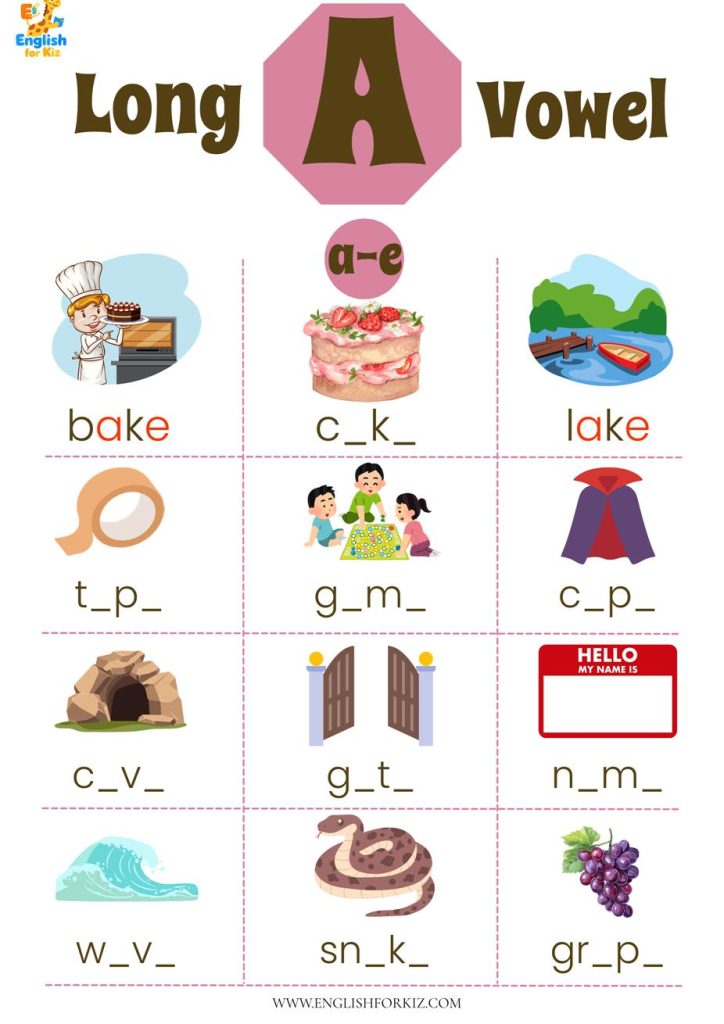
Choose 1st Grade resources after CVC reading becomes stable
This level fits learners who can decode many short-vowel words and are ready for longer sound patterns. Practice should expand reading without abandoning careful attention to every letter.
- Consonant blends and digraphs
- Magic E and long vowels
- Common vowel teams
- Sentence reading and spelling practice
How to Match Worksheet Difficulty to the Child
A grade label can narrow the search, but it should not make the final decision. The same kindergarten phonics worksheets may be appropriate for one learner, too simple for another, and too advanced for a third.
Before assigning a page, check four hidden demands. Each one can change how difficult the activity feels, even when the target words appear simple.
Sound knowledge
Scan every word for untaught letters, digraphs, blends, or vowel patterns.
Reading demand
Consider sound count, word length, sentence length, and the amount of tracking required.
Language demand
Preview uncommon vocabulary so background knowledge does not hide decoding ability.
Response demand
Writing, cutting, coloring, and copying can make a reading task harder than expected.
Place the page in one of three practice zones
Ready practice
The learner understands the direction, knows nearly all required sounds, and completes most items accurately. Use this level for review and smoother reading.
Productive stretch
One feature is new, while the rest remains familiar. Brief modeling is enough for the learner to continue with thoughtful effort.
Too many demands
Several patterns, directions, or response types are unfamiliar. Guessing increases, and errors no longer reveal one clear need.
The productive-stretch zone is usually the best place for new learning. Ready practice still has value because it supports confidence and fluency. A difficult page should not become the default simply because it looks more advanced.
Change the demand without discarding the page
Cover half the items, reduce the number of answer choices, or reveal one row at a time. Picture names can be read aloud when vocabulary is not the target. Oral answers can replace copying when decoding is the main goal.
An easy page can also be extended. Hide the pictures, mix the word order, ask for oral spelling, or use two selected words in a sentence. These changes increase attention to print without adding unrelated busywork.
Build a Lesson → Worksheet → Game → Reader Sequence
A worksheet should not carry the entire lesson. It works best after a short explanation and before the same pattern appears in a game or controlled reading passage. Each part should answer a different learning question.
Lesson
Can the learner hear and explain the target sound or spelling pattern with direct support?
Worksheet
Can the learner apply the same target across a small set of carefully chosen items?
Game
Can the learner recognize the pattern when examples appear in a different order or format?
Reader
Can the learner carry the pattern into words and sentences while keeping meaning in mind?
A complete short i session
During the lesson, build sit, pin, and lip with movable letters. Blend each word slowly, then ask the learner to identify the middle sound.
Use a focused page with six to ten short i words. Cover picture clues during the first read. Review an error by returning to the letters rather than supplying the word immediately.
For flexible practice, create a word chain: sit, sip, lip, lid, kid. The learner names the changed sound after every move. Finish with two controlled sentences that use the same pattern.
Repeat the skill, not the exact page
A pattern may need several short sessions, but identical worksheets can lead to layout memory. Change the examples, response type, or word order while keeping the phonics target stable.
One session may focus on reading, another on word building, and a later session on sentence transfer. This variety gives a more reliable picture of what the learner can actually do.
Quick Stage-Selection Checklist
Use the checklist before opening a large worksheet packet. Select the stage that describes what the learner can do now, not the stage associated with a birthday or classroom label.
Stay with Stages 1–2 when:
- Letter sounds still require frequent picture clues.
- Opening sounds are difficult to compare.
- Oral blending has not begun.
- Dense pages quickly reduce attention.
Choose Stage 3 when:
- Several consonant sounds are secure.
- Two spoken parts can blend into a word.
- The middle short vowel needs focused practice.
- Simple word building is becoming possible.
Choose Stage 4 when:
- Mixed CVC words are read accurately.
- Four sounds can be held in order.
- Pictures are no longer needed for most word reading.
- Short controlled sentences are manageable.
Before printing, ask:
- Which skill is already secure?
- Which one skill should improve next?
- Does this page test that skill clearly?
- Where will the pattern appear after the page?
A good choice makes the next teaching decision easier. The finished page should show whether practice can become more varied, whether the same stage needs another example, or whether a smaller skill requires reteaching.
Choose a Worksheet by Skill, Not by Guesswork
After identifying the current stage, open the EnglishForKiz worksheet library and select a page that reinforces one clear target. Letter sounds, CVC words, short vowels, blends, digraphs, and long vowels can then connect to the appropriate learning path.
Frequently Asked Questions
What should a complete beginner use first?
Begin with a small group of clearly different letters and familiar picture words. Oral sound production should come before a large amount of tracing. Once several sounds can be recalled, add beginning-sound sorting and matching.
Are grade labels or skill levels more important?
Skill levels should make the final decision. Grade labels help organize a resource library, but direct evidence from letter sounds, oral blending, and word reading provides a more accurate match.
When is it appropriate to move from CVC words to long vowels?
Begin long-vowel work after new CVC words remain accurate across mixed short vowels. Introduce one visible contrast, such as cap/cape, before adding several Magic E or vowel-team patterns.
What if letter sounds are known but blending is still difficult?
Return to oral blending with two parts, such as /m/ plus /ap/. Continuous blending, movable letters, and short word chains can reduce memory demands before independent CVC reading begins.
How should worksheets connect with games and readers?
Keep one sound or spelling target across the full sequence. Teach the pattern, complete a focused page, use a game that changes the order of examples, and finish with controlled text containing the same feature.