simple alphabet learning for kids zero fluff phonics program
Teaching a child to read is one of the most rewarding milestones a parent or educator will ever experience. Yet, if you browse the internet or walk down the educational aisle of a toy store, the process looks incredibly complicated. You are bombarded with flashing toys, subscription apps, sight word flashcards, and elaborate reading systems promising overnight success.
The truth? Early literacy does not require bells, whistles, or expensive gadgets. In fact, cognitive science shows that the brain learns to read best when distractions are minimized and instruction is clear, explicit, and logical. That is the beauty of simple alphabet learning for kids using a zero-fluff phonics program.
By stripping away the unnecessary clutter, we can provide young learners with a clear, direct path to reading. Whether you are a parent looking to give your preschooler a head start, or an educator searching for a minimalist reading curriculum for homeschool, focusing on the essentials makes the journey joyful and stress-free.
In this comprehensive guide, we will explore how to strip back the noise, implement stream-lined literacy instruction methods, and use evidence-based practices to turn your little one into a confident reader.
Why Ditch the Clutter? The Power of Zero-Fluff Phonics
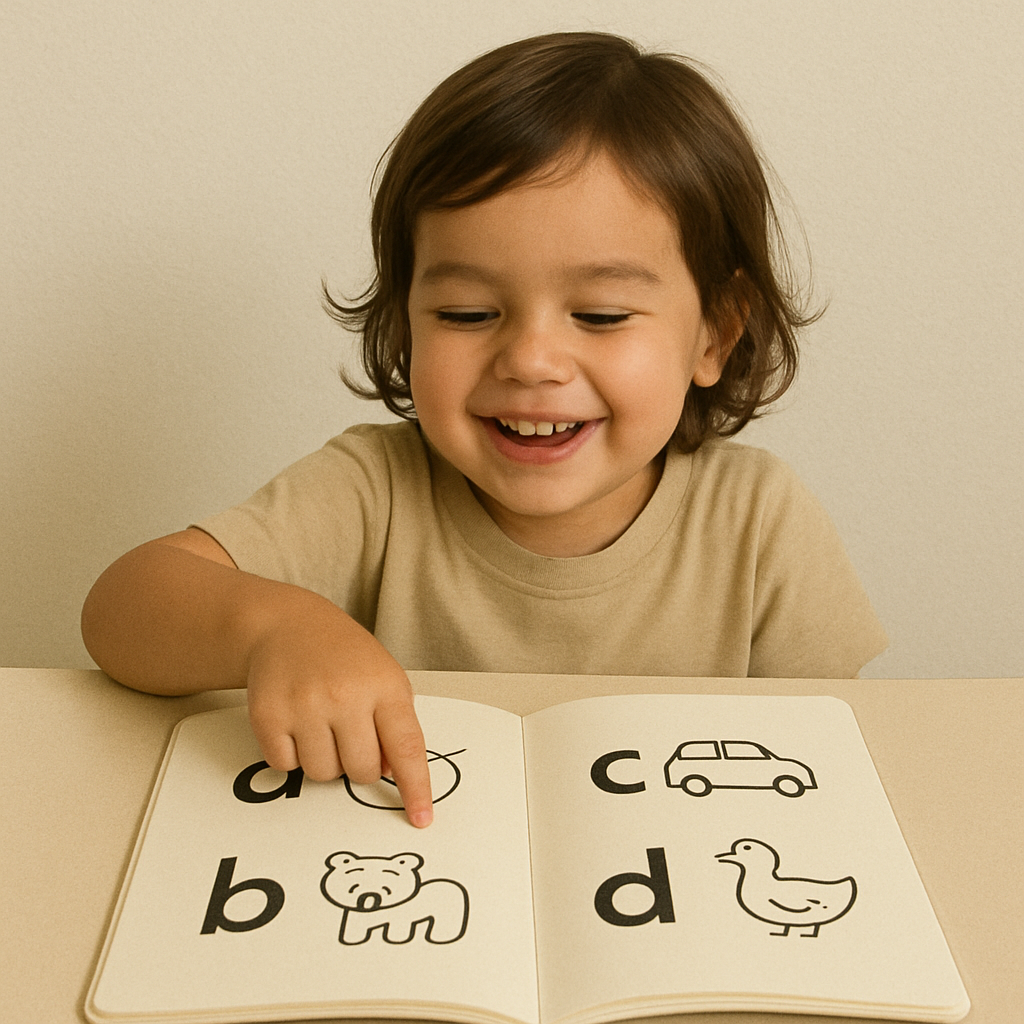
When we talk about a “zero-fluff” approach to reading, we mean eliminating instructional strategies and materials that do not directly contribute to a child’s ability to decode words. Many modern educational toys combine letter shapes with bright lights, loud music, and cartoon characters. While entertaining, these features often split a child’s attention. The child learns to press a button for a song, rather than focusing on the actual shape and sound of the letter.
A zero-fluff approach focuses purely on core phonics principles for early literacy. It treats reading as a code that needs to be cracked. Instead of relying on a child’s ability to memorize hundreds of word shapes, zero-fluff phonics provides them with the key to the code: the sounds of the letters and how to push those sounds together.
The Benefits of Keeping It Simple
- Reduced Cognitive Overload: Young brains can only process a limited amount of new information at once. By removing busy backgrounds and complex rules, kids can focus purely on the letter and its sound.
- Cost-Effective: You don’t need a $200 program. A pencil, paper, and a simple whiteboard are often enough.
- Higher Confidence: Because the progression is logical and step-by-step, children experience continuous small wins, which is crucial for overcoming alphabet learning frustration.
The Great Debate: Synthetic Phonics vs Whole Language
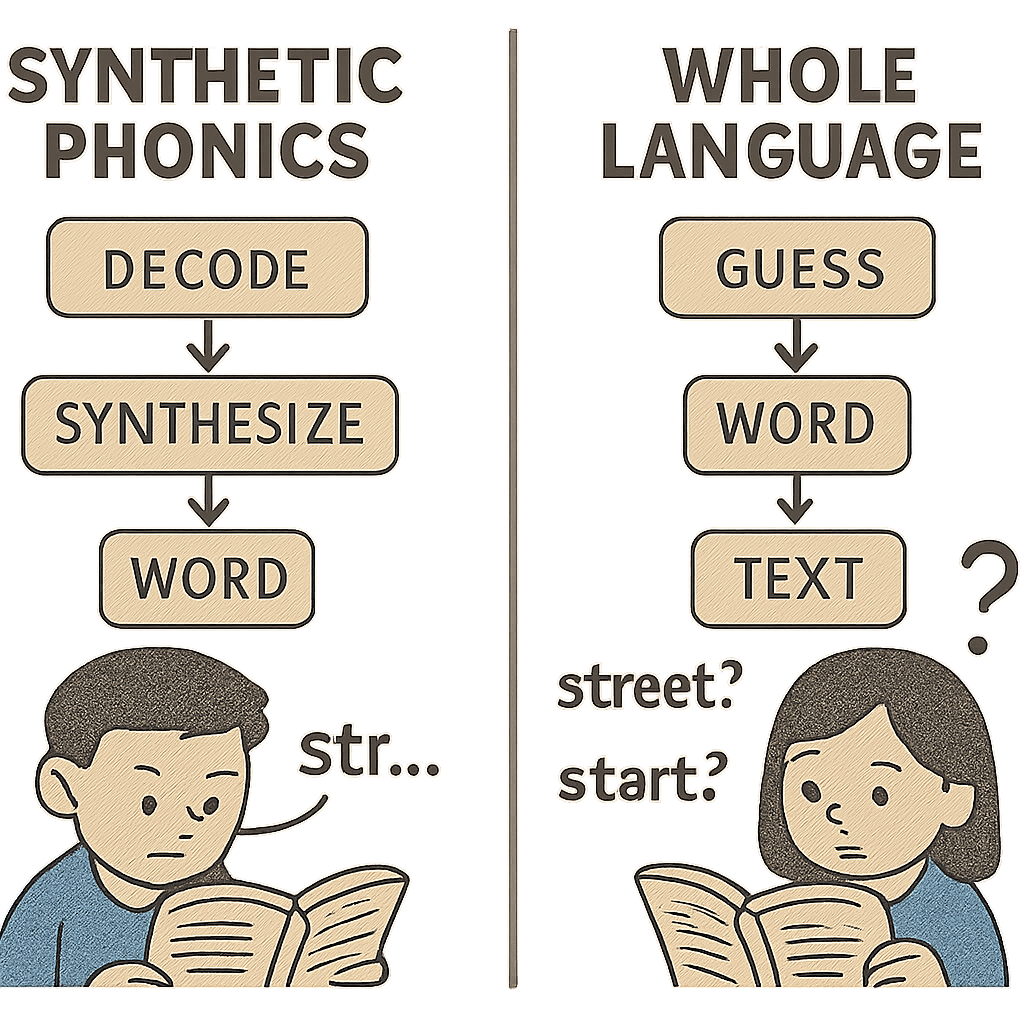
To understand why a simple, direct approach works best, it is helpful to look at how reading instruction has evolved. For decades, the educational world has debated synthetic phonics vs whole language.
The Whole Language Approach
The whole language approach operates on the belief that learning to read is as natural as learning to speak. It encourages children to memorize whole words by sight and use context clues—like pictures or the rest of the sentence—to guess unknown words. If a child sees a picture of a horse and the word starts with an ‘h’, they are encouraged to guess “horse.”
The problem? Guessing is not reading. When pictures are eventually removed from chapter books, children taught this way often hit a “reading wall.”
The Synthetic Phonics Approach
Synthetic phonics takes the opposite route. It teaches children that spoken language is made up of individual sounds (phonemes), and these sounds are represented by letters (graphemes). Children learn the sounds in isolation and then synthesize (blend) them together to read a word.
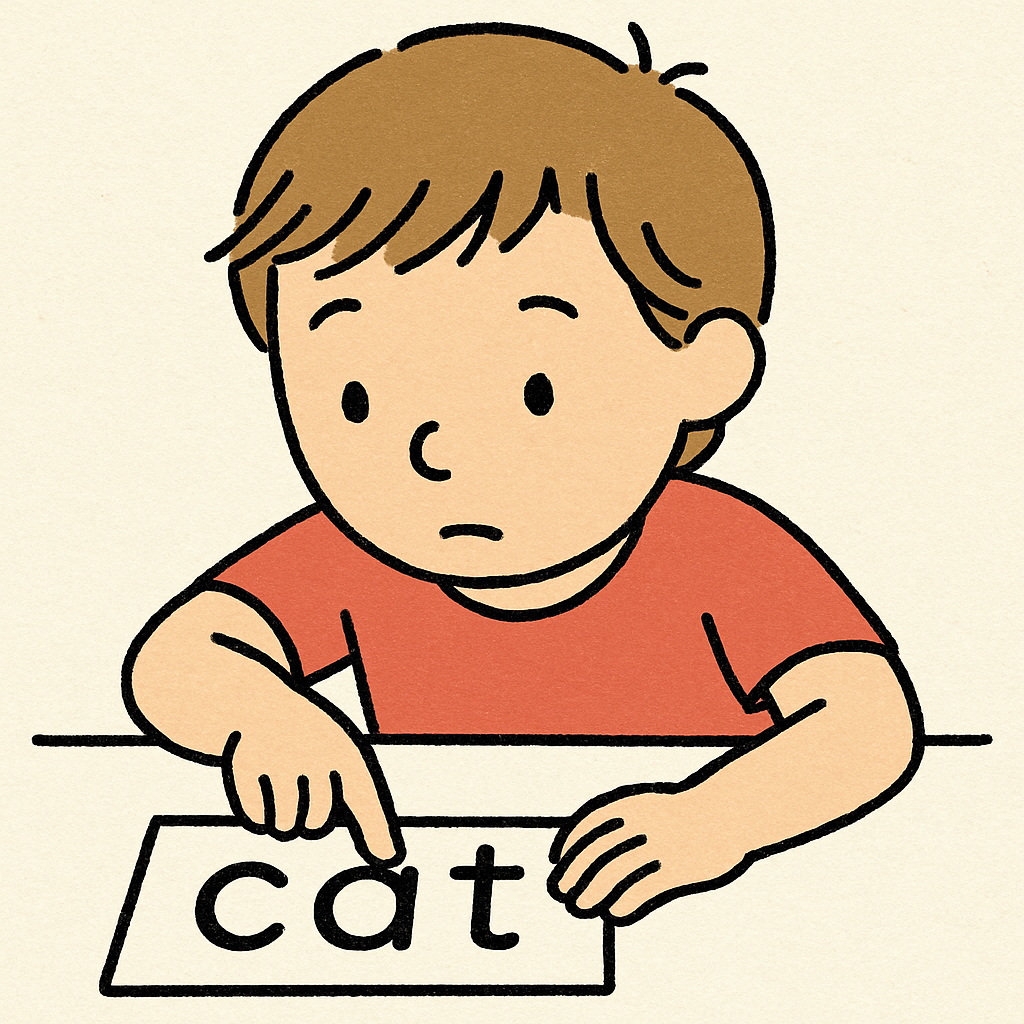
For example, a child learns the sounds /c/, /a/, and /t/. When they see the word “cat,” they do not look at a picture of a feline to guess the word. They sound it out: /c/ – /a/ – /t/, and blend it to say “cat.”
Science overwhelmingly supports synthetic phonics. It is the most effective way of teaching decoding skills to young children, ensuring they have the tools to read words they have never seen before.
When to Begin: The Best Age to Start Phonics Instruction
Parents frequently ask about the best age to start phonics instruction. The answer depends heavily on the child’s developmental readiness rather than a strict chronological age.
For most children, the foundation for reading begins between the ages of 3 and 5. However, the way you introduce the alphabet for toddlers looks vastly different from how you instruct a kindergartener.
Signs of Reading Readiness
Before diving into formal phonics, look for these readiness cues in your child:
- Print Awareness: They pretend to read books, hold them right-side up, and understand that text carries meaning.
- Verbal Skills: They can speak in clear sentences and understand simple instructions.
- Sound Curiosity: They start noticing rhymes in songs or ask, “What does that sign say?”
For a two or three-year-old, simple alphabet learning for kids means casual exposure. It means pointing out letters on street signs or playing with alphabet blocks without the pressure of a formal lesson. Formal phonics instruction—where a child sits down for a structured lesson—is usually most appropriate around ages 4 to 6, depending on the child.
Building the Ear: Phonemic Awareness for Preschoolers
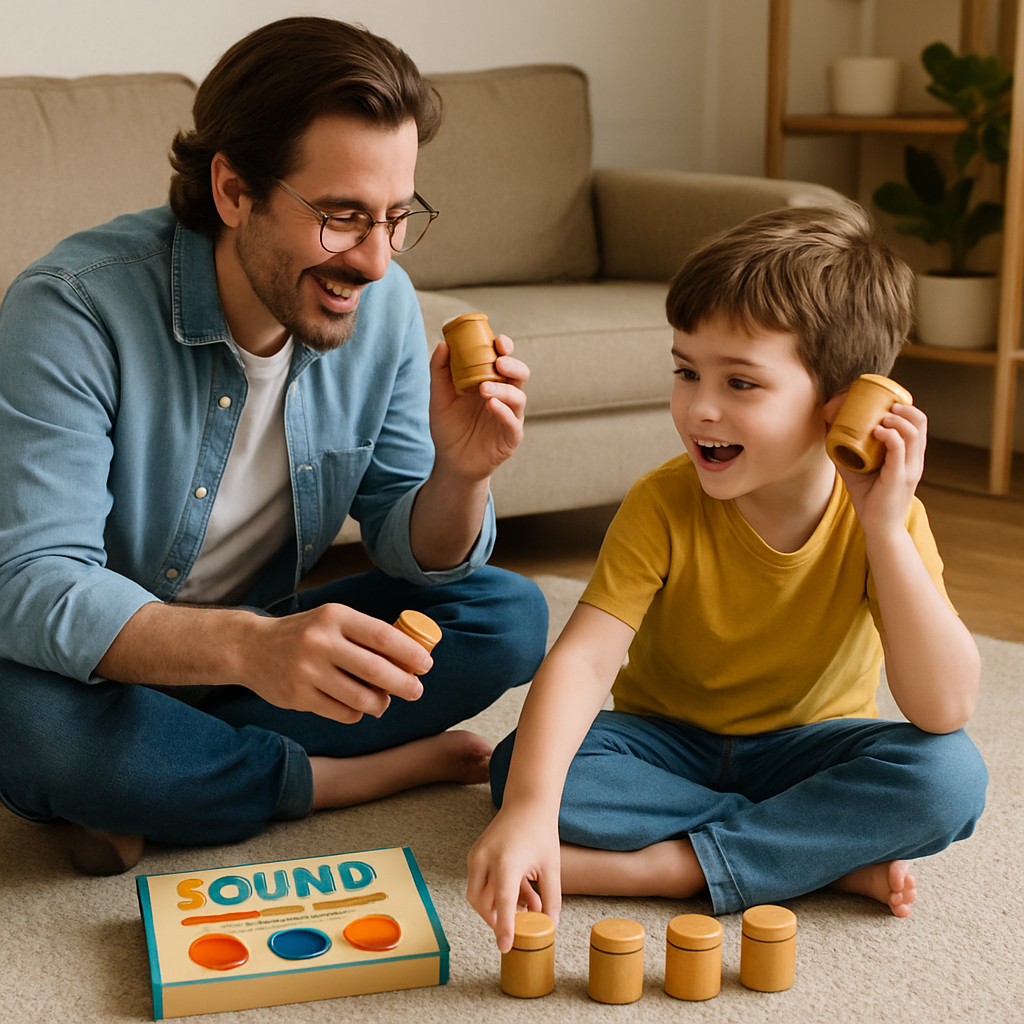
Before a child can read letters on a page, they must be able to hear sounds in the air. This skill is called phonemic awareness. It is the ability to hear, identify, and manipulate individual sounds in spoken words.
Phonemic awareness for preschoolers is strictly an auditory skill. You can do it in the dark! If a child cannot hear that the word “dog” is made up of three distinct sounds (/d/ /o/ /g/), they will struggle to decode it on paper later.
Simple Auditory Games to Play
Here are a few ways to build this critical skill without any flashcards or screens:
- The Robot Game: Talk to your child like a robot by breaking words into their individual sounds. “Please get your c-oa-t.” “Time for b-e-d.” Have them blend the word back together.
- I Spy with My Little Ear: Instead of spying colors, spy sounds. “I spy something that starts with the /m/ sound.” (Mirror, milk, mat).
- Rhyming Baskets: Place three items in a basket (e.g., a toy cat, a hat, and a dog). Ask your child to pick the two items that sound the same at the end.
Focusing on these auditory skills creates a robust foundation, making the eventual transition to written letters incredibly smooth.
The Foundation: Teaching Letter Sounds Before Names
One of the most common mistakes parents make is teaching the alphabet song and focusing heavily on the names of the letters (A, B, C). While knowing letter names is important eventually, it is the sounds of the letters that actually allow a child to read.
Think about it: the word “cat” is not read “Cee-Ay-Tee.” If a child only knows the names of the letters, trying to blend them together yields gibberish. This is why teaching letter sounds before names is a hallmark of any successful, zero-fluff phonics program.
Establishing Systematic Letter-Sound Correspondence
When introducing the alphabet, we want to establish systematic letter-sound correspondence. This means introducing a few letters at a time, mastering their sounds, and immediately using them to build words.
Instead of teaching letters in alphabetical order from A to Z, zero-fluff programs teach letters in an order that allows for immediate word building. A common starting sequence is S, A, T, P, I, N.
Why this order? Because once a child learns just these six sounds, they can immediately read dozens of words: sat, pat, pin, tin, sip, pan, nap, pit. This immediate application is incredibly motivating for young learners.
Tips for Teaching Sounds Correctly
- Use “Pure” Sounds: Avoid adding an “uh” sound to the end of consonants. For example, ‘M’ should be a continuous /mmmm/, not /muh/. ‘T’ should be a crisp, quiet /t/, not /tuh/. Adding “uh” makes blending very difficult later (e.g., /muh/ /a/ /tuh/ becomes “muhatuh” instead of “mat”).
- Keep Visuals Clean: When showing the letter ‘A’, use a plain card with the letter printed clearly. Avoid cards where the letter ‘A’ is shaped like an alligator. The child needs to memorize the architecture of the letter itself, not the illustration.
Moving to Print: How to Teach Blending Sounds for Beginners
Once your child knows a handful of letter sounds and has decent phonemic awareness, it is time for the magic to happen: blending. Blending is the process of stringing individual letter sounds together to form a whole word.
Learning how to teach blending sounds for beginners requires patience. It is often the biggest hurdle in early literacy, but with the right technique, it clicks.
The Successive Blending Technique
Many children struggle with traditional blending. If you point to the word “M-A-P” and they say /m/… /a/… /p/… they often forget the first sound by the time they reach the last, guessing a word like “tap” or just “puh.”
To prevent this, use successive blending (also known as continuous blending). Here is how it works:
- Point to the first letter and say its sound: /m/
- Move to the second letter, but keep holding the first sound and slide them together: /mmmaaa/
- Finally, add the last sound: /mmmaaap/
- Say it fast: Map!
Start with continuous consonants—letters whose sounds can be stretched out endlessly, like M, S, F, L, N, R. Words like mat, sun, fan, and lap are much easier to blend than words starting with “stop” sounds like C, T, P, or B (e.g., cat, top, pot).
A Minimalist Reading Curriculum for Homeschool
If you are teaching your child at home, you do not need to replicate a traditional classroom to be successful. A minimalist reading curriculum for homeschool focuses entirely on explicit phonics, a little bit of handwriting, and reading decodable texts.
Components of a Zero-Fluff Homeschool Curriculum
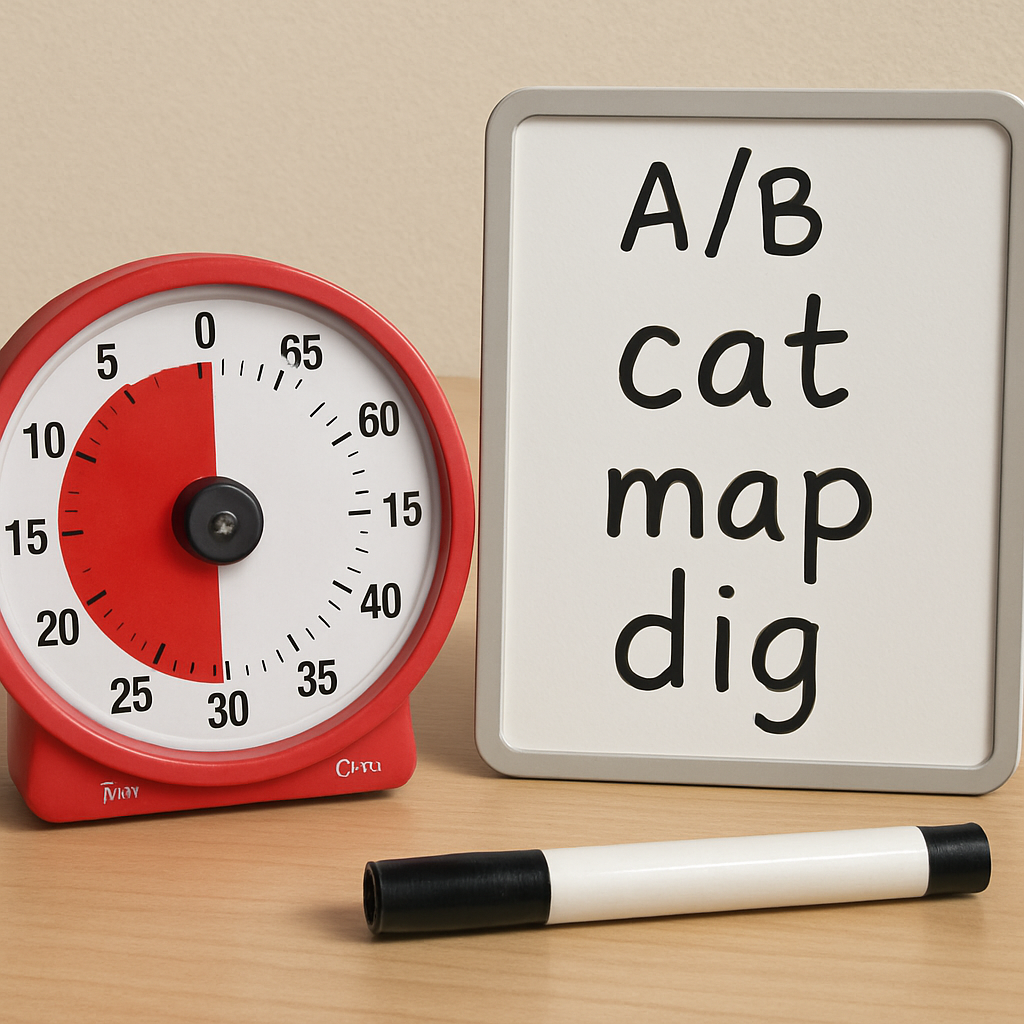
- A Whiteboard and Marker: The most versatile tool you can own. You can write letters, manipulate word families (changing cat to hat to bat), and practice writing.
- Plain Letter Tiles or Flashcards: Simple lower-case letters printed on tiles or cards. No pictures.
- Decodable Books: These are books that only contain words using the phonetic rules the child has explicitly learned. Unlike standard picture books, decodables prevent guessing and force the child to practice their decoding skills.
- Phonics-Based Reading Strategies for Parents: Equip yourself with a simple scope and sequence (a roadmap of what sounds to teach and when). You can find many free, evidence-based scope and sequence charts online.
By sticking to these four elements, you eliminate the distractions and busywork that often overwhelm both parent and child.
The Magic of a Daily Ten-Minute Phonics Routine
Young children have short attention spans. Pushing a reading lesson for 45 minutes will only lead to tears and resistance. The secret to rapid reading progress is not the length of the lesson, but the frequency. A daily ten-minute phonics routine is far more effective than an hour-long session once a week.
Here is a highly effective, zero-fluff 10-minute routine you can use every day:
Minute 1-2: Sound Review (Warm-up)
Flash simple letter cards your child has already learned. Have them say the pure sounds as quickly as possible. This builds automaticity, which is crucial for reading fluency.
Minute 3-5: Phonemic Awareness
Put the cards away and do a quick auditory exercise. Parent: “I am going to say some sounds, you tell me the word. /s/ /u/ /n/.” Child: “Sun!” Parent: “Great! Now change the /s/ to an /r/.” Child: “Run!”
Minute 6-8: Blending and Reading Print
Write 3 to 5 words on a whiteboard using sounds the child knows. Have the child point to each letter and blend the sounds together. Alternatively, have them read one short page from a decodable book.
Minute 9-10: Dictation and Writing
Give the child a whiteboard and marker. Parent: “The word is ‘map’. What sounds do you hear in map?” Child: “/m/ /a/ /p/” Parent: “Write the letters that make those sounds.” This step connects reading (decoding) with spelling (encoding), solidifying the phonetic concept in the brain.
Consistency is key. Do this simple routine five days a week, and you will be astounded by the progress.
Engaging Without the Fluff: Activities and Games
“Zero-fluff” does not mean “boring.” In fact, because the learning objectives are so clear, you can easily turn them into highly engaging, playful moments. The key is that the game serves the phonics goal, rather than the game distracting from the learning.
Here are a few ways to keep learning joyful.
Simple Alphabet Games
You don’t need expensive board games to practice letter sounds. Simple alphabet games can be created in seconds:
- Post-it Note Swat: Write individual letters on sticky notes and place them on a blank wall. Call out a sound (not the letter name), and have your child run and swat the correct letter with their hand or a fly swatter.
- Musical Sounds: Place letter cards in a circle on the floor. Play music and have your child walk around the circle. When the music stops, they step on a card and shout the sound that letter makes.
- Word Building Racing: Give your child a set of letter tiles. Say a simple CVC (consonant-vowel-consonant) word like “bug.” See how fast they can find the letters and build the word.
Multisensory Alphabet Activities for Toddlers
For younger siblings or children who are highly tactile, engaging the senses helps cement the learning. Multisensory alphabet activities for toddlers bridge the gap between physical play and early literacy.
- Sand or Salt Tracing: Pour a thin layer of salt or colored play sand into a baking tray. Call out a sound, and have the child trace the corresponding letter into the sand using their index finger while repeating the sound out loud.
- Playdough Letters: Have your child roll playdough into long “snakes” and form them into the shapes of letters.
- Shaving Cream Smear: Spray a small amount of shaving cream on a table or inside the bathtub wall. Let them write letters with their fingers. It is messy, fun, and highly effective for muscle memory.
No-Prep Phonics Activities for Beginners
For busy parents, you need activities that can happen anywhere, anytime. These no-prep phonics activities for beginners are perfect for the car, the grocery store, or the waiting room:
- The Grocery Store Sound Hunt: While pushing the cart, ask your child to find three items that start with the /b/ sound (bananas, bread, beans).
- License Plate Blending: While driving, look at the letters on a license plate (e.g., R, A, T). Have your child sound them out to make a silly or real word.
- Staircase Reading: If you have stairs in your house, place a simple word card on each step. As your child walks up to bed, they have to read the word to conquer the step.
Overcoming Obstacles and Frustrations
Even with the most streamlined, effective program, learning to read requires hard cognitive work. There will be days when your child seems to forget everything they learned the day before. This is completely normal.
When facing resistance, remember these tips for overcoming alphabet learning frustration:
- Step Back: If blending is too hard, go back to practicing isolated sounds and auditory phonemic awareness. Build confidence before moving forward.
- Keep Sessions Short: A frustrated child cannot learn. If tears start, stop the timer. Try again later or the next day.
- Praise the Effort, Not the Outcome: Celebrate the hard work of sounding out a word, even if they get it wrong. “I love how hard you worked to stretch those sounds out! Let’s look at the middle sound again.”
By relying on explicit instruction, you are giving your child a predictable, safe framework. They don’t have to guess. They just have to use the tools you’ve given them.
Conclusion: The Beauty of Simplicity in Literacy
In a world that constantly tells parents they need to buy more, do more, and schedule more, teaching reading offers a refreshing alternative. Simple alphabet learning for kids using a zero-fluff phonics program proves that less truly is more.
By prioritizing teaching letter sounds before names, fostering robust phonemic awareness for preschoolers, and utilizing a clear, daily ten-minute phonics routine, you strip away the confusion of early literacy. You replace guesswork with logic, and frustration with genuine, earned confidence.
You don’t need a teaching degree, a fancy classroom, or a subscription box to teach your child to read. Armed with a whiteboard, a handful of letters, and an understanding of how the reading brain actually works, you have everything you need to unlock the magic of reading for your child. Keep it simple, stay consistent, and enjoy the incredible journey of watching your little one become a reader.