Phonics and reading confidence how phonics helps with reading
There are few moments in a child’s educational journey as magical as the exact second they realize that the squiggles on a page actually mean something. Watching a child sound out their first complete word is a profound experience. However, for many children, reading does not come effortlessly. The transition from recognizing letters to reading fluidly can be fraught with frustration, leading to a noticeable drop in self-assurance.
When we explore the dynamic between Phonics and reading confidence: how phonics helps with reading, we are fundamentally looking at how giving a child the right tools can transform them from a hesitant guesser into an empowered, independent reader. Reading is not a natural process like speaking; it is a learned skill that requires explicit instruction.
In this comprehensive guide, we will explore the profound connection between phonics and reading confidence, dive into the science of how we learn to read, and provide actionable strategies to help educators and parents foster a lifelong love of literacy in their children.

The Foundation of Literacy: Understanding the Building Blocks
Before a child can read fluently, they must understand the fundamental rules of the English language. Phonics is an instructional method that teaches children the relationship between letters (graphemes) and the sounds they make (phonemes). By understanding these sound-spelling relationships, children can decode words they have never seen before.
Why is Phonemic Awareness Important for Literacy?
To understand phonics, we must first look at its precursor: phonemic awareness. Many people confuse phonemic awareness with phonics, but they are distinct skills. Phonemic awareness is entirely auditory; it is the ability to hear, identify, and manipulate individual sounds in spoken words. You can practice phonemic awareness in the dark.
So, why is phonemic awareness important for literacy? Because if a child cannot hear that the word “cat” is made up of three distinct sounds (/c/ /a/ /t/), they will struggle to map those sounds onto printed letters. A strong foundation in auditory sound manipulation is the fertile soil in which phonics instruction grows. It primes the brain to understand that spoken language can be broken down into parts, a concept crucial for later reading and writing.
Developmental Milestones in Early Literacy Skills
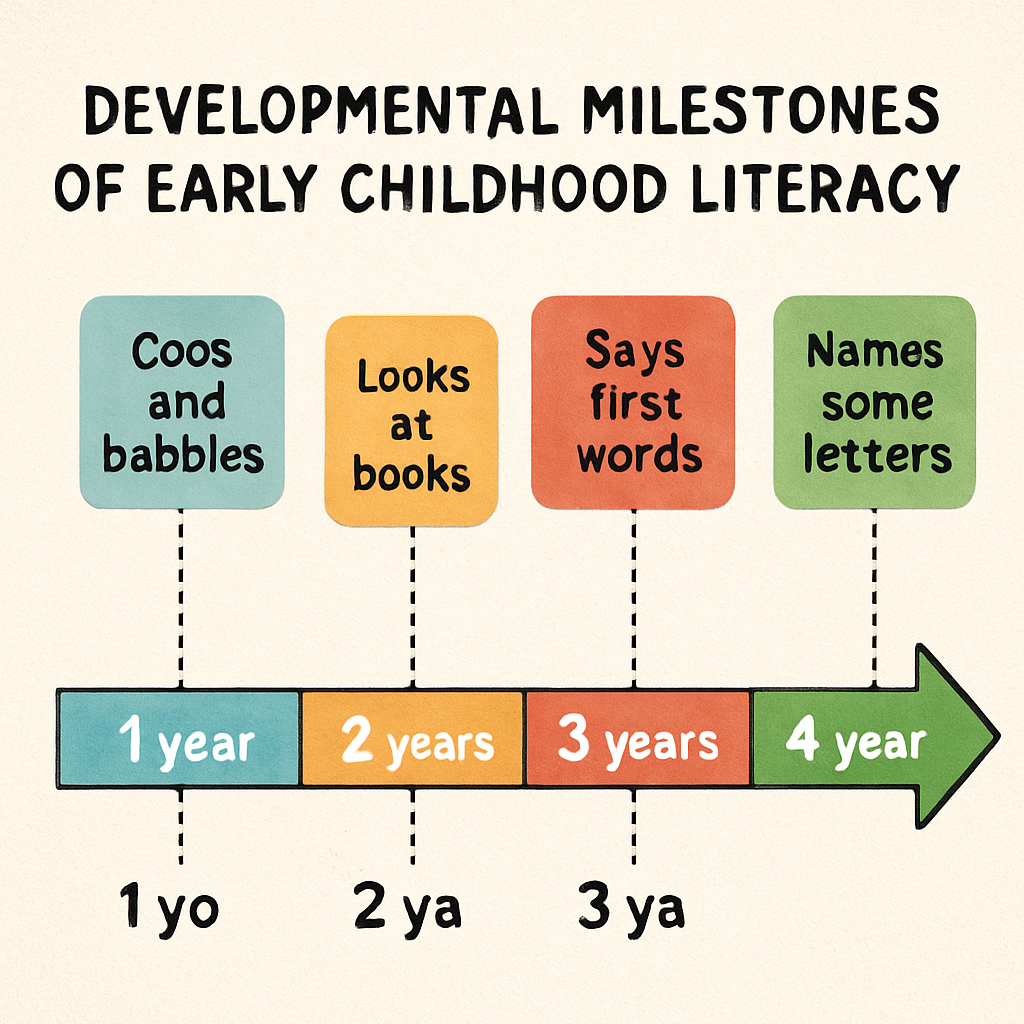
Understanding the typical trajectory of a developing reader helps parents and educators provide the right support at the right time. Here are the key developmental milestones in early literacy skills:
- Ages 3-4 (Pre-K): Children begin to recognize rhyming words, sing the alphabet song, and identify the first letter of their name. They develop print awareness (holding a book right-side up, turning pages).
- Ages 5-6 (Kindergarten): Phonemic awareness solidifies. Children learn standard letter-sound correspondences. They begin sounding out simple consonant-vowel-consonant (CVC) words like dog, mat, and sun.
- Ages 6-7 (First Grade): Children move beyond basic decoding. They learn consonant digraphs (sh, ch, th), vowel teams (ea, oa), and begin reading with early fluency.
- Ages 7-8 (Second Grade and Beyond): The shift from “learning to read” to “reading to learn” occurs. Phonics knowledge is applied to multisyllabic words, and reading comprehension takes center stage.
The Great Debate: Phonics vs Whole Language Approach
For decades, the educational world was divided by the “Reading Wars.” On one side was phonics; on the other was the whole language approach. Understanding this debate is crucial for grasping why modern, science-backed reading instruction leans heavily in one direction.
The phonics vs whole language approach debate centers on how children learn best.
- Whole Language: This philosophy suggested that reading is a natural process, much like speaking. It argued that if you surround children with rich, engaging literature, they will naturally absorb words by sight and use context clues (like pictures or sentence structures) to guess unknown words.
- Phonics: This approach argues that because reading is a human invention, the brain must be rewired to connect visual symbols to auditory sounds. It demands direct teaching of the alphabetic code.
The verdict, backed by decades of cognitive science and brain imaging, is clear: relying on context clues is what struggling readers do. Strong readers rely on letters and sounds. When children are taught to look at a picture to guess a word, their eyes leave the text, hindering their ability to actually map the word into their memory.
Explicit vs Implicit Phonics Instruction
Even within phonics, the delivery method matters. The difference between explicit vs implicit phonics instruction is the difference between leaving things to chance and guaranteeing mastery.
- Implicit Phonics: Often embedded in whole-language classrooms, this approach waits for a “teachable moment.” If a child struggles with the word “shark,” the teacher might point out the “sh” sound. The learning is incidental and lacks a structured sequence.
- Explicit Phonics: This approach leaves nothing to chance. Teachers follow a strict scope and sequence. They teach the “sh” sound directly, practice it in isolation, blend it into words, and then have children read decodable books containing the “sh” sound.
Explicit instruction is far superior because it systematically demystifies the English code, ensuring no foundational gaps are left behind.
Psychological Triumphs: How Phonics Eliminates Reading Anxiety
When we talk about phonics and reading confidence, we are addressing the deep psychological impact of literacy. For a child, being called on to read aloud in class can be an exhilarating opportunity to show off, or it can be a source of profound dread.
Overcoming Reading Anxiety Through Decoding Skills
Reading anxiety is typically rooted in a feeling of powerlessness. When children are taught to memorize whole words or guess based on pictures, they hit a wall by the second or third grade when pictures disappear and words become longer and more complex. Facing a page of text becomes a guessing game with high stakes and frequent failures.
Overcoming reading anxiety through decoding skills happens because decoding gives children a reliable, repeatable strategy. When a child equipped with phonics encounters a word like splendid, they don’t panic or look at the teacher for the answer. They break it down: s-p-l-e-n-d-i-d. They realize they have the power to unlock the word themselves. This shift from dependence to independence is the cornerstone of reading confidence.
Building Self-Esteem in Struggling Readers
Continuous failure in reading takes a massive toll on a child’s self-esteem. They often internalize their struggles, believing they are simply not smart. Building self-esteem in struggling readers requires shifting the narrative.
By utilizing explicit phonics, we can show a child that reading isn’t about arbitrary intelligence; it’s about cracking a code. When a struggling reader is taught the rules of the code and successfully applies them to sound out a new word, their posture changes. Their eyes light up. They begin to view reading as a puzzle they can solve rather than a test they are failing. Success breeds success, and a child who feels capable is a child willing to take academic risks.

The Mechanics of Mastery: Decoding, Blending, and Fluency
To understand how phonics improves reading fluency, we need to break down the mechanics of what happens when a child looks at a word on a page. The goal of phonics is not just to sound out words slowly forever; the goal is rapid, automatic word recognition.
Teaching Children to Decode Unfamiliar Words
The initial phase of reading is highly mechanical. Teaching children to decode unfamiliar words involves instructing them to look at each letter (or group of letters) left to right, assign the correct sound to it, and hold those sounds in their working memory.
For example, when decoding the word “stamp,” a child must recognize /s/ /t/ /a/ /m/ /p/. They learn that words are not just abstract shapes to be memorized, but combinations of logical, predictable units.
Blending Sounds for Better Reading Speed
Once a child can decode individual sounds, the next vital step is blending. Blending sounds for better reading speed is the ability to push those isolated sounds together seamlessly.
Instead of a choppy, robotic reading style (/c/… /a/… /t/), blending allows the child to “sing” or stretch the sounds together (cccaaattt -> cat). Continuous blending exercises, particularly with continuous consonant sounds like /m/, /s/, and /f/ (which can be held out without stopping breath), are incredibly effective for smoothing out reading speed and minimizing frustration.
The Bridge to Fluency
So, how exactly does this translate to faster reading? To boost reading fluency, a child must move from laborious decoding to automatic recognition. Reading fluency is defined by three factors: accuracy, speed, and prosody (expression).
You cannot have speed and expression if you do not have accuracy. Phonics ensures accuracy. As children decode the same spelling patterns over and over, their brains begin to process letter combinations instantly. They no longer read sound-by-sound; they read syllable-by-syllable, and eventually, word-by-word. This rapid, effortless processing is the essence of reading fluency.
The Science of Reading: Memory, Mastery, and Comprehension
We’ve discussed the mechanics, but what is actually happening in the brain? Recent advancements in cognitive neuroscience have given educators a clear picture of how reading develops at a neurological level.
Orthographic Mapping and Long-Term Memory
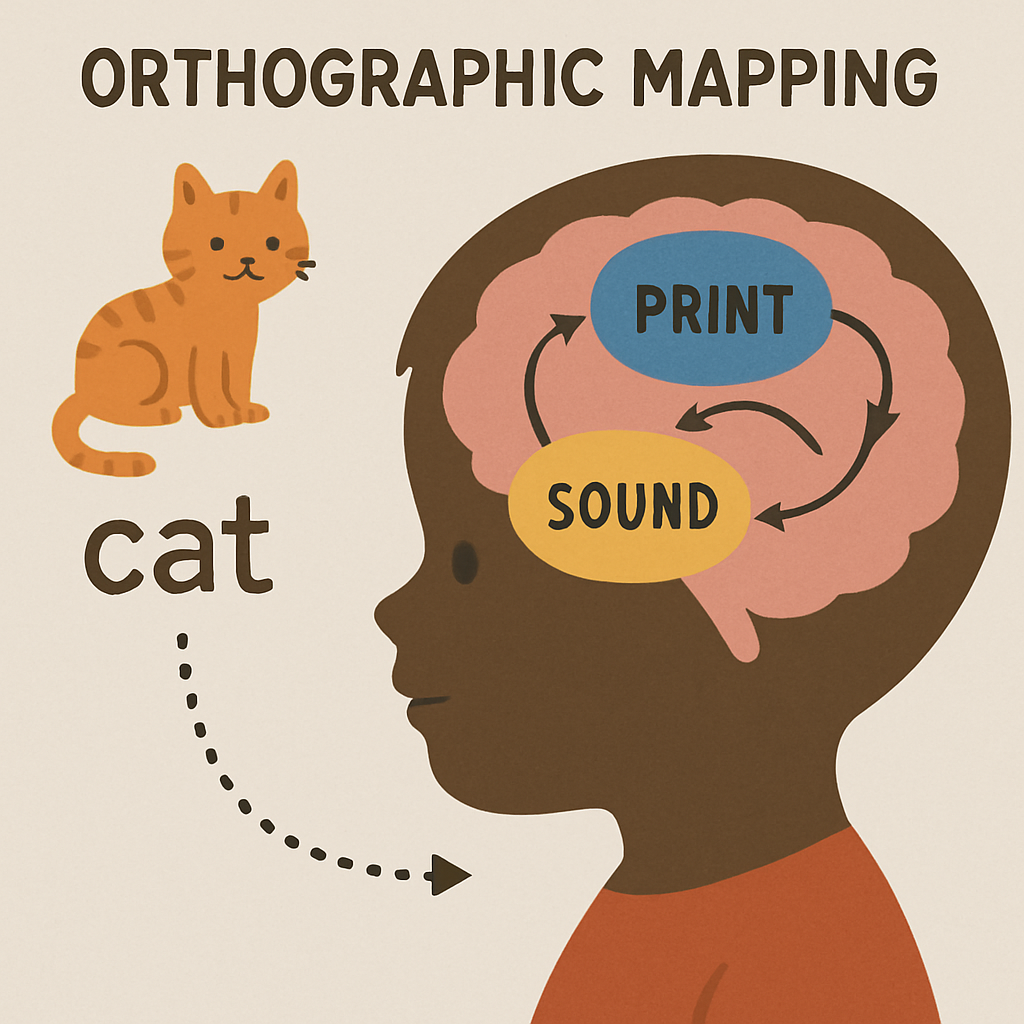
One of the most important concepts in modern reading science is orthographic mapping. Orthographic mapping and long-term memory form the invisible process that turns an unfamiliar word into a “sight word” (a word instantly recognized without conscious effort).
Contrary to popular belief, sight words are not learned through visual memorization of the word’s shape. They are learned through phonics. When a child decodes a word successfully a few times, connecting the sounds (phonemes) to the letters (graphemes), the brain “maps” that specific letter sequence into long-term memory.
Once a word is orthographically mapped, the brain recognizes it in milliseconds. The child no longer has to sound it out. Because phonics explicitly teaches the connections required for this mapping, it is the most efficient highway to building a massive vocabulary of instantly recognizable words.
Linking Phonics Mastery to Reading Comprehension
Some critics of phonics argue that it focuses too much on sounds and not enough on meaning. However, linking phonics mastery to reading comprehension is undeniable when you consider cognitive load theory.
The human brain has a limited amount of working memory. If a child is expending 90% of their mental energy just trying to figure out what the words on the page say (decoding), they only have 10% of their brain power left to understand what the sentence actually means (comprehension).
When phonics instruction leads to automatic word recognition (fluency), the cognitive load required for decoding drops to near zero. This frees up 100% of the child’s working memory to focus on vocabulary, context, imagery, and the deeper meaning of the text. Simply put: you cannot comprehend a text if you cannot accurately read the words within it. Phonics is the key that unlocks comprehension.
Program Selection: What Works Best?
Not all phonics instruction is created equal. The educational market is flooded with various curricula, but research consistently points to one specific framework as the gold standard for reading instruction.
Systematic Synthetic Phonics Programs
The most effective way to teach a child to read is through systematic synthetic phonics programs. Let’s break down what these terms mean:
- Systematic: The program follows a logical, carefully planned scope and sequence. It starts with the easiest, most common sound-spelling patterns and gradually introduces more complex ones. No skills are left to chance; everything is taught deliberately.
- Synthetic: It teaches children to synthesize (blend) individual sounds together to form words. It builds from the smallest unit of sound up to whole words, rather than starting with whole words and breaking them down (analytic phonics).
Programs like Orton-Gillingham, Wilson Reading System, and Jolly Phonics are excellent examples of systematic synthetic phonics programs. They provide the highly structured environment that developing brains need to grasp the complexities of the English language.
Multi-Sensory Phonics Instruction Techniques
To maximize engagement and retention, the best phonics programs employ a multi-sensory approach. Multi-sensory phonics instruction techniques engage visual, auditory, kinesthetic (movement), and tactile (touch) pathways in the brain simultaneously.
Examples of multi-sensory techniques include:
- Sky Writing: Having a child use two fingers to write a letter in the air with large arm movements while saying its sound aloud.
- Sand or Shaving Cream Tracing: Letting children trace graphemes in a tactile tray of sand or shaving cream.
- Magnetic Letters and Tiles: Physically manipulating physical letters to build and break apart words.
- Tapping Sounds: Using the thumb to tap different fingers for each sound in a word to physically count the phonemes before blending them.
Engaging multiple senses creates stronger, more diverse neural pathways, making it much easier for children to recall letter-sound associations.

Phonics for Diverse Learners: Supporting Every Child
While phonics is essential for all readers, it is an absolute necessity for children with specific learning differences. What is beneficial for a neurotypical child is often life-changing for a neurodivergent one.
Supporting Children with Dyslexia Using Phonics
Dyslexia is a neurobiological learning disability characterized by difficulties with accurate and/or fluent word recognition, and by poor spelling and decoding abilities. Brain imaging shows that the dyslexic brain processes language differently, often under-utilizing the left-hemisphere regions responsible for rapid word recognition.
Supporting children with dyslexia using phonics is not just an option; it is the scientifically proven intervention. Children with dyslexia require intensive, explicit, systematic, and highly multi-sensory phonics instruction. Because they struggle naturally with phonological processing, they cannot rely on implicit learning or context clues.
Through highly structured phonics programs (often based on the Orton-Gillingham approach), educators can actually help rewire the neural pathways in a dyslexic student’s brain, enabling them to become highly capable and confident readers. Phonics demystifies the language for dyslexic learners, providing them with the rigid, logical rules they need to navigate reading successfully.
Actionable Advice: Partnering at Home
Educators play a massive role in literacy, but parents are a child’s first and most influential teachers. You don’t need a degree in education to support your child’s reading journey at home. Short, consistent bursts of practice yield massive results over time.
Daily Phonics Practice Routines for Parents
Establishing a positive, low-stress environment is key. Here are some effective daily phonics practice routines for parents that take only 10 to 15 minutes a day:
- Phonemic Awareness Car Games: Play “I Spy” using sounds instead of letters. “I spy with my little eye, something that starts with the /b/ sound” (not the letter B, but the sound it makes). Play word blending games: “Can you guess what word I am saying? c-u-p.”
- Sound Hunts: Give your child a specific phonics rule they are learning (like “ch”) and have them hunt through a favorite picture book to find as many words containing that spelling pattern as possible.
- Decodable Reading: Swap out predictable picture books for decodable texts during reading time. Decodable books are carefully written to only include phonics patterns the child has already been taught. This prevents guessing and forces the child to practice decoding, ensuring early success and massive confidence boosts.
- Word Building with Magnets: Keep magnetic letters on the fridge. Give your child a word to build (e.g., “ship”). Then, ask them to change one letter to make a new word (“Now change ‘ship’ to ‘shop’. What letter needs to change?”). This builds critical manipulation skills.
- Read Aloud for Vocabulary: While your child should practice reading decodable texts to you, you should also read rich, complex storybooks to them. This builds the oral vocabulary and background knowledge they will need for reading comprehension once their phonics skills catch up to their age level.
By keeping these activities light, game-like, and heavily praised, parents reinforce that reading is both a fun and achievable skill.
Frequently Asked Questions About Phonics and Literacy
To provide absolute clarity on this topic, let’s address a few common questions parents and educators frequently ask regarding phonics and reading progression.
Q: English has so many rule-breakers (sight words). Does phonics still work? A: Yes! While it is true that English is complex, approximately 84% of English words follow highly predictable phonetic rules. Even for “irregular” words like said or was, usually, only one letter is acting irregularly (the ‘ai’ in said, the ‘a’ in was). Phonics teaches children to sound out the regular parts of the word and only memorize by heart the single tricky part.
Q: How do I know if my child is guessing words instead of reading them? A: Watch their eyes. If a child comes to an unknown word and looks up at the picture, looks at your face, or looks around the room, they are guessing. If they look at the first letter, say the sound, and move their eyes sequentially left to right through the word, they are utilizing decoding skills.
Q: Will too much phonics make my child hate reading? A: Actually, the opposite is true. Frustration makes children hate reading. When children are asked to read texts that contain spelling patterns they haven’t been taught, they experience failure. Explicit, systematic phonics ensures a child only encounters what they have mastered, creating a continuous cycle of success and boosting their confidence drastically.
Conclusion
The journey from a non-reader to a fluent reader is one of the most complex cognitive tasks a human being will ever undertake. However, it doesn’t have to be a journey filled with anxiety, guesswork, and frustration.
When we reflect on Phonics and reading confidence: how phonics helps with reading, the correlation is exceptionally clear. Phonics removes the mystery of the written word. It empowers children with a logical, systematic toolkit to decode unfamiliar words, blending sounds effortlessly to achieve true reading fluency. By understanding the critical role of phonemic awareness, leveraging systematic synthetic phonics programs, and implementing multi-sensory strategies, we can literally map these skills into our children’s long-term memory.
Whether you are an educator refining your classroom instruction or a parent looking for daily phonics practice routines, remember that every sound you teach is a building block. By prioritizing explicit decoding skills, you are doing much more than teaching a child to read; you are building the self-esteem of struggling readers, overcoming reading anxiety, and giving them the unshakeable confidence needed to unlock every other subject in their educational journey. Give a child the code, and you give them the world.